 ultimate-guide
Landscape Procurement Strategies for Large Projects
Table of Contents
- Why Landscape Procurement Strategies Decide Large Project Outcomes
- Building a Landscape Project Procurement Plan Template
- Landscaping Contractor Selection Criteria That Hold Up
- Landscape Contractor Bid Comparison Without Apples-to-Oranges Bids
- Plant Procurement and Delivery Planning for Living Materials
- Risk, Cost Control, and Scheduling in Landscape Procurement Strategies
- Frequently Asked Questions
Last Updated: October 15, 2026
Why Landscape Procurement Strategies Decide Large Project Outcomes
Landscape procurement strategies for large projects determine whether a multi-phase installation finishes on schedule or stalls halfway through. On a large property, the procurement plan controls material availability, contractor coordination, and cost predictability more than any single design decision.
That is the core tension in landscape procurement: the plants, stone, and irrigation components that make a project distinctive also have the longest lead times and least flexibility. Get the sequence wrong and the best design sits in a staging yard waiting for materials that arrive after the crew has moved on.
Below, we break down how to build a procurement plan, select contractors who can deliver, and protect a large project from the two things that kill budgets: scope drift and late material.
Building a Landscape Project Procurement Plan Template
A landscape project procurement plan template maps every package of work to its sourcing method, lead time, and installation window. It is a sequencing tool, not a budget spreadsheet.
For a large residential or commercial property, a practical template covers:
- Scope and requirements definition, what is being built, in what phases, and to what standard
- Package breakdown, hardscape, planting, irrigation, lighting, and any seasonal décor, each treated as its own procurement package
- Sourcing method, competitive tendering, negotiated award, or direct supplier relationship
- Lead times, realistic windows for nursery stock, stone, and specialty components
- Delivery and staging plan, where materials land and how they are protected before installation
- Risk register, weather, supply, and substitution contingencies
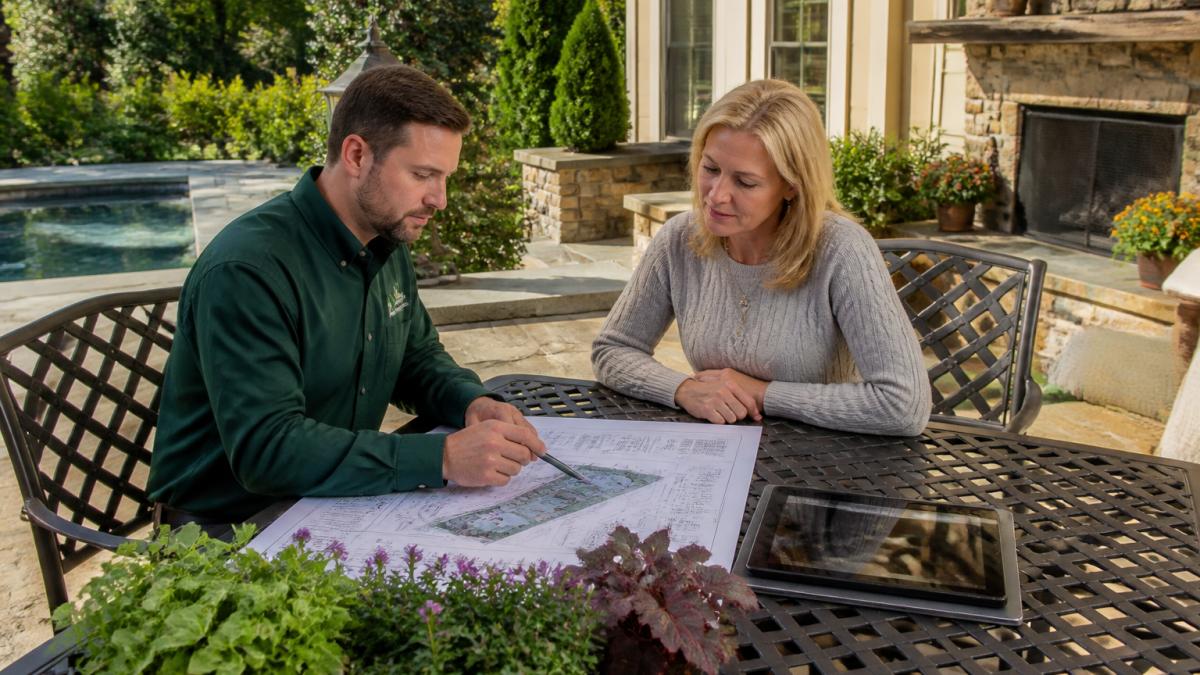
Build the template before the first bid goes out. When it exists early, every bid comes back against the same scope, making comparison meaningful instead of guesswork.
Landscaping Contractor Selection Criteria That Hold Up
Landscaping contractor selection criteria should test capability against your specific project, not general reputation. A firm that excels at maintenance may not be equipped for complex masonry and grading.
The criteria that actually predict performance:
- Relevant project scale, have they delivered work of comparable size and complexity?
- Internal capabilities, do they self-perform key trades or subcontract everything?
- Supplier relationships, do they have established nursery and material sources?
- Insurance and coverage, verified, current, and adequate for the scope
- Schedule reliability, a documented history of on-time completion
- Transparency in quoting, clear line items with no vague allowances
Ask each candidate how they handle a material shortfall mid-installation. The answer reveals more about their procurement discipline than any reference list.
Landscape Contractor Bid Comparison Without Apples-to-Oranges Bids
Landscape contractor bid comparison fails when each bid is priced against a different scope. One contractor includes irrigation; another lists it as an allowance. One prices premium plant stock; another substitutes smaller caliper material at the same line item.
The fix is a bid leveling sheet. Before opening bids, define the scope in enough detail that every proposal can be normalized to the same baseline. Then compare in a structured table:
| Comparison Point | What to Check | Why It Matters |
|---|---|---|
| Scope alignment | Same inclusions and exclusions | Prevents hidden gaps |
| Material specification | Plant size, stone type, grade | Drives long-term appearance |
| Allowances | Any "to be determined" items | Common source of change orders |
| Schedule commitment | Start and completion dates | Protects your season window |
| Payment terms | Deposit, milestones, retainage | Cash flow and risk balance |
| Warranty | Workmanship and plant guarantee | Protects your investment |
A bid that is 15% lower because it silently dropped a package is not a lower bid. It is a different project.
Plant Procurement and Delivery Planning for Living Materials
Plant procurement and delivery planning is where landscape procurement diverges from every other construction category. Living materials are seasonal, perishable in transit, and quality-variable in ways stone and pipe are not.
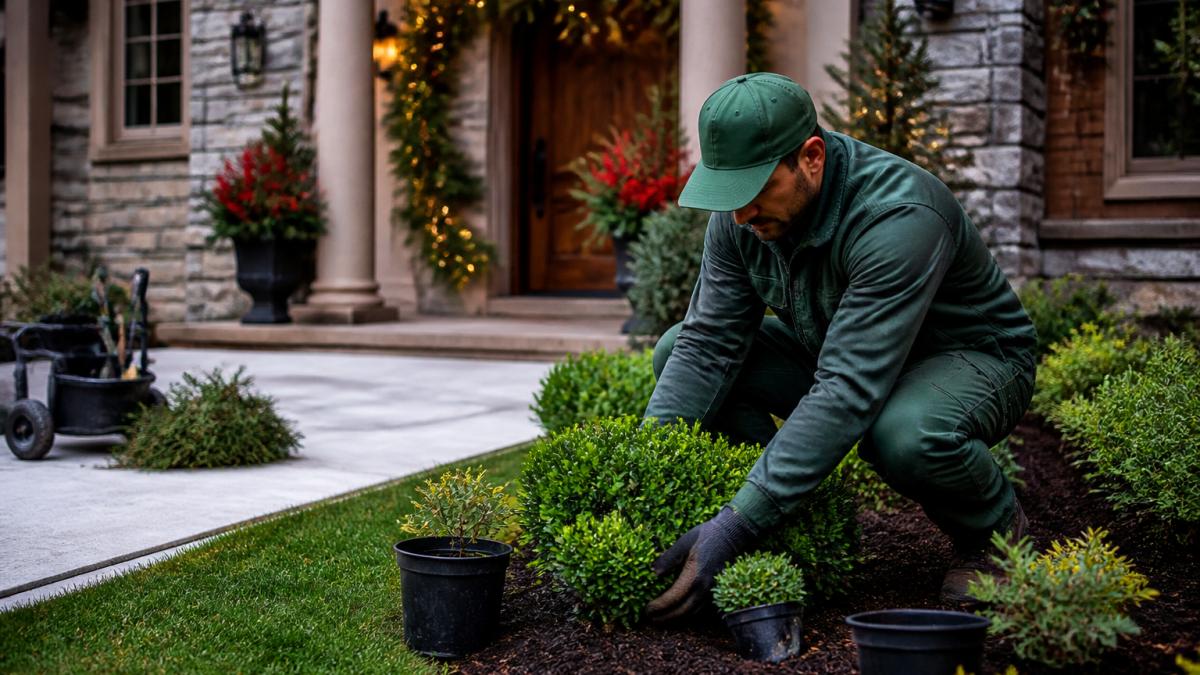
Start with the growing calendar, not the construction calendar. Most field-grown nursery stock is dug during dormancy, and balled-and-burlapped material is harvested in the cooler months and held until planting conditions allow. Container stock is available year-round but limited by what the grower has potted on.
Specify by size, grade, and root condition, not just species. Two trees of the same species can differ enormously in installed cost and survival depending on caliper, height, root ball diameter, and whether they were field-grown or container-grown.
Build substitution rules into the contract before bids go out. The most effective protection against plant-driven schedule slips is a pre-approved substitution list.
Match delivery to installation, not to the truck schedule. Living material degrades the longer it sits on site. Holding a large planting package in a staging yard for two weeks costs water, labor, and sometimes the plant.
Inspect on arrival and document condition before the crew begins. A plant that arrives with a cracked root ball, girdling roots, or dieback should be rejected at the gate, not planted and argued about later.
Plan for climate and regional sourcing realities. Material grown in a different hardiness zone or soil type can struggle after installation even if it looks healthy at delivery. Where possible, source from growers in a comparable climate and confirm the material was not pushed with excessive fertilizer or grown in a way that produces a weak root system. For large programs, splitting the order across two or three regional growers reduces the risk that a single crop failure or weather event wipes out the planting package.
Risk, Cost Control, and Scheduling in Landscape Procurement Strategies
Risk, cost control, and scheduling are the three levers that decide whether a large landscape project lands on budget. They are also where weak procurement planning shows up first, and where landscape work differs from general construction in ways generic procurement advice misses.
Risk allocation. Weather, supply disruption, site conditions, and plant health are the recurring risks on landscape work. The contract should state clearly who carries each one; ambiguity becomes a dispute later.
Package sequencing and interface management. On a large project, landscape procurement does not happen in isolation. Hardscape, irrigation, lighting, and planting packages each have their own lead times and dependencies on other trades. A practical sequence:
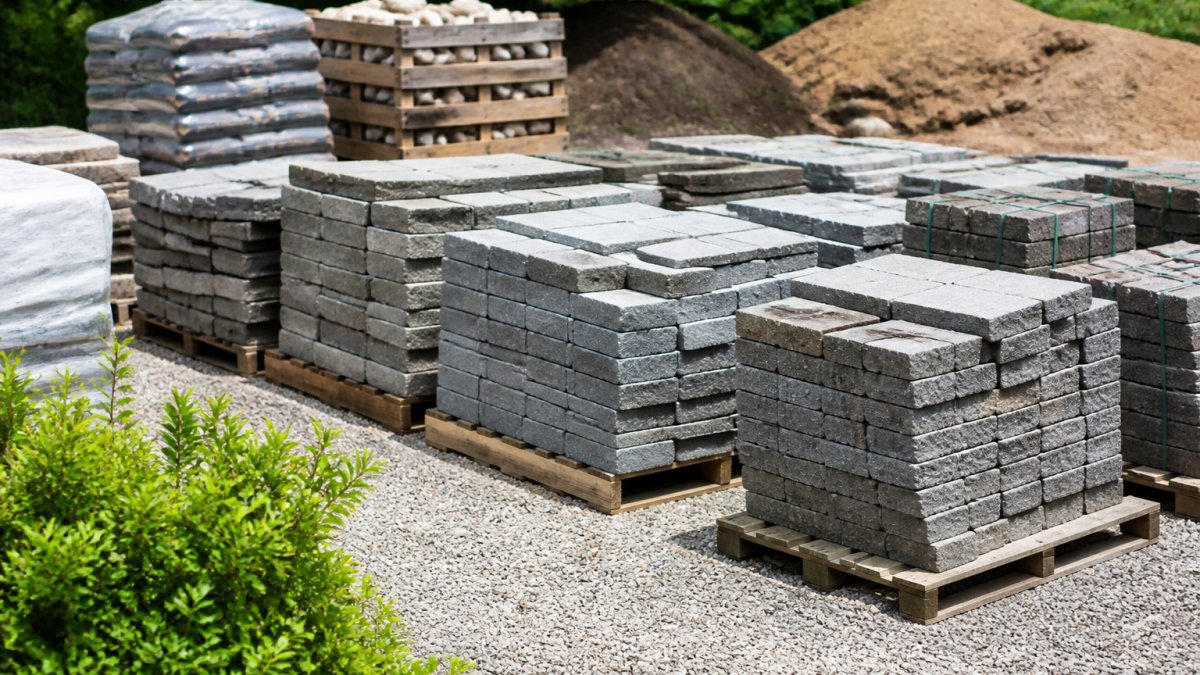
- Early procurement (design phase): long-lead specimen plants, specialty stone, custom lighting fixtures, and any imported or fabricated hardscape elements. These items drive the schedule and must be reserved before the design is finalized.
- Mid-phase procurement (site work underway): irrigation components, standard hardscape materials, soil amendments, and drainage. These can be ordered once site grades are confirmed.
- Late procurement (installation window): annual color, seasonal plantings, and any material that cannot be held on site. These are ordered against a confirmed installation date, not a target date.
Interface management confirms each package is ready before the next starts. Irrigation rough-in must be inspected before hardscape is placed over it. Drainage must be tested before soil is imported. Lighting conduit must be installed before paving is finished.
Cost control and lifecycle cost. Value for money on a large project comes from whole-life cost, not lowest initial price. A cheaper paver that needs replacing in five years costs more than a premium one installed once. The same logic applies to irrigation components and plant stock. A lifecycle cost comparison for landscape procurement should weigh:
- Purchase price, the invoice cost of the material
- Transport and handling, freight, crane time, and staging labor
- Installation cost, labor, equipment, and soil preparation
- Establishment cost, watering, fertilizing, and replacement of failed material during the warranty period
- Maintenance cost, pruning, mowing, irrigation service, and seasonal care over the expected life
- Replacement cost, the expected service life of hardscape, irrigation, and plant material
- Water use, the long-term irrigation demand of the plant palette, which can dwarf the purchase price over a decade
A plant that costs less at the nursery but requires constant watering, replacement, or disease treatment is not cheaper. Procurement decisions that ignore lifecycle cost shift expense from the capital budget to the operating budget, where it is harder to see and control.
Schedule management and early procurement. Early procurement of long-lead items is the most effective schedule protection. If a specialty stone or large specimen tree takes months to source, that clock has to start long before the crew breaks ground.
| Risk | Practical Mitigation | Effect on Project |
|---|---|---|
| Plant unavailability | Approved substitution list with two alternates per specimen | Keeps planting on schedule |
| Weather delays | Buffer windows in the sequence and a defined weather-day clause | Absorbs lost days |
| Material price movement | Lock pricing early where possible; use unit-price allowances for volatile items | Protects the budget |
| Scope drift | Fixed scope in bid documents with a written change-order process | Reduces change orders |
| Supplier underperformance | Defined performance terms, delivery milestones, and retainage | Protects delivery dates |
| Interface failure | Sequenced procurement plan with hold points between packages | Reduces rework |
| Plant establishment failure | Written acceptance at delivery and a defined warranty period | Clarifies responsibility |
A procurement plan that addresses these seven risks covers most of what goes wrong on large landscape installations.
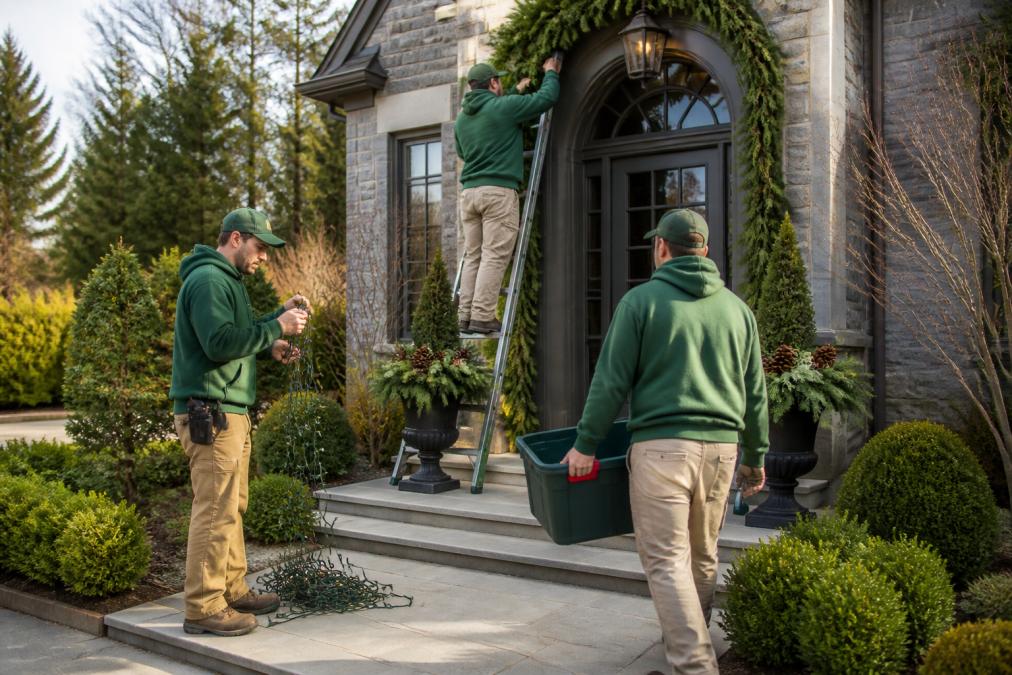
One more package deserves a place in the plan even though it is not living material: holiday lighting and décor. If your project includes holiday lighting and décor, fold it into the procurement schedule alongside the other long-lead packages rather than bolting it on at the last minute.
Frequently Asked Questions
What should a landscape procurement plan include?
A workable plan lists the project scope, a phased schedule, the bid packages you will send out, contractor selection criteria, and a plant and material delivery timeline tied to the build sequence. It should also name who signs off on substitutions and how change orders get approved. Keep it to a few pages the whole team can follow, not a binder nobody opens. For larger properties, add a simple risk list covering weather delays, nursery shortages, and permit timing.
How do you create a procurement strategy for a large landscaping project?
Start with the design intent and budget, then break the work into packages: site prep, hardscape, irrigation, planting, and lighting. Decide which packages you bid together and which you bid separately. Set your contractor selection criteria before you send anything out, so every bid gets scored the same way. Landscape procurement strategies work best when the schedule drives the buying, not the other way around, so lock delivery windows before you award contracts.
How should you evaluate landscaping contractors for a large project?
Score each bidder on licensing and insurance, comparable project experience, crew capacity during your build window, references you actually call, and how clearly they document exclusions. Ask who will be on site daily and whether that person is an employee or a subcontractor. A low bid with vague scope usually costs more later. Request a written change-order process up front, since that is where budgets quietly fall apart on large installs.
How do you manage plant and material lead times in landscape procurement?
Order specimen trees and specialty plant material first, since nurseries grow to order and cannot rush a canopy. Confirm caliper size, root ball type, and spacing before the order is placed. Schedule deliveries to match the installation sequence so plants are not sitting on site in full sun for a week. Build in a substitution rule: if a species is unavailable, who approves the swap, and what size or cultivar is acceptable.
What is the 80/20 rule in procurement?
The idea is that a small share of your suppliers and line items carries most of the value and risk. On a landscape project, that usually means specimen trees, custom stone, and the primary installation contractor. Give those your attention: verify sources, lock dates, and inspect on delivery. Standard mulch, edging, and commodity plants need less scrutiny. Spend your management time where a failure would actually stall the job.
How far ahead should you plan landscape procurement for a large project?
Begin planning before the design is finalized, not after. Early procurement lets you check nursery availability, book the contractor crew for your preferred season, and align permits with the build schedule. Spring and fall install windows fill up, and holiday lighting and décor work competes for the same crews late in the year. Starting the conversation early keeps your project on the calendar instead of waiting for an opening.