 ultimate-guide
Integrated Landscape Care for Estates: A Complete Guide
Table of Contents
- What Integrated Landscape Care Actually Means
- How Integrated Landscape Care Protects Property Value
- Seasonal Landscape Care Checklist for Year-Round Health
- Integrated Pest Management for Estates
- Irrigation System Optimization and Soil Health
- Why One Trusted Provider Beats Multiple Contractors
- Building a Sustainable Landscape Management Plan
- Frequently Asked Questions
Last Updated: September 28, 2026
What Integrated Landscape Care Actually Means
Integrated landscape care is a comprehensive approach to managing your entire outdoor property as a connected system rather than a collection of separate projects. Instead of calling different contractors for irrigation, pest control, masonry, and seasonal maintenance, integrated landscape care coordinates all these services under one strategic plan focused on long-term property health and aesthetics.
At Four Seasons Landscaping NY, we treat your estate as an asset requiring continuous stewardship. This means understanding how soil health, irrigation efficiency, seasonal timing, and plant selection work together to create a landscape that doesn't just look beautiful today, it thrives for decades.
The distinction matters. A fragmented approach might address one problem (say, a pest outbreak) without considering how that solution affects soil health or irrigation patterns. Integrated landscape care prevents these disconnects by maintaining a holistic view of your property's needs across all seasons and systems.
How Integrated Landscape Care Protects Property Value
Property valuation depends heavily on curb appeal, structural integrity of outdoor features, and the long-term health of specimen plants and hardscape elements. A single neglected season can trigger years of decline: dead trees reduce property value, failing irrigation systems damage soil structure, and deferred maintenance compounds exponentially.
Integrated landscape care protects this investment by catching problems early through systematic site assessment and preventative care. When your estate is managed as a unified system, seasonal care follows a maintenance schedule designed specifically for your property's conditions, not a generic calendar.
The financial logic is straightforward: proactive management prevents costly emergency repairs. A specimen plant that receives proper soil care, irrigation optimization, and integrated pest management stays healthy. The same plant neglected for two years may require removal and replacement, a far more expensive outcome.
Seasonal Landscape Care Checklist for Year-Round Health
A seasonal landscape care checklist ensures your property receives the right attention at the right time. This supporting keyword reflects a core principle: timing is everything in landscape stewardship. More importantly, seasonal neglect creates compounding liability and asset depreciation that integrated planning prevents.
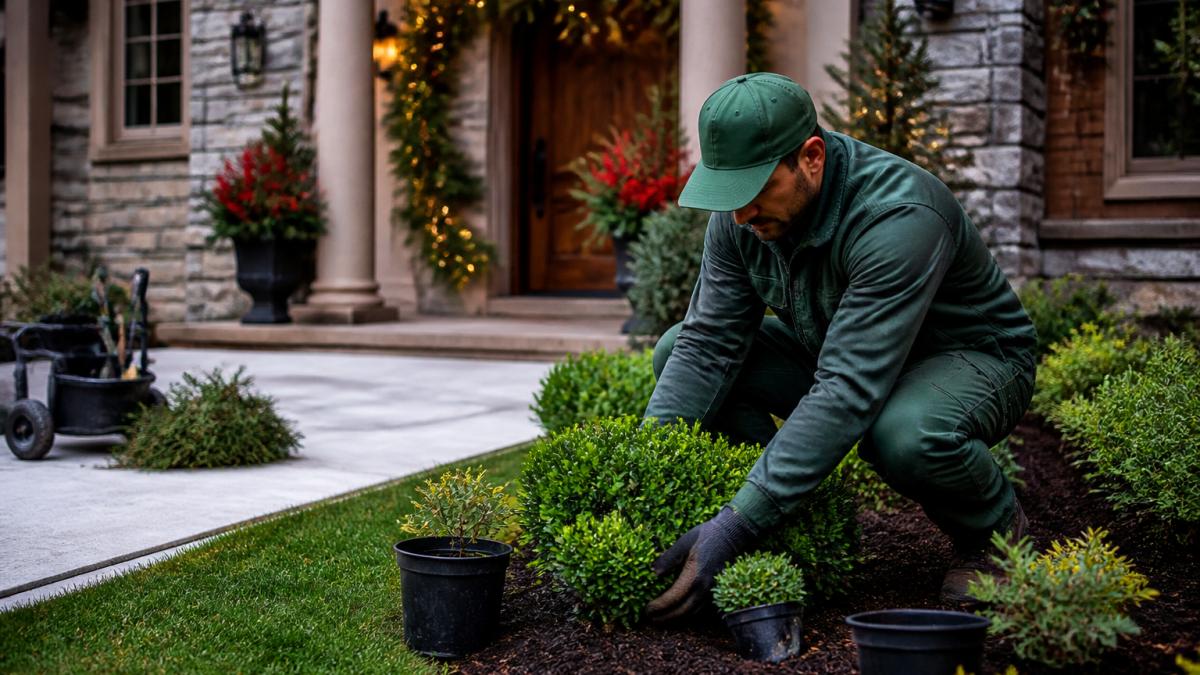
Spring (March-May): Winter damage assessment identifies hazards before they become liability risks, dead branches that could fall, frost heave damage to hardscape, soil compaction from snow and salt. Pruning dead wood reduces disease vectors and pest habitat. Irrigation system startup must include pressure testing and nozzle inspection to catch leaks that waste water and damage soil structure. Early pest management application (before populations peak) reduces chemical dependency later in the season. Mulch refresh in planting beds regulates soil temperature and moisture, critical for specimen plant establishment after winter stress.
Summer (June-August): This is the critical monitoring window. Irrigation efficiency directly impacts both water conservation and plant survival during heat stress. Soil moisture monitoring (manual or sensor-based) prevents both overwatering (which causes root disease and fungal issues) and underwatering (which stresses plants and makes them vulnerable to pest damage). Weed management before mid-summer prevents seed set that compounds problems into fall. Hardscape inspection catches drainage failures early, clogged gutters and downspouts create water damage to foundations and landscape features. Regular site walks identify pest activity, disease symptoms, and irrigation malfunctions before they escalate.
Fall (September-November): Dormancy preparation is not cosmetic, it's asset protection. Soil aeration improves drainage and root development before winter. Fall fertilization strengthens root systems and cold hardiness. Debris removal (leaves, branches, plant material) eliminates pest overwintering habitat and prevents drainage blockages. Hardscape inspection for winter damage risks (cracked pavers, loose stones, failing mortar) allows repairs before freeze-thaw cycles worsen damage. Gutter and drainage system cleaning prevents ice dam formation and water infiltration.
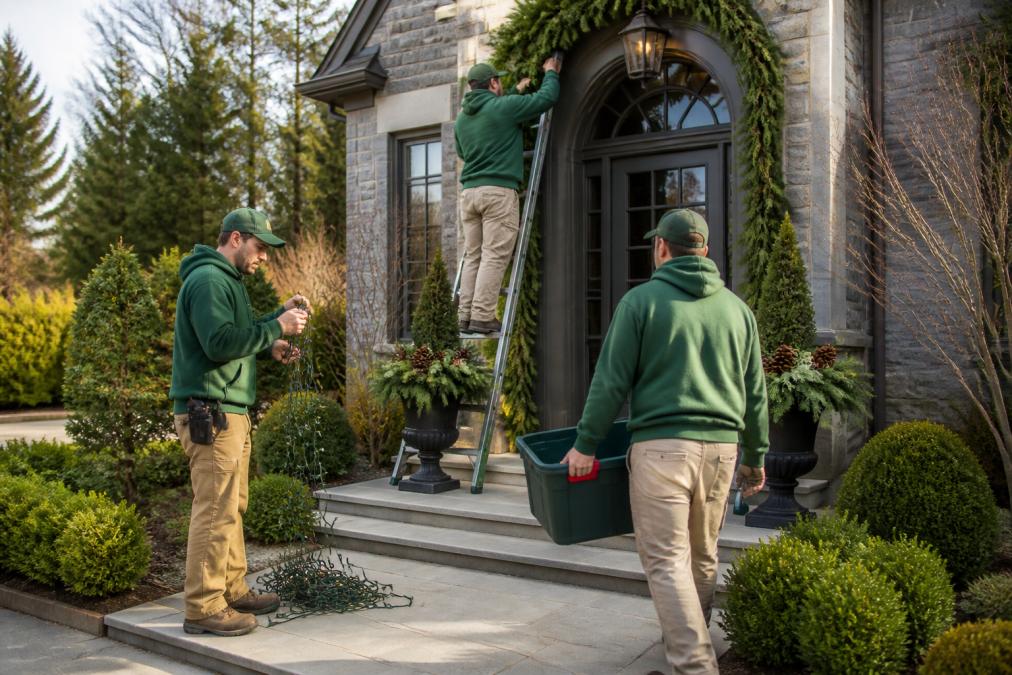
Winter (December-February): Planning is the often-overlooked leverage point. Strategic review of the past year's performance, which plants struggled, where irrigation failed, what pest pressure emerged, informs next year's adjustments. Snow and ice management protects hardscape and prevents slip-and-fall liability. Sensitive plant protection (wrapping, screening) prevents winter burn and breakage. Irrigation system winterization prevents freeze damage that can require expensive repairs. Spring project scheduling ensures contractors are booked and materials are sourced before the rush. Winter is also the ideal time to enhance your property's evening presence with Holiday Lighting and Décor, transforming your estate into an elegant seasonal showcase while adding security and ambiance during the darker months.
The difference between a generic seasonal schedule and an integrated plan is accountability. A comprehensive provider tracks which tasks were completed, documents site conditions, and adjusts the plan based on actual performance. This creates a documented record that protects your property and demonstrates due diligence for insurance and liability purposes.
Integrated Pest Management for Estates
Integrated pest management for estates combines monitoring, prevention, and targeted treatment to protect plant health without relying solely on chemical solutions. This approach reduces environmental impact while maintaining landscape aesthetics and specimen plant vigor.
The strategy works in layers. First, proper soil health and irrigation create conditions where plants naturally resist pest pressure. Second, regular site monitoring catches infestations early when they're easier to address. Third, treatment escalates only when necessary, starting with cultural practices, moving to biological controls, and using chemical intervention only as a last resort.
A common mistake is treating pest management as separate from overall landscape care. In reality, a plant struggling from poor drainage is far more vulnerable to pest damage than one receiving proper integrated landscape care. The prevention happens upstream.
Irrigation System Optimization and Soil Health
Irrigation efficiency directly impacts both water conservation and plant health. Many estates operate irrigation systems installed years ago, delivering water by schedule rather than by actual plant need. This wastes water while potentially creating conditions that harm specimen plants through overwatering.
Irrigation system optimization involves assessing your property's zones, soil composition, plant types, and drainage patterns, then adjusting delivery to match actual needs. Smart scheduling, proper nozzle selection, and soil health improvements work together to reduce water use while improving plant vigor.
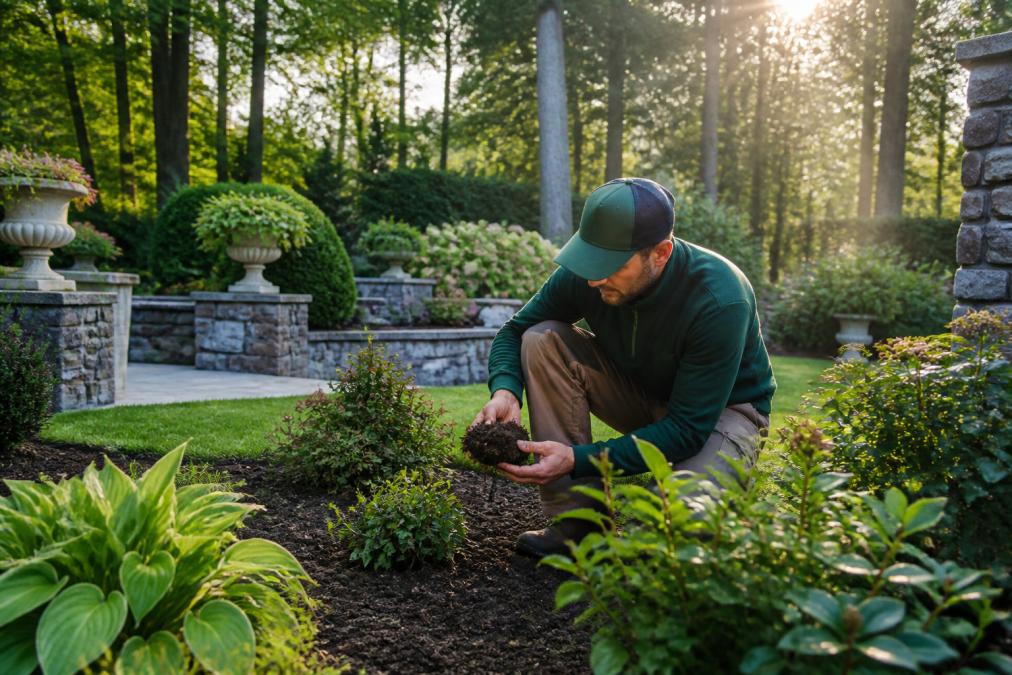
Soil health underpins everything in integrated landscape care. Compacted, depleted soil requires constant chemical inputs and struggles to support healthy root systems.
Why One Trusted Provider Beats Multiple Contractors
Coordination across multiple contractors creates gaps, but the real cost is hidden in liability and asset risk. Your irrigation specialist doesn't know what the masonry contractor is doing. Your pest management provider doesn't see the seasonal care schedule. Each contractor optimizes for their specific service, not for your property's overall health or risk exposure.
Risk Management and Liability Reduction
-
Tree hazard assessment: Dead or diseased trees are a documented liability. A comprehensive provider conducts regular tree inspections, documents hazard conditions, and coordinates removal or treatment before failure occurs. Multiple contractors miss this entirely, the irrigation company doesn't assess tree health, the masonry contractor doesn't evaluate branch overhang risk. A single provider maintains a documented tree inventory and hazard log, which demonstrates due diligence if an incident occurs.
-
Slip-and-fall prevention: Drainage failures, algae growth on hardscape, and poor grading create slip hazards. When multiple contractors work independently, drainage improvements by one contractor can be undermined by grading decisions made by another. An integrated provider designs and maintains drainage systems holistically, reducing standing water and surface hazard conditions.
-
Pest and disease management: Uncoordinated pest treatment can damage beneficial insects or create chemical interactions. An integrated provider maintains a unified pest management strategy that reduces chemical use, documents treatment history, and prevents the escalation that occurs when multiple providers each apply their own solutions.
-
Documented compliance: Insurance carriers and property managers increasingly require documented maintenance records. A single provider maintains a unified service log, photographic documentation, and compliance records that prove ongoing stewardship. Multiple contractors create fragmented records that are difficult to audit and don't demonstrate systematic care.
Operational Efficiency and Accountability
-
Scheduling conflicts: When you work with multiple contractors, irrigation startup might be delayed because the masonry crew is still working in that zone. A single provider controls the schedule and sequences work efficiently.
-
Communication gaps: The pest management contractor doesn't know that the irrigation system was just repaired, so they don't adjust treatment timing. The seasonal maintenance crew doesn't coordinate with the hardscape contractor. These gaps lead to rework and missed opportunities.
-
Quality consistency: Different contractors have different standards. One maintains mulch at 3 inches; another at 2 inches. One prunes to industry standards; another doesn't. A single provider maintains consistent quality across all services.
-
Accountability: When something goes wrong, multiple contractors point fingers. A single provider owns the outcome and is incentivized to solve problems rather than defend their piece of the work.
Technology Integration
Building a Sustainable Landscape Management Plan
A sustainable landscape management plan considers environmental impact, resource efficiency, and long-term property stewardship. This goes beyond basic maintenance to include plant selection for climate resilience, water conservation strategies, and practices that support local ecosystems.
Frequently Asked Questions
How does integrated landscape care differ from standard lawn maintenance?
Standard lawn maintenance focuses on mowing, edging, and basic upkeep. Integrated landscape care coordinates design, hardscape, irrigation, pest management, soil health, and seasonal planning as one cohesive system. This unified approach prevents costly mistakes, like irrigation damage to newly installed plantings or pest infestations spreading unchecked, and ensures every element supports the others. You get strategic asset protection, not just reactive yard work.
Does professional integrated landscape care increase property value?
Yes. A well-executed landscape management plan demonstrably enhances curb appeal, maintains specimen plants in peak condition, and protects hardscape investments. Properties with comprehensive estate stewardship show stronger resale value and faster sales. Buyers recognize the difference between a neglected yard and one backed by professional horticultural expertise and preventative care. The ROI compounds over time as your landscape assets appreciate rather than deteriorate.
What should be included in a seasonal landscape care checklist?
A proper checklist covers spring soil assessment and aeration, summer irrigation efficiency and pest monitoring, fall leaf management and specimen plant pruning, and winter hardscape inspection plus holiday lighting setup. Each season addresses different risks: spring prevents soil compaction, summer guards against drought stress and pest damage, fall prepares plants for dormancy, and winter protects infrastructure. A comprehensive schedule ensures nothing falls through the cracks and your landscape stays healthy year-round.
How does integrated pest management protect estates without overusing chemicals?
Integrated pest management for estates combines monitoring, cultural practices, and targeted intervention. Regular site assessments catch pest pressure early, proper irrigation and soil health reduce plant stress (which attracts pests), and strategic pruning improves air circulation. Chemical applications, when needed, are precise and minimal. This approach protects your specimen plants and hardscape investments while reducing environmental impact and long-term treatment costs.