 how-to
How to Design a Backyard for Entertaining
Table of Contents
- Step 1: Plan Your Backyard Layout and Activity Zones
- Step 2: Create Backyard Entertaining Ideas for Dining and Lounging
- Step 3: Design an Outdoor Entertaining Space with Proper Shade
- Step 4: Implement Backyard Lighting Ideas for Ambiance
- Step 5: Plan Outdoor Kitchen Design and Food Preparation
- Step 6: Add Landscaping, Greenery, and Finishing Touches
- Step 7: Budget, Materials, and Professional Design Support
- Frequently Asked Questions
Last Updated: October 5, 2026
Step 1: Plan Your Backyard Layout and Activity Zones
How to design a backyard for entertaining starts with a clear plan. Before you buy a single light fixture or piece of furniture, map out what your space needs to do.
Think of your backyard as a series of zones. Each zone serves a different purpose. One area might be for dining. Another handles lounging.
Assess your space and identify constraints
Start by measuring your backyard carefully. Note the sun's path throughout the day.
Walk your yard at different times. Morning light feels different than afternoon. Evening shadows tell you where shade naturally falls.
Document what you see:
- Total square footage
- Sun exposure (full sun, partial shade, full shade)
- Existing trees or structures
- Slope or level changes
- Problem areas (wet spots, poor drainage)
- Views you want to keep or hide
At Four Seasons Landscaping NY, we start every project this way. Understanding your actual space prevents costly mistakes later.
Divide the backyard into functional zones
A successful backyard entertaining space needs clear separation between activities. Without zones, everything blurs together and nothing feels intentional.
Create distinct areas using these methods:
- Pavers or decking, Define boundaries with hard surfaces
- Landscaping, Use plantings to separate spaces visually
- Elevation changes, Multi-level designs naturally divide zones
- Shade structures, An awning or covered area becomes its own zone
- Furniture placement, Groupings create implied boundaries
The zones you need depend on how you entertain. A family with young children needs play space. Dinner hosts need a dining area. Cocktail parties work best with a lounge zone and standing room.
Step 2: Create Backyard Entertaining Ideas for Dining and Lounging
Once your zones are mapped, design the two most important areas: where people eat and where they relax.
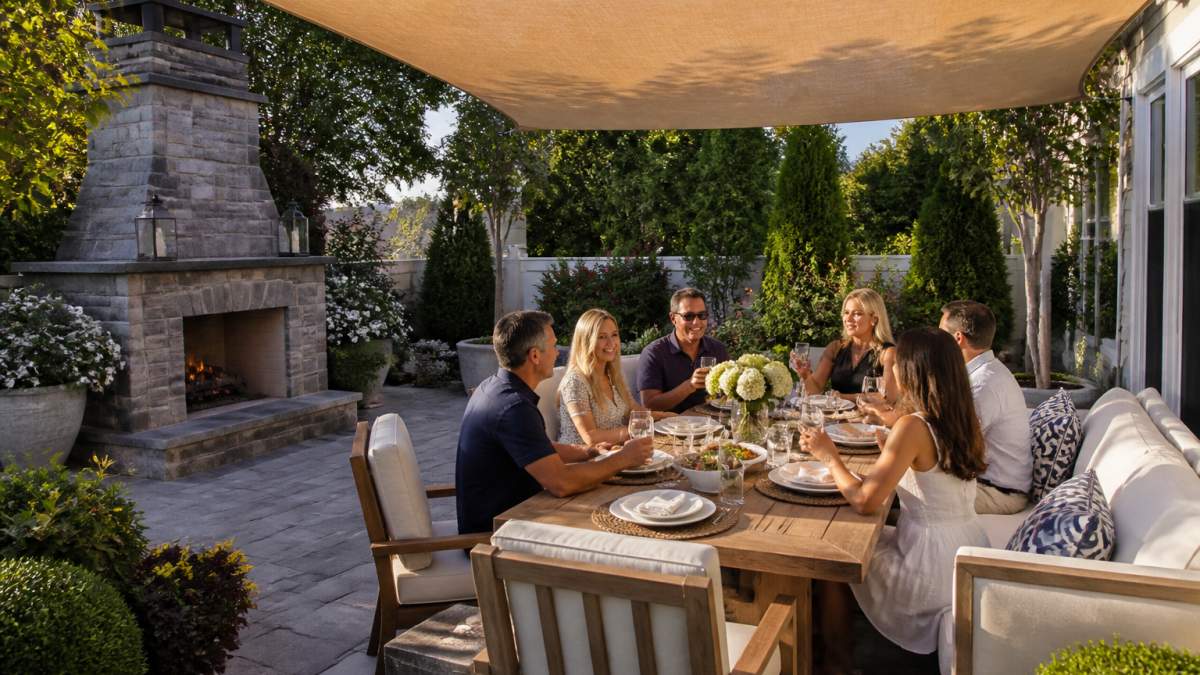
Design a dedicated dining area
A dining zone needs a table, seating for your typical guest count, and clearance to move around it.
A standard dining table is 36 inches wide and 60 inches long. Add 18 inches on each side for chairs and movement.
Position your dining area thoughtfully:
- Place it close to your kitchen or prep area for easy food service
- Avoid positioning directly under trees (falling debris and droppings)
- Orient it away from afternoon sun if possible, or plan for shade
- Ensure sightlines to the rest of your entertaining space
Consider the surface beneath the table. Pavers work well and drain properly. Decking is comfortable underfoot.
Build a comfortable lounge zone
A lounge area is where people relax between meals or gather for conversation. This zone needs comfortable outdoor seating, good sightlines, and room to move.
Start with quality outdoor furniture. Durable pieces in weather-resistant materials last years. Look for:
- Cushioned seating with removable, washable covers
- Sturdy frames that won't tip or wobble
- Materials rated for your climate
Add layers to the lounge space:
- A low table for drinks and snacks
- Outdoor rugs to define the space and add comfort
- Potted plants for greenery and texture
- Cushions and throws for softness
The lounge zone should feel separate from dining but connected to the overall flow. Position it where guests can see the house and the yard. This creates a sense of security and keeps people engaged.
Step 3: Design an Outdoor Entertaining Space with Proper Shade
Shade transforms a backyard from uncomfortable to inviting. Without it, guests retreat indoors on hot days.
Choose shade structures for comfort
Multiple shade options work together to cool your space:
- Shade sails, Flexible, modern, and affordable. Install them between posts or trees.
- Awnings, Permanent or retractable. Excellent for covering dining or lounge areas.
- Pergolas, Partial shade with architectural interest. Good for defining zones.
- Trees, The best long-term shade. Plant them now for future benefit.
- Umbrellas, Portable and flexible. Good for tables and lounging areas.
Combine multiple types. A pergola over your lounge area plus umbrellas at the dining table gives you flexibility. Shade sails over the main entertaining zone provide broad coverage.
Position shade structures carefully:
- Block afternoon sun (west-facing)
- Avoid blocking morning light (east-facing)
- Consider sightlines and views
- Ensure structures are secure and rated for wind
Position seating for conversation and flow
How you arrange furniture determines how guests interact. Tight clusters encourage conversation. Spread-out arrangements work for large parties.
For lounging, arrange seating in a circle or U-shape. This lets people see and talk to each other.
For dining, a single table works for up to eight people.
Leave clear pathways through your entertaining space.
Step 4: Implement Backyard Lighting Ideas for Ambiance
Lighting extends your entertaining hours and creates atmosphere. The right backyard lighting ideas transform an ordinary yard into a magical space after dark.
Layer lighting for function and atmosphere
Use three types of lighting together:
Task lighting, Bright enough to see. Use for dining and food prep areas. Overhead lights or hanging fixtures work well.
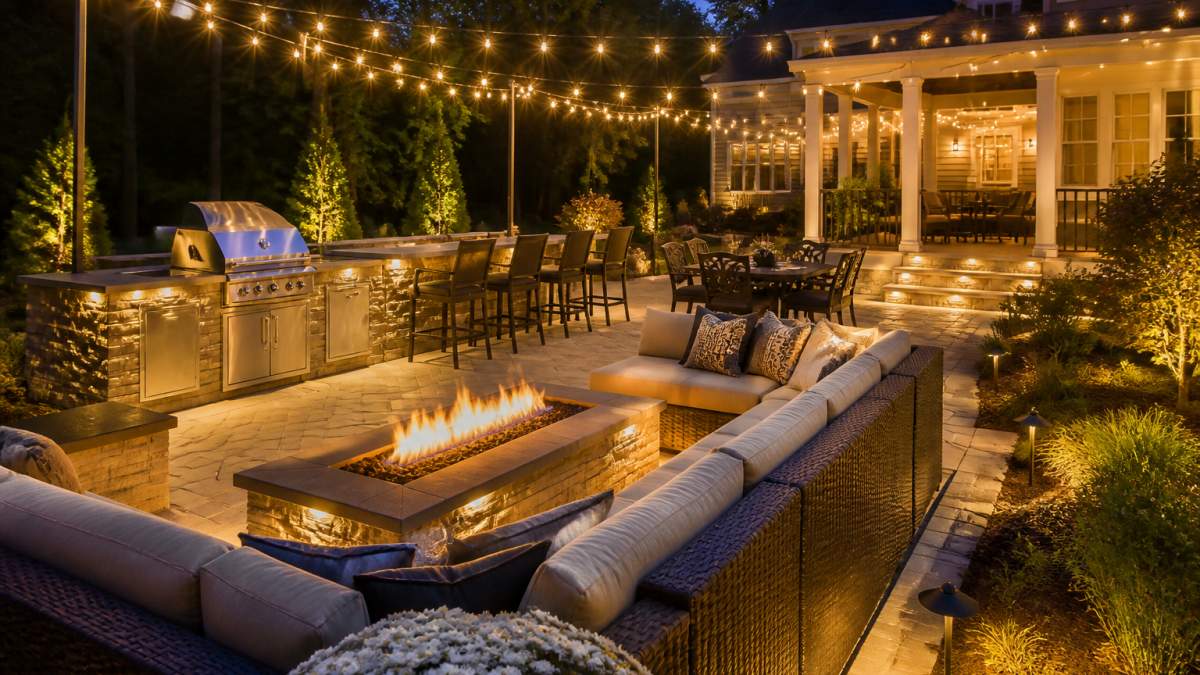
Ambient lighting, Soft, general illumination. String lights, lanterns, and uplighting create mood. This is the backbone of entertaining ambiance.
Accent lighting, Highlights specific features. Spotlight landscaping, architectural elements, or focal points.
String lights are the easiest way to add ambiance. Hang them overhead in a grid or swooping pattern. They're warm, inviting, and relatively inexpensive to install.
Consider these lighting options:
- String lights strung overhead
- Solar lanterns placed on tables
- Uplighting on trees or structures
- Pathway lights to guide guests
- Candles in hurricane glasses (wind-safe)
Highlight landscaping and architectural features
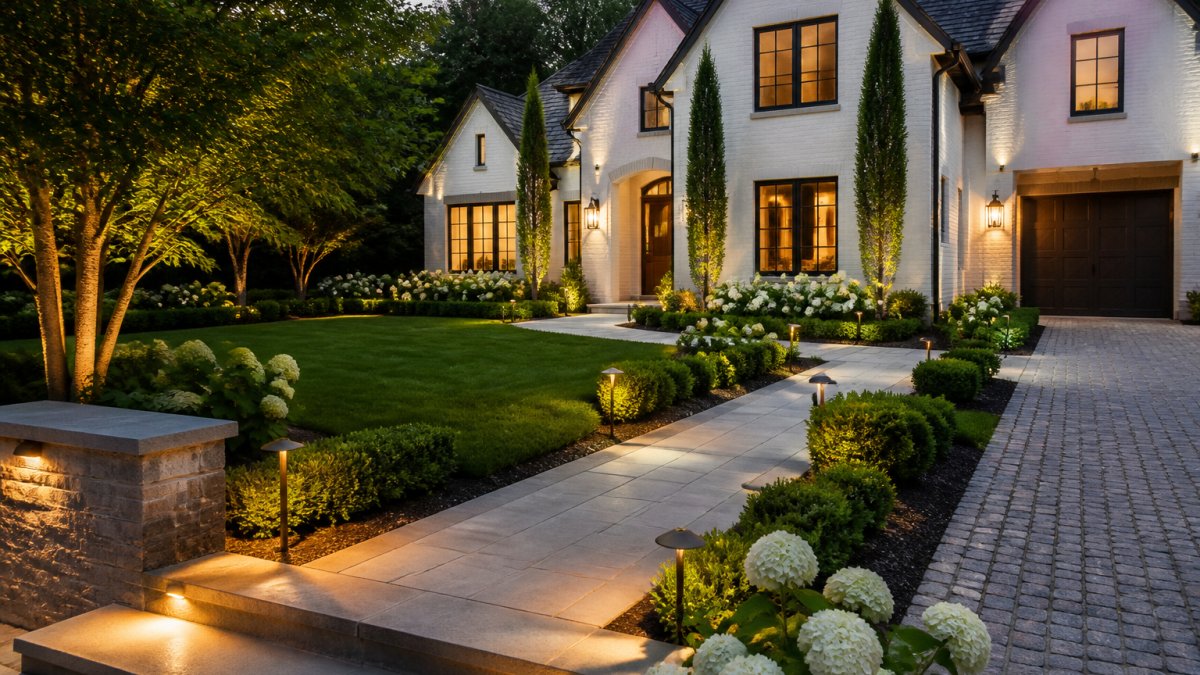
Use accent lighting to showcase your yard's best features. Uplighting on a mature tree creates drama. Spotlighting a stone wall adds dimension.
Position lights at ground level pointing upward for trees and structures. This creates shadows and depth that feel sophisticated.
Test lighting placement during the day. Walk your space at dusk to see how light falls.
Step 5: Plan Outdoor Kitchen Design and Food Preparation
How you serve food shapes the entire entertaining experience. A well-designed food prep area keeps guests happy and you less stressed.
Determine your food service needs
Think about how you actually entertain. Do you host sit-down dinners or cocktail parties? Casual cookouts or formal events?
Sit-down dinners need a full dining setup and kitchen access. Cocktail parties work with passed appetizers and a drink station. Cookouts require a grill and prep space.
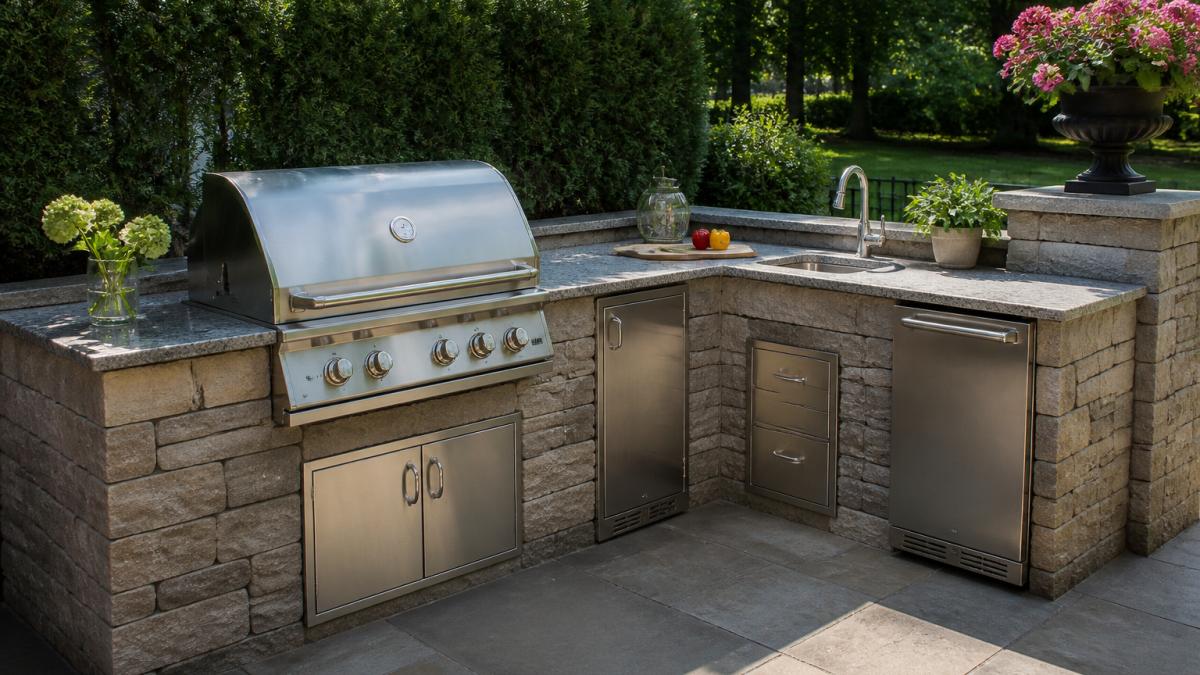
Your food service approach determines what infrastructure you need:
- Grill or outdoor cooking equipment
- Prep table or counter space
- Serving table or bar
- Ice storage or cooler
- Trash and recycling bins
Position prep and serving areas for efficiency
Keep food prep close to your house. This minimizes trips carrying heavy items.
Arrange prep, cooking, and serving in a line. Raw food → cooking → plated food → serving → dining.
Position your grill where smoke and heat don't blow toward guests. Keep it away from lounge areas.
Create a separate drink station if you host large parties.
Step 6: Add Landscaping, Greenery, and Finishing Touches
Landscaping transforms a bare yard into an inviting outdoor sanctuary. Plants define spaces, add color, and create the feeling of an outdoor room.
Use plants to define spaces and add texture
Plantings work as living walls. They divide zones without blocking sightlines completely. A row of shrubs separates the lounge area from the dining zone.
Add texture with varied plant types:
- Tall plants (trees, tall shrubs) for structure
- Medium plants (shrubs, ornamental grasses) for layering
- Low plants (groundcover, perennials) for softness
- Potted plants (herbs, flowers) for flexibility
Consider year-round interest. Plants that look good in summer might be bare in winter. Mix evergreens with deciduous plants for consistent coverage.
Potted plants offer flexibility. Move them to highlight different areas or refresh the look seasonally.
Incorporate hardscaping and architectural interest
Hardscaping includes pavers, decking, stone walls, and built structures. These elements anchor your design and provide the foundation for entertaining.
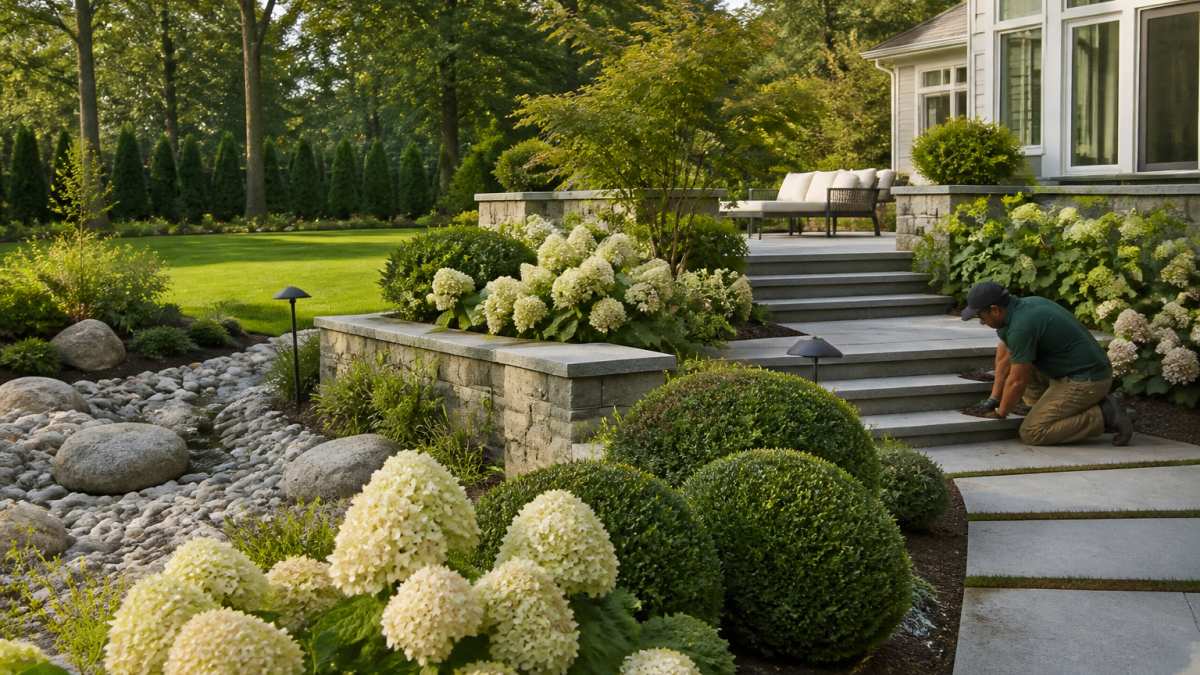
Pavers create defined spaces and improve drainage. They're durable and weather well. Stone walls add permanence and visual weight.
Add architectural interest with:
- Stone or brick pathways
- Raised planting beds
- Water features (fountains, small ponds)
- Seating walls that double as planting edges
- Arbors or trellises for vertical interest
Four Seasons Landscaping NY specializes in combining hardscaping and plants to create cohesive outdoor living spaces.
Step 7: Budget, Materials, and Professional Design Support
A successful backyard entertaining space requires planning, materials, and sometimes professional help.
Understand cost trade-offs and durability
Materials vary widely in durability and maintenance. Pressure-treated wood decking is affordable but requires regular maintenance.
Stone pavers are durable and beautiful but labor-intensive to install. Concrete is cheaper and faster but less elegant.
Outdoor furniture ranges from budget-friendly to luxury. Quality matters for comfort and longevity.
Consider the full lifecycle cost:
- Initial purchase price
- Installation or assembly costs
- Maintenance and repairs
- Replacement timeline
- Your actual usage
A more expensive option that lasts ten years might cost less than a cheap option replaced every two years.
When to bring in professional help
Some projects require expertise. Large hardscaping projects benefit from professional installation.
How to design a backyard for entertaining gets complicated when your space has challenges.
Four Seasons Landscaping NY brings twenty years of experience to backyard projects.
We also offer holiday lighting and décor services.
Designing a backyard for entertaining requires planning, thoughtful layout, and quality materials.
Four Seasons Landscaping NY transforms backyards into stunning outdoor sanctuaries. Our transparent approach means no hidden fees and clear communication throughout your project. Get Your Free Quote today and let us show you how a professionally designed backyard elevates your entire property.
Frequently Asked Questions
How do you plan a backyard for entertaining?
Start by assessing your space and identifying how much room you have to work with. Divide the backyard into separate zones for dining, lounging, and play if needed. Consider traffic flow, sun exposure, and sight lines. Sketch out a rough layout showing where seating, food prep, shade, and landscaping will go. Think about your typical guest count and the types of gatherings you'll host. Professional landscape design can help you maximize space and create a cohesive plan that works for your property.
What should a backyard entertaining area include?
A well-designed backyard entertaining space needs seating and dining furniture, adequate shade from an awning or shade sail, good lighting for evening gatherings, and defined activity zones. Include a food preparation or serving area, landscaping to create visual interest and define spaces, and durable outdoor rugs or pavers to anchor zones. Comfortable cushions, potted plants, and string lights add warmth and ambiance. The specific elements depend on your entertaining style and guest capacity.
What is the best lighting for an outdoor entertaining area?
Layer your lighting for both function and atmosphere. Use overhead fixtures or string lights for ambient lighting, task lighting near dining and prep areas for safety and visibility, and accent lighting to highlight landscaping or architectural features. Solar-powered or LED options are energy-efficient and low-maintenance. Dimmable lights give you flexibility to adjust mood throughout the evening. Consider uplighting trees, backlighting shrubs, and pathway lighting to guide guests safely while creating an inviting outdoor oasis.
How can you make a small backyard work for entertaining?
In a smaller space, choose multi-functional furniture like benches with storage or tables that can expand. Use vertical landscaping and wall-mounted planters to add greenery without consuming floor space. A single shade structure or awning can define your entertaining zone and make it feel more intentional. Lighting and thoughtful furniture arrangement create the illusion of more space. Focus on one primary gathering area rather than trying to fit multiple zones. Professional design can help you maximize every square foot and create an inviting backyard gathering space despite limited size.