 ultimate-guide
How to Choose Patio Pavers for Westchester Homes
Table of Contents
- How to Choose Patio Pavers for Westchester Homes
- Understanding Paver Materials and Types
- Natural Stone vs. Concrete Pavers Comparison
- Best Patio Paver Materials for Freeze-Thaw Cycles
- Paver Patio Design Trends for Luxury Homes
- Westchester-Specific Soil and Drainage Challenges
- Installation Process and Foundation Requirements
- Long-Term Maintenance Schedule for Northeast Climates
- Frequently Asked Questions
Last Updated: September 25, 2026
How to Choose Patio Pavers for Westchester Homes
Selecting the right patio pavers for your Westchester home involves understanding how local climate, soil conditions, and your aesthetic preferences work together. The process is far simpler when you know what to prioritize. The freeze-thaw cycles that define Northeast winters, the drainage challenges specific to Westchester County soils, and the durability standards for luxury outdoor living spaces all shape which materials will actually perform for you year after year. Below, we'll walk you through the key factors that separate pavers that last from those that fail, and how to choose patio pavers that match both your vision and your property's unique conditions.
Understanding Paver Materials and Types
The foundation of any patio decision starts with material selection. Each paver type brings different strengths to the table, and what works beautifully in one context may underperform in another.
Interlocking pavers are engineered concrete units designed to lock together without mortar. They're popular in Westchester because they handle freeze-thaw cycles reasonably well when installed over a proper sub-base compaction layer. The real advantage is flexibility: if one paver cracks or settles, you can replace it individually without disrupting the entire patio. Installation typically involves laying them on a crushed stone base, then sweeping joint sand into the gaps. Most homeowners see this as the practical middle ground, not the cheapest option, but often more forgiving than natural stone if your foundation shifts.
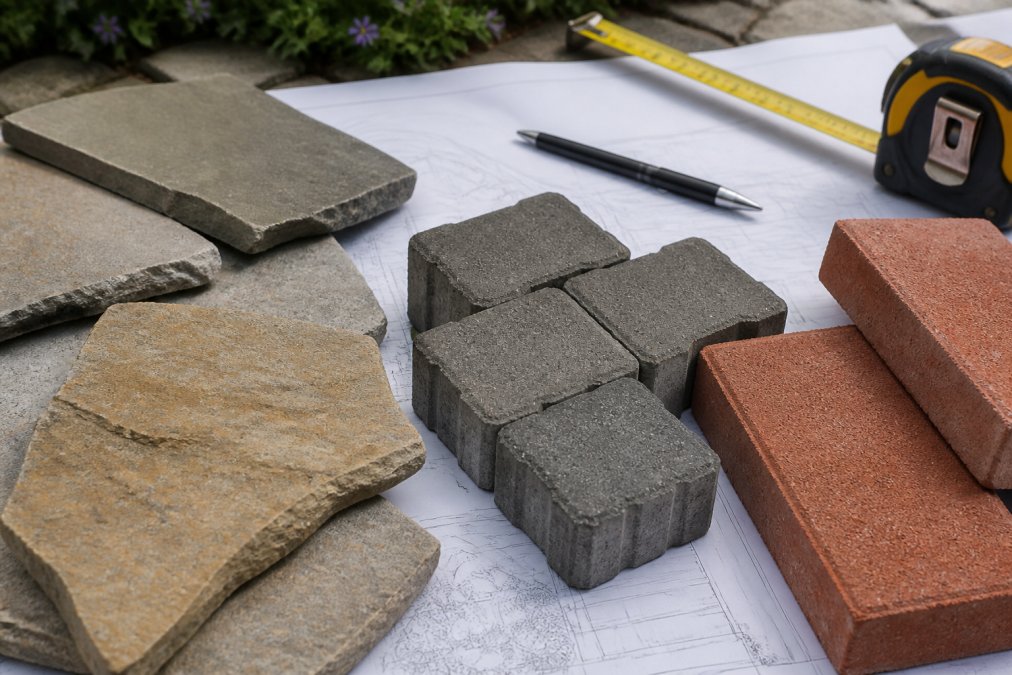
Flagstone and natural stone options deliver the luxury aesthetic that defines high-end Westchester properties. Slate, bluestone, and granite offer visual depth and warmth that stamped concrete simply cannot match. The trade-off is real: natural stone often demands more maintenance, can be slippery when wet, and may require professional sealing to resist staining and efflorescence (the white mineral deposits that appear on stone surfaces). Flagstone can also be more prone to cracking under freeze-thaw stress if not installed on a solid, well-draining base. For luxury homes where appearance is non-negotiable, the aesthetic payoff often justifies the extra care.
Stamped concrete and clay brick alternatives occupy the middle ground. Stamped concrete mimics the look of natural stone at a lower cost and with easier maintenance. Clay brick offers warmth and traditional charm, though it's less common in modern luxury installations. Both can be affected by the Northeast's harsh winters, concrete can spall (surface deterioration), and brick can absorb moisture that freezes and expands. These materials work best when sealed properly and installed over a strong sub-base.
Natural Stone vs. Concrete Pavers Comparison
The choice between natural stone and concrete fundamentally shapes your maintenance burden and long-term costs.
| Paver Type | Durability | Maintenance | Aesthetic | Best For |
|---|---|---|---|---|
| Natural Stone (Flagstone, Bluestone) | High with proper sealing | Requires annual sealing, stain-prone | Luxury, warm, unique | High-end homes, showcase patios |
| Interlocking Concrete | Good with proper base | Minimal; occasional joint sand refresh | Modern, consistent | Active families, high-traffic areas |
| Stamped Concrete | Moderate; prone to spalling | Seal every 2-3 years, watch for cracks | Mimics stone, uniform | Budget-conscious luxury look |
| Clay Brick | Moderate; frost-sensitive | Moderate; can absorb moisture | Traditional, warm | Period homes, lower-traffic areas |
Durability and load-bearing capacity matter more than most homeowners realize. Natural stone like bluestone and granite have exceptional compressive strength, they'll support heavy furniture, vehicles, and foot traffic without degrading. Concrete pavers are engineered for residential loads but can crack under extreme stress or poor base preparation. The real failure point isn't always the paver itself; it can be the foundation beneath it. A patio installed over inadequate crushed stone base or poor drainage slope may fail regardless of how premium the surface material is.
Maintenance expectations and sealing separate pavers that age gracefully from those that deteriorate. Natural stone requires sealing every 1-2 years to prevent staining, water absorption, and efflorescence. Concrete pavers benefit from sealing every 2-3 years to resist spalling and color fading. Unsealed pavers in the Northeast will absorb moisture that freezes, expands, and cracks the surface. This maintenance is important for the longevity of your patio.
Best Patio Paver Materials for Freeze-Thaw Cycles
Westchester winters are unforgiving. Understanding how freeze-thaw damage occurs is the key to avoiding it entirely.
How freeze-thaw damage occurs in the Northeast starts with water absorption. When a paver absorbs moisture and temperatures drop below freezing, that water expands as it turns to ice. This expansion creates internal stress that cracks the paver from the inside out. Over multiple freeze-thaw cycles (which Westchester experiences 30-40 times per winter), even small cracks grow into visible damage. Unsealed pavers are most vulnerable. Natural stone like flagstone can be particularly susceptible if not sealed regularly. Concrete pavers with air entrainment (tiny air bubbles built into the mix) handle freeze-thaw better than solid concrete.
Sub-base compaction and drainage slope essentials are where most patios succeed or fail. A proper patio foundation requires 4-6 inches of compacted crushed stone base, graded to slope away from your home at roughly 1 inch of drop per 4 feet of distance. This slope ensures water runs off rather than pooling on the surface or seeping beneath the pavers. Without proper compaction, the base settles unevenly, creating low spots where water collects and freezes. The paver itself may be premium, but a weak foundation guarantees failure. Edge restraint, solid borders that prevent pavers from shifting outward, is equally critical. Many DIY installations may skip this step, which can lead to patios spreading apart.
Paver Patio Design Trends for Luxury Homes
Aesthetics matter as much as function in Westchester's luxury market. The right design choices elevate your outdoor living space and increase property value.
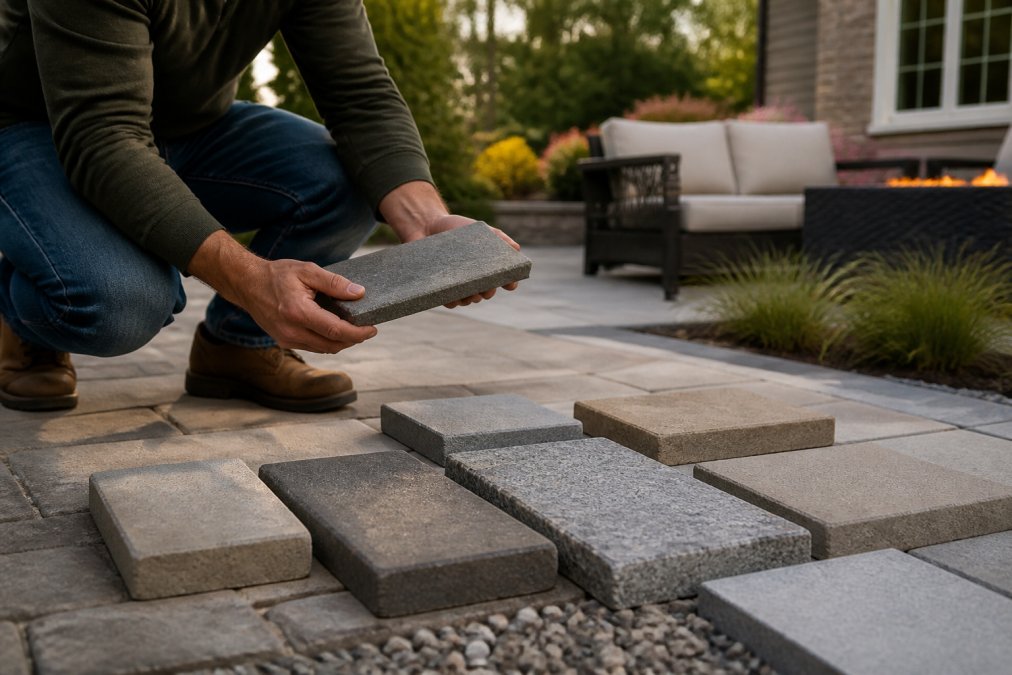
Color selection and design aesthetics set the tone for your entire outdoor environment. Warm tones like tan, honey, and terracotta create an inviting, traditional feel. Cool grays and blacks offer modern sophistication. Mixing two complementary colors in a pattern adds visual interest without overwhelming the space. Natural stone offers unique color variation, each piece is slightly different, which some homeowners love and others find chaotic. Uniform concrete pavers provide consistency and a cleaner aesthetic. The trend in luxury homes is moving toward larger format pavers (18x18 inches or bigger) that create a more expansive, modern feel compared to traditional 12x12 options. Larger pavers also mean fewer joints, which means less joint sand to maintain and fewer seams to trap debris.
Pattern selection and layout considerations influence both appearance and structural integrity. Running bond (offset brick pattern) is classic and works with almost any paver type. Herringbone patterns are visually striking but require more cuts and waste. Circular or radial patterns create focal points but are labor-intensive and prone to settling if the base isn't absolutely perfect. Straight grid patterns are modern and minimize cutting. For Westchester luxury homes, the trend favors clean lines and larger formats over busy patterns. One practical note: certain patterns can be more forgiving of uneven settling. Running bond may accommodate minor shifts better than herringbone, which can look obviously misaligned if the base settles unevenly.
Westchester-Specific Soil and Drainage Challenges
Your property's soil and drainage profile directly determines which pavers will perform and which will fail.
Westchester County soils vary significantly by location, but many areas have clay-heavy composition that drains poorly. Clay holds water, which creates two problems: it prevents the sub-base from draining properly, and it shifts seasonally as it absorbs and releases moisture. A patio built on clay soil without addressing drainage will experience frost heave, the upward pressure created when frozen soil expands. This pushes pavers upward unevenly, creating trip hazards and visible humping. The fix requires either excavating and replacing the clay with engineered fill, or installing a perforated drainage layer beneath the crushed stone base. Many luxury properties in Scarsdale and Bedford have rocky, well-draining soils, which is ideal. Properties in White Plains and New Rochelle may have more clay.
Installation Process and Foundation Requirements
The installation method determines whether your patio survives Westchester winters or fails within a few years.
Long-Term Maintenance Schedule for Northeast Climates
A maintenance plan keeps your patio looking new and prevents small issues from becoming expensive repairs.
Frequently Asked Questions
What are the best patio paver materials for freeze-thaw cycles?
In Westchester's climate, dense materials like permeable pavers, quality concrete, and certain natural stones perform best through freeze-thaw cycles. The key is proper sub-base compaction with crushed stone base and correct drainage slope. Porous materials absorb water that expands when frozen, causing damage. Work with professionals who understand the freeze-thaw cycle and install edge restraints to prevent shifting during winter months.
How do I choose a paver color that complements my home's architecture?
Consider your home's exterior materials and style. Warm-toned pavers complement traditional brick homes, while cooler grays suit modern architecture. Natural stone offers varied earth tones that age gracefully. View samples in different lighting conditions since surface temperature and solar radiation affect how colors appear throughout the day. Luxury homes often benefit from subtle color variation across the patio for visual depth and design aesthetics that feel intentional rather than uniform.
Are concrete or natural stone pavers better for high-end properties?
Natural stone typically offers superior curb appeal and long-term value for luxury homes, with flagstone and premium quarry process materials providing distinctive character. Concrete pavers offer consistency and lower maintenance but may not deliver the same aesthetic impact. The choice depends on your design vision, maintenance commitment, and desired durability. High-traffic areas benefit from natural stone's load-bearing capacity, while design-forward spaces gain from stone's visual sophistication and ability to complement landscape architecture.
What maintenance is required for different types of patio pavers?
Natural stone requires periodic sealing to prevent efflorescence and staining, plus annual inspection for frost heave damage. Concrete pavers need less frequent sealing but benefit from regular cleaning. All pavers need joint sand maintenance and edge restraint checks after winter. Permeable pavers require occasional cleaning to maintain drainage effectiveness. Northeast climates demand spring inspections after freeze-thaw cycles and fall preparation before winter weather. Professional maintenance schedules ensure your outdoor living space stays beautiful and functional year-round.