 listicle
Modern Stone Fireplace Designs for Luxury Homes
Table of Contents
- Modern Stone Fireplace Designs That Define Luxury Living
- Modern Stone Fireplace Ideas for Contemporary Homes
- Stone Fireplace Surround Ideas for Visual Impact
- Full-Height Stone Fireplace Designs
- Modern Fireplace Materials and Stone Selection
- Color Palettes and Finishes for Luxury Spaces
- Fireplace Placement and Room Layout Considerations
- Complementary Design Elements and Finishing Touches
- Frequently Asked Questions
Last Updated: October 20, 2026
Modern Stone Fireplace Designs That Define Luxury Living
A modern stone fireplace serves as the architectural centerpiece of luxury homes, combining sculptural elegance with functional warmth.
Today's designs emphasize clean geometry, material authenticity, and spatial drama.
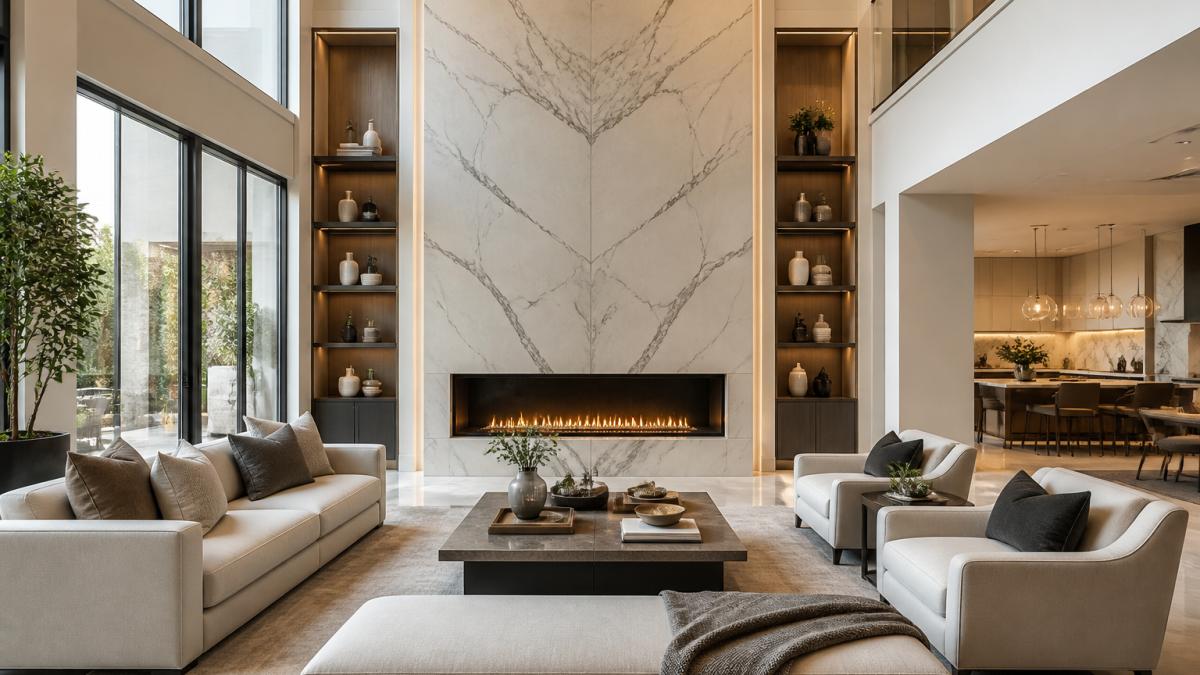
The best designs share intentional simplicity, letting the stone's natural texture, color variation, and grain become the visual statement.
Modern Stone Fireplace Ideas for Contemporary Homes
Clean Lines and Minimalist Aesthetics
Minimalist fireplace design strips away visual noise and emphasizes geometric purity. A surround of honed marble with no mantel, trim, or decorative elements creates drama through restraint.
Clean-line designs work especially well floor-to-ceiling: the vertical emphasis makes rooms feel taller, and the fireplace opening becomes a dark void contrasting with the stone.
Homeowners often worry minimalist fireplaces feel cold or incomplete.
Bold Geometric Shapes and Texture
Where minimalism favors flatness, geometric design embraces dimension: a chevron surround, a cantilever hearth, or an asymmetrical opening that breaks the traditional square.
Textured finishes, brushed, flamed, or split-face stone, add visual depth without complexity. Light catches these surfaces differently throughout the day, and one material with varied finishes can deliver more impact than several treated the same way.
Geometric and textured approaches work well in open-concept homes, where bold shapes give the fireplace visual weight against kitchen islands and dining areas.
Stone Fireplace Surround Ideas for Visual Impact
Full-Width Surrounds and Accent Walls
A full-height stone fireplace wall extends from floor to ceiling, making the fireplace the dominant architectural feature. This works especially well with high ceilings or open floor plans where the fireplace must anchor a large space.
The full-width surround defines the living area without physical barriers, signaling the heart of the space.
Full-height designs also integrate a television into the composition rather than making it look like an afterthought.
Layered Stone Textures and Finishes
Layering finishes within a single surround creates depth without multiple materials, honed marble with a split-face stone accent band, for example.
This requires restraint: two finishes create sophistication, three or more create confusion. Choose finishes in the same color family so transitions feel intentional.
Layered textures also affect light: honed finishes reflect evenly while textured finishes scatter it, creating subtle movement.
Full-Height Stone Fireplace Designs
A full-height stone fireplace wall creates architectural drama, extending to the ceiling or roofline and making the fireplace the dominant visual element.
In open-concept homes, a full-height fireplace wall provides visual definition without physical barriers.
Full-height designs also integrate utilities seamlessly, so outlets, HVAC returns, and structural supports become part of the stone composition rather than distractions.
Full-height surrounds demand careful material selection because the stone dominates the room's palette.
Modern Fireplace Materials and Stone Selection
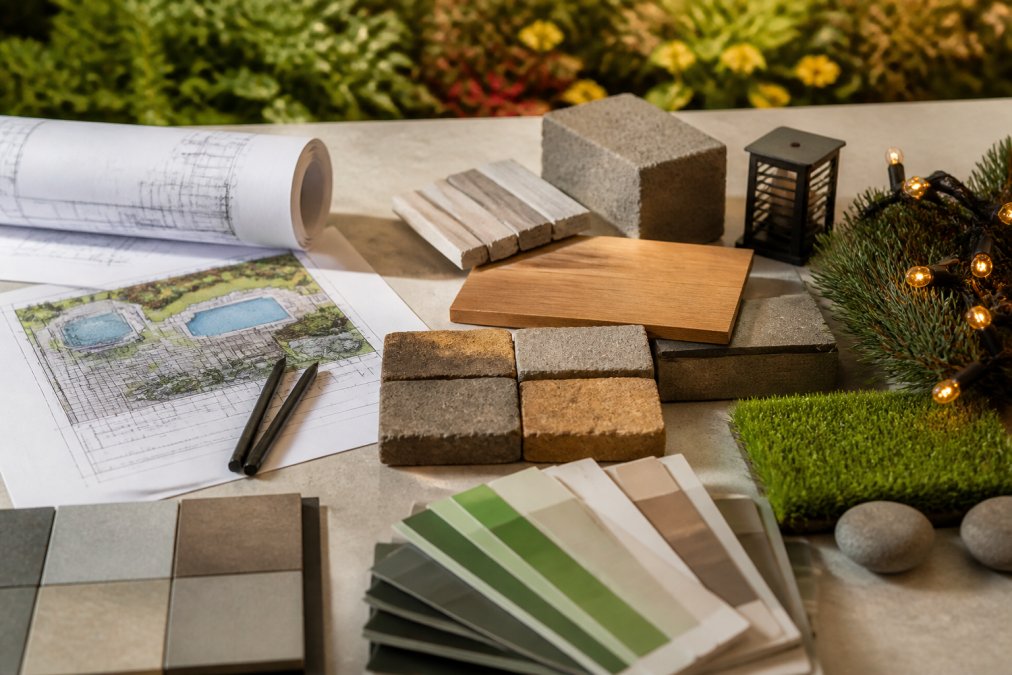
The right stone balances heat performance, maintenance, installation complexity, and relative cost, not just appearance. Here is a practical comparison of the materials most often specified in luxury homes.
Natural Stone Options: Granite, Marble, and Soapstone
Granite is the most forgiving choice for a working fireplace surround.
Marble delivers the veining and luminosity that define luxury interiors, but it is softer and more porous than granite, etching from acids and showing wear.
Soapstone offers a matte, almost chalky finish and subtle color variation that deepens with age.
Limestone and travertine suit warm, neutral palettes. Both are softer and more porous than granite, so they suit gas and electric units better than wood-burning.
Stacked Stone and Veneer Solutions
Stacked stone creates texture and visual interest through layering. Individual stones are installed with visible mortar joints, creating a three-dimensional appearance.
Veneer solutions offer the appearance of solid stone with easier installation. Thin-cut veneers are adhered to a backing surface, reducing weight and installation complexity.
Both approaches work beautifully in modern designs. The decision depends on your structural situation and timeline.
Matching Stone to Fireplace Type and Fuel
Stone selection is inseparable from the fireplace's fuel type, because each unit has different heat output, clearance requirements, and ventilation needs.
- Gas fireplaces produce moderate heat and are the most flexible for stone surrounds. Direct-vent units pull combustion air from outside and vent through a wall or roof, so they can be installed on interior walls where a traditional chimney would be impractical. Clearances to combustibles are set by the unit's listing and the manufacturer's instructions; stone itself is noncombustible, but the framing and mantel behind and around it are not.
- Wood-burning fireplaces produce the most heat and require a chimney or flue and specific clearances to combustible materials. Stone surrounds are common, but the firebox, hearth extension, and any mantel must meet the clearances in the unit's listing and local code. A wood-burning fireplace also produces soot and ash, so porous stones need more frequent cleaning and sealing.
- Electric fireplaces are the simplest to integrate with stone because they produce little heat and require no venting. They are often used in rooms where a gas line or chimney is impractical, and they allow stone to be installed closer to the unit subject to the manufacturer's clearances.
In every case, the fireplace's listing and the manufacturer's installation instructions govern clearances, and local code and the authority having jurisdiction govern the permit and inspection. A qualified installer or licensed contractor should confirm the substrate, clearances, and venting before any stone is set.
Relative Cost and Maintenance at a Glance
Relative cost among natural stones is driven by slab availability, thickness, edge detailing, and installation complexity rather than by a single national price. As a general pattern, granite and soapstone fall in the moderate-to-high range, marble and rare book-matched slabs in the high range, and thin-cut veneer products in the lower range because they use less material and install faster.
Color Palettes and Finishes for Luxury Spaces
Modern luxury fireplaces typically embrace monochromatic or near-monochromatic color schemes. A single stone in varied finishes creates sophisticated restraint.
Warm neutrals, creams, taupes, and soft grays, feel contemporary and timeless. They pair well with mid-century modern furniture and minimalist design.
The finish matters as much as the color. A polished cream marble feels entirely different from a honed cream marble.
Fireplace Placement and Room Layout Considerations
Fireplace placement shapes how a room functions and feels, and it is also where most design mistakes happen. A surround that looks right in a photo can overwhelm a room or disappear in it. The guidance below covers wall choice, scale math, ceiling height, viewing distance, and the fuel and clearance considerations that determine what is actually possible in a given room.
Wall Choice: Interior Versus Exterior
A fireplace positioned on an interior wall becomes the room's focal point and is the most common choice in luxury living rooms.
In open-concept homes, fireplace placement defines space boundaries. A fireplace positioned to face the seating area creates a natural gathering point. A fireplace positioned at the end of a long room creates a visual destination and draws people through the space.
Scale and Proportion: The Numbers That Matter
A common rule of thumb among designers is that the fireplace surround should occupy roughly 15 to 25 percent of the wall it sits on.
Ceiling height changes the math. In a room with a standard eight- to nine-foot ceiling, a full-height surround reads as a strong vertical element and can make the room feel taller.
Viewing distance matters as much as size.
Room-Specific Planning
- Small living rooms (roughly under 200 square feet): A full-height stone wall can overwhelm the space. A surround that stops at the mantel, or a full-height wall in a lighter stone, keeps the room from feeling compressed. Flush hearths preserve floor space.
- Standard living rooms (roughly 200 to 400 square feet): A full-height surround or a generous mantel-height surround both work. The fireplace should anchor the main seating group, and traffic paths should route around rather than through the seating area.
- Great rooms and open-concept spaces (roughly 400 square feet and up): A full-height stone wall is often the right choice because it gives the space a visual anchor. The fireplace should be positioned to define the main gathering zone without blocking sight lines to the kitchen or dining area.
Traffic Flow and Furniture Layout
Consider traffic flow as well. A fireplace positioned directly in a major traffic path becomes an obstacle. Position it where people naturally gather, in conversation areas, seating nooks, or at the end of sight lines.
Furniture arrangement completes the picture. Position seating to face the fireplace and create conversation areas. Coffee tables should relate proportionally to the fireplace. The fireplace should feel like the room's natural gathering point, not an afterthought.
Fuel, Venting, and Clearances Shape Placement
Placement is not purely aesthetic. The fireplace's fuel type and venting determine which walls are feasible.
- Direct-vent gas units can be installed on interior walls because they vent horizontally through a side wall or vertically through the roof, subject to the manufacturer's vent termination clearances to windows, doors, and grade. This flexibility is why they are common in luxury homes where an interior wall is the best focal point.
- Wood-burning fireplaces require a chimney or flue and specific clearances to combustible materials, which can limit placement to walls where a chimney can be routed.
- Electric fireplaces require no venting and are the most flexible for placement, which makes them useful in rooms where a gas line or chimney is impractical.
In every case, the fireplace's listing and the manufacturer's installation instructions govern clearances, and local code and the authority having jurisdiction govern the permit and inspection. A qualified installer or licensed contractor should confirm the substrate, clearances, and venting before the design is finalized.
Complementary Design Elements and Finishing Touches
The fireplace surround is just the beginning.
A modern mantel, if you choose to include one, should echo the fireplace's aesthetic.
Hearth design matters.
Lighting transforms a fireplace at night.
Furniture arrangement completes the picture. Position seating to face the fireplace and create conversation areas.
A stunning fireplace becomes even more impactful when it connects to thoughtfully designed surrounding spaces.
A modern stone fireplace is one of the highest-impact investments in luxury home design. We bring the same attention to detail and material expertise to every aspect of luxury property transformation.
Frequently Asked Questions
What stone is best for a modern fireplace?
Granite, marble, and soapstone are top choices for modern stone fireplaces. Granite offers durability and bold veining; marble provides elegance and luxury appeal; soapstone delivers a sleek, matte finish with excellent heat retention. Your choice depends on maintenance tolerance, aesthetic preference, and how the stone complements your home's design. Stacked stone and engineered veneer are also popular for modern looks with easier installation.
How do you make a stone fireplace look modern?
Achieve a modern aesthetic through clean lines, minimalist surrounds, and monochromatic or neutral color palettes. Use larger stone slabs or geometric patterns rather than traditional stacked designs. Incorporate sleek millwork, plaster finishes, and contemporary mantel styles. Avoid ornate details; instead, let the stone's natural texture and bold shapes be the focal point. Lighting design and complementary luxury finishes also enhance the modern appearance.
Are full-height stone fireplaces still in style?
Yes, full-height stone fireplaces remain a timeless design choice for luxury homes. Floor-to-ceiling surrounds create dramatic visual impact and serve as powerful focal points in living rooms. Modern interpretations use clean lines, minimal ornamentation, and contemporary materials to keep them current. Full-height designs work especially well in homes with high ceilings and open floor plans where they can truly showcase their scale and presence.
How do you choose the right scale for a stone fireplace?
Scale depends on room size, ceiling height, and furniture arrangement. In spacious living rooms with high ceilings, a full-height or oversized surround creates appropriate proportion. Smaller rooms benefit from more modest surrounds that don't overwhelm the space. Consider the fireplace's relationship to seating areas and other architectural features. Professional design consultation helps ensure your stone fireplace complements rather than dominates the room's overall layout and aesthetic.