 ultimate-guide
Landscaping for Luxury Property Value: 2026 Guide
Table of Contents
- Why Landscaping Drives Luxury Property Value
- Luxury Landscape Design ROI: What Actually Pays Back
- High-End Outdoor Living Space Ideas That Appraise Well
- Seasonal Landscape Maintenance for Property Value
- Sustainable Landscaping and Smart Irrigation Systems
- Common Landscaping Mistakes That Lower Property Value
- Conclusion
- Frequently Asked Questions
Last Updated: September 19, 2026
Why Landscaping Drives Luxury Property Value
Landscaping for luxury property value means designing, building, and maintaining outdoor spaces that hold up under appraisal scrutiny and buyer inspection. At Four Seasons Landscaping NY, 20-plus years on high-end Westchester properties shows buyers pay for outdoor space that looks finished, functions year-round, and shows no deferred maintenance.
Curb Appeal and First Impressions
First impressions form in seconds, from the curb. A luxury home with a tired lawn, cracked walkway, or overgrown beds signals deferred maintenance to every buyer who pulls up, whatever the interior looks like.
How Appraisers and Buyers Evaluate Outdoor Space
Appraisers and buyers evaluate outdoor space differently, and both matter. Appraisers look for permanent improvements: hardscaping, irrigation, drainage, mature plantings, and outdoor structures that count as fixed assets.
Luxury Landscape Design ROI: What Actually Pays Back
Luxury landscape design ROI is the return a property owner recovers at sale from outdoor improvements. It varies widely by improvement type, and not every dollar spent outdoors comes back at closing.
What the Numbers Actually Look Like
National cost-versus-value data gives a useful anchor. A basic lawn care and maintenance program tends to return well because the spend is small and the curb-appeal effect is immediate.
Improvement-by-Improvement Payback
| Improvement | Typical Cost Recovery at Resale | Why |
|---|---|---|
| Stone or paver patio | 60-80% | Permanent, functional, hard to replicate |
| Retaining walls and drainage | 50-70% | Structural; buyers assume they're expensive |
| Irrigation system | 50-70% | Protects plantings; signals a maintained property |
| Mature, healthy trees | Often exceeds cost | Cannot be replicated on a buyer's timeline |
| Lawn and bed maintenance | Frequently over 100% | Low annual spend, high visual return |
| Annual color and temporary décor | Under 30% | Replaced or removed by the next owner |
| Holiday lighting and seasonal decor | Varies; strongest when permanent infrastructure is installed | Temporary displays rarely recover cost; permanent mounting, wiring, and power do |
How Holding Period and Climate Shift the Math
ROI isn't static. Two variables move it most.
Holding period. A patio installed five years before sale has already delivered five years of use, so the effective return beats the raw resale number. A project installed the month before listing rarely recovers its cost, the buyer captures the benefit, not the seller.
The Holiday Lighting Angle
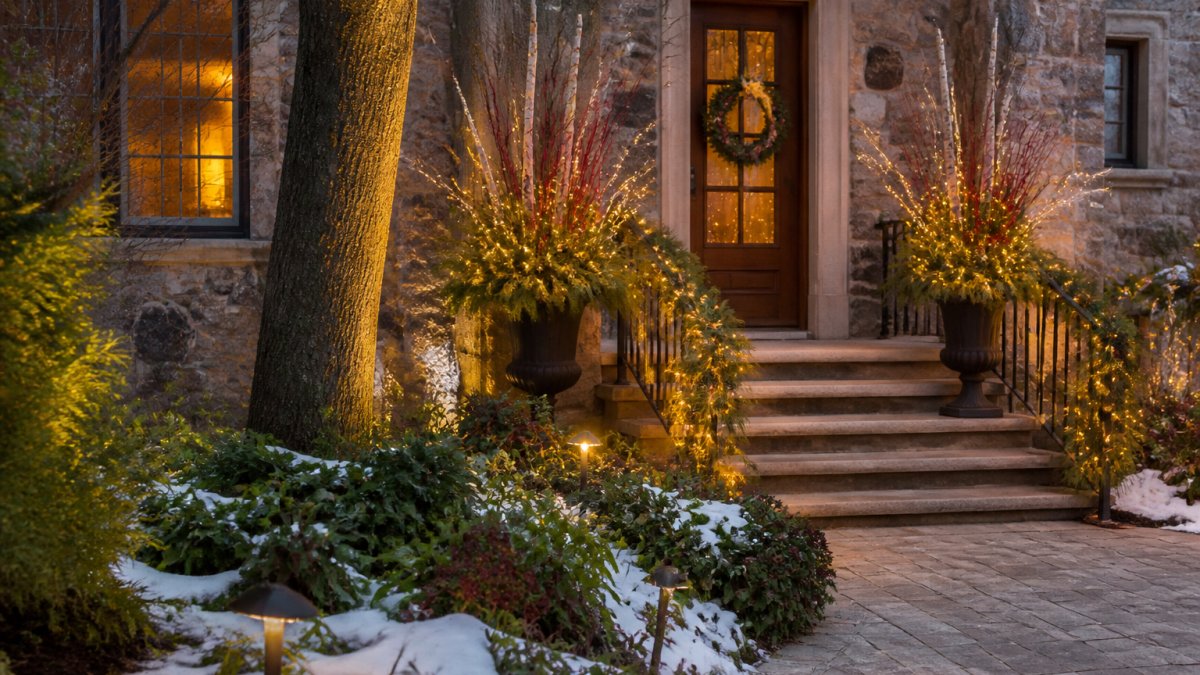
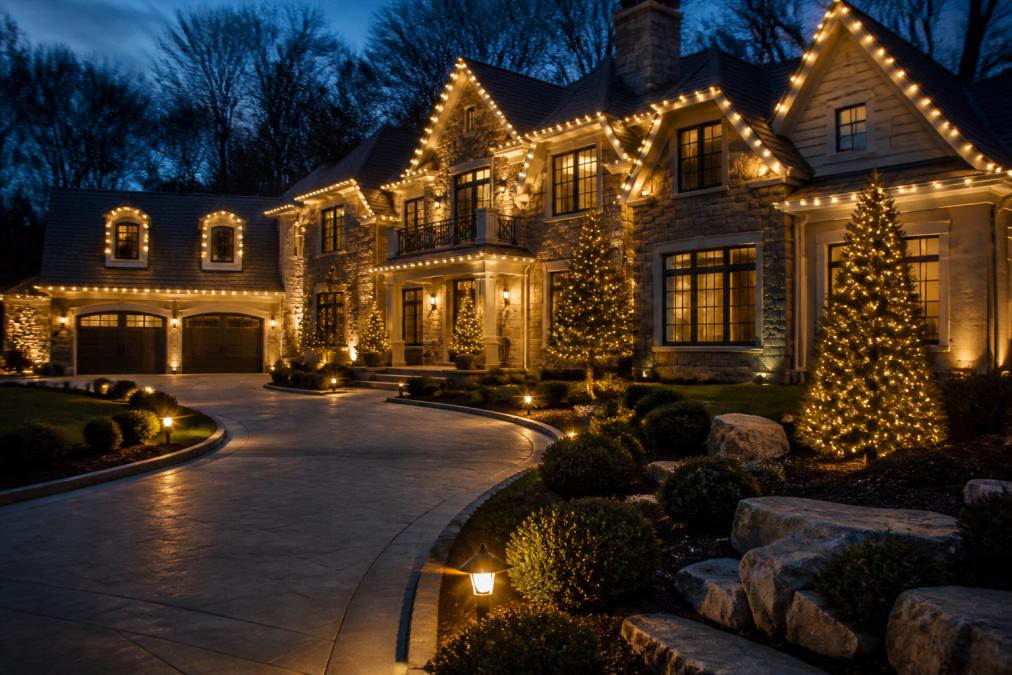
Holiday lighting and decor sit in an unusual category. As a standalone seasonal display, the spend is temporary and rarely recovers at resale. But when the installation includes permanent infrastructure, dedicated exterior outlets, hidden wiring runs, mounting points along the fascia and roofline, and a landscape lighting transformer sized for the load, that infrastructure becomes a fixed asset.
What Doesn't Pay Back
- Annual color rotations that a new owner will replant to their own taste
- Portable décor and furniture that reads as personal property, not real estate
- Overly specific themed plantings that narrow the buyer pool
- Improvements that fight the architecture, a formal parterre in front of a modern home, or a rustic fire pit against a formal facade
The through-line: value lives in what's permanent, functional, and broadly appealing. Everything else is enjoyment, not equity.
High-End Outdoor Living Space Ideas That Appraise Well
High-end outdoor living space ideas appraise best when they read as permanent extensions of the home rather than temporary additions. A covered structure with masonry, utilities, and lighting is treated differently by an appraiser than freestanding furniture.
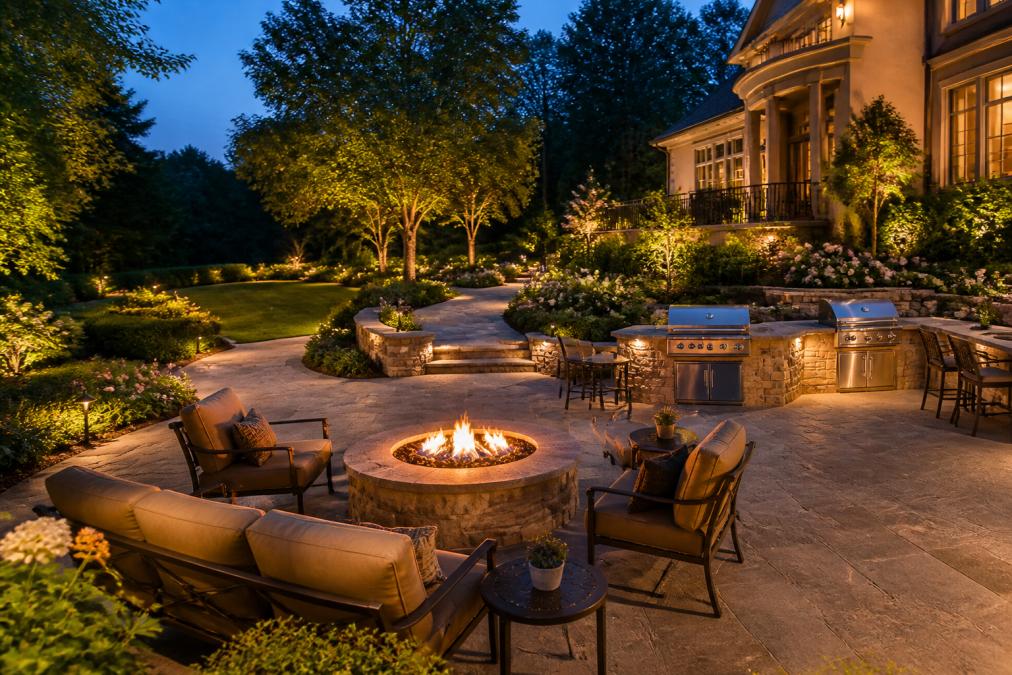
- Built-in outdoor kitchen: masonry base, permanent gas or electric connection, counter space for prep
- Fire feature: gas fire pit or masonry fireplace with a permanent fuel line
- Covered pergola or pavilion: anchored footings, integrated lighting, ceiling fan or heater
- Landscape lighting: low-voltage system on a transformer, illuminating paths, specimen trees, and architecture
- Water feature: recirculating fountain or pond with a dedicated pump and power
- Sport or recreation court: graded base, proper drainage, permanent surfacing
Seasonal Landscape Maintenance for Property Value
If you're weighing multiple contractors versus consolidating, the maintenance calendar usually decides it. One crew that owns the whole property keeps the standard consistent across seasons.
Sustainable Landscaping and Smart Irrigation Systems
Sustainable landscaping reduces water, chemical, and maintenance inputs while keeping the property looking intentional. For luxury properties, sustainability is no longer niche, it's a resale talking point, and in some markets a documented one.
What Sustainability Certifications Actually Signal
Most guides stop at "plant native." The luxury tier goes further, because high-end buyers and their agents increasingly ask for documentation.
- LEED for Homes and LEED for Neighborhood Development award points for water-efficient landscaping, native plantings, and reduced irrigation demand.
- National Wildlife Federation Certified Wildlife Habitat designation is achievable for a single property that provides food, water, cover, and places for wildlife to raise young. The application is straightforward, and the signage is a recognizable marker to buyers who care about ecology.
- Audubon Cooperative Sanctuary programs and state-level native plant society certifications serve similar purposes in different regions.
- EPA WaterSense-labeled irrigation controllers and qualifying toilets and fixtures give a property a measurable efficiency benchmark that appraisers and buyers can verify.
How Smart Irrigation Actually Works
A "smart" irrigation system is not just a controller with a phone app. The meaningful components are:
- Weather-based or soil-moisture-based scheduling. The controller pulls local evapotranspiration data or reads soil moisture sensors and adjusts run times automatically. This is the feature that actually saves water.
- Zone-by-zone control. Hydrozones group plants with similar water needs, turf, beds, and specimen plantings run on separate schedules.
- Flow and pressure monitoring. The system detects a broken head or a leak and shuts down the affected zone before it floods a bed or stains masonry.
- Drip and subsurface irrigation. Delivers water to the root zone instead of the air, which cuts evaporation and prevents overspray on fences, siding, and hardscape.
- Rain sensors and freeze sensors. Standard on quality systems; they prevent the embarrassing and wasteful spectacle of sprinklers running during a storm.
Smart Home Integration: The Angle Most Guides Skip
Lighting, irrigation, and outdoor audio can now run on the same platform as the indoor systems. In practice, that means:
- A single app or voice command controls landscape lighting, holiday lighting circuits, irrigation zones, and outdoor speakers.
- Scenes can be scheduled, path lights at dusk, holiday display on a timer, irrigation paused during a party.
- Security integration ties motion sensors and cameras to lighting, so a person approaching the property triggers illumination rather than darkness.
- Energy monitoring shows which circuits draw the most power, which is useful when a holiday display adds load.
Where Holiday Lighting and Decor Fit
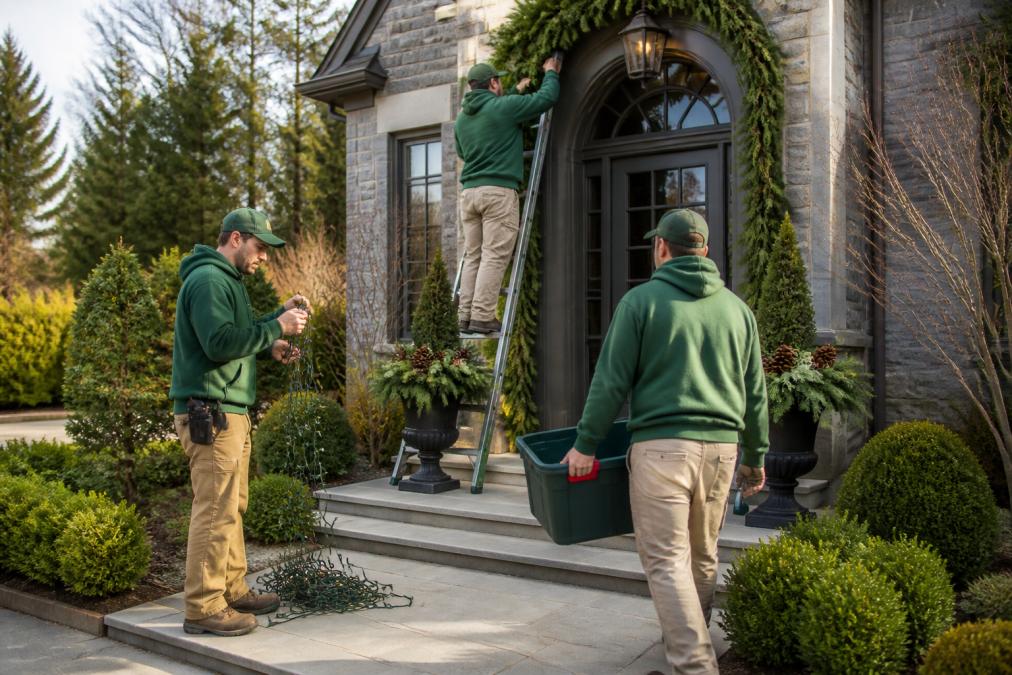
Holiday lighting is the most visible sustainability and smart-home test a property faces all year. A display that runs on LED fixtures, on a scheduled circuit, with permanent mounting and hidden wiring, checks every box: low energy draw, no ladder work each season, no extension cords across walkways, and full control from the same app that runs the irrigation.
The Practical Version
If you want a sustainability certification or a documented water budget for a property, work with a landscape architect or certified designer who can specify the plant palette and irrigation plan to match. For most homeowners, the practical version is simpler: right plant, right place, smart controller, annual audit, and LED fixtures on every circuit that runs after dark.
Common Landscaping Mistakes That Lower Property Value
The most expensive landscaping mistakes are the ones that look fine on installation day and fail within two seasons. Poor drainage tops the list. Water that pools against a foundation or under a patio causes structural damage that costs far more than the original install.
Other repeat offenders:
- Planting for the wrong hardiness zone: a specimen that dies in the first hard winter is a sunk cost
- Overplanting for instant impact: shrubs planted at mature size crowd each other and need removal within three years
- Skipping the irrigation audit: a system that waters the driveway and misses the beds wastes money and kills plantings
- Choosing style over architecture: a landscape that fights the house looks wrong to every buyer
- Deferred pruning: overgrown trees near the roofline create insurance and safety problems
Conclusion
Landscaping for luxury property value rewards owners who think in decades, not seasons. The improvements that pay back are the permanent ones: hardscaping, drainage, irrigation, lighting, and plantings that suit the site. The improvements that don't are the ones a new owner will replace.
Frequently Asked Questions
What landscaping increases property value the most?
Hardscaping elements like stone patios, walkways, and retaining walls tend to deliver the strongest returns because they are permanent, functional, and visible from the street. Mature trees, layered garden beds, and landscape lighting also raise perceived value significantly. For luxury properties, an outdoor kitchen or fire feature can make the yard a true extension of the home, which buyers in the high-end market price into their offers.
How does luxury landscape design ROI compare to interior renovations?
A well-designed landscape improves curb appeal, which influences first impressions before a buyer ever steps inside. Because landscaping is one of the few upgrades that appreciates as plants mature, the return can grow over time. The exact ROI depends on your region, home price tier, and how well the design matches the architecture.
What seasonal landscape maintenance tasks protect property value year-round?
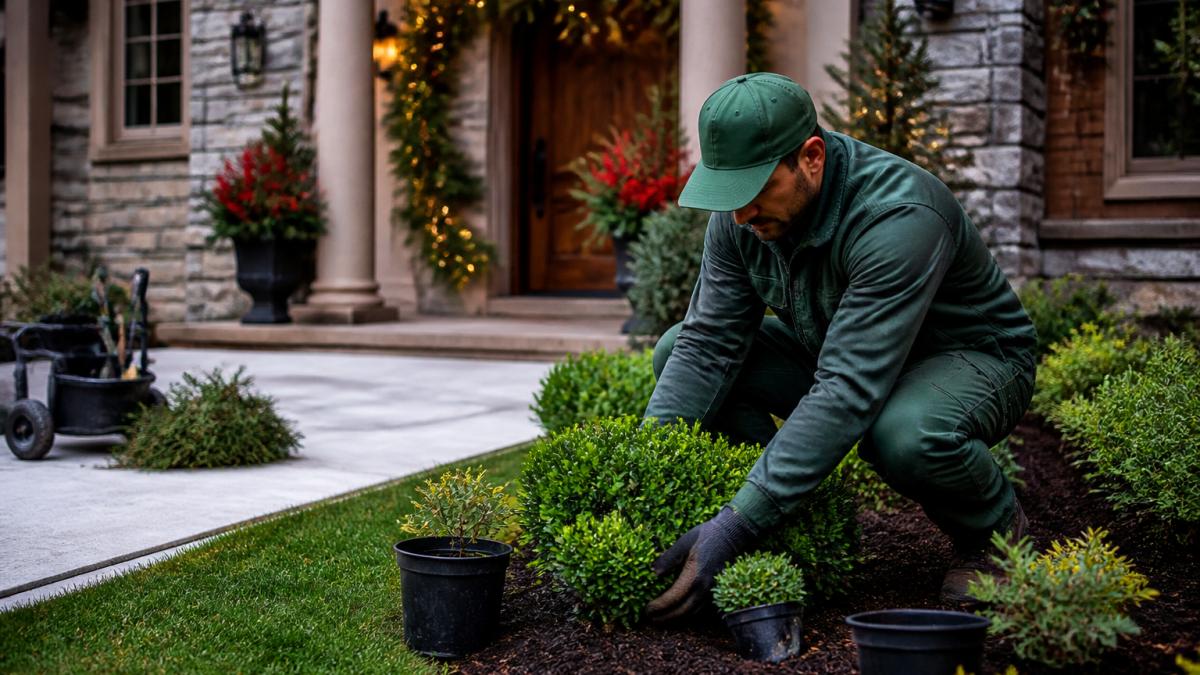
Spring cleanup, mulching, and irrigation checks set the tone for the growing season. Summer pruning and lawn care keep beds and turf looking sharp. Fall leaf removal and aeration prevent damage before winter. Winter plowing, salting, and holiday lighting protect hardscaping and keep the property looking cared for. Consistent maintenance signals to buyers and appraisers that the home has been well kept, which supports a stronger resale value.
What are the most common landscaping mistakes that detract from luxury property value?
Overplanting, mismatched styles, and neglected irrigation top the list. A yard stuffed with too many species looks cluttered rather than curated. Foundation plantings that block windows or hide architectural details undermine the home's design. Dead shrubs, patchy lawns, and broken hardscaping read as deferred maintenance and invite lowball offers. Working with a professional landscape designer helps avoid these pitfalls and keeps the outdoor environment aligned with the home's price tier.