 listicle
Luxury Landscape Design Scarsdale NY: 7 Must-Haves
Table of Contents
- What Defines Luxury Landscape Design in Scarsdale
- Comparing Signature Landscape Services
- Luxury Outdoor Living Space Ideas That Work
- Custom Landscape Lighting Design for Night Appeal
- High-End Masonry and Hardscaping Elements
- Navigating Scarsdale Zoning and Permits
- The Real ROI of Luxury Landscaping
- Which Luxury Landscape Design Approach Fits You?
- Frequently Asked Questions
Last Updated: September 9, 2026
Luxury landscape design in Scarsdale, NY, isn't just about planting trees and laying sod. It’s about creating an outdoor environment that matches the architectural caliber of your home. At Four Seasons Landscaping NY, we’ve spent over two decades refining that standard for properties. True luxury landscaping requires a thoughtful integration of hardscaping, native planting, and architectural lighting that transforms a yard into a private sanctuary.
Below, we’ll show you how to approach a high-end property makeover, covering the must-haves that separate a standard yard from a signature landscape, plus practical realities like zoning laws and return on investment.
What Defines Luxury Landscape Design in Scarsdale
Luxury landscape design is the deliberate orchestration of outdoor space to create a seamless extension of the home’s living area. In Scarsdale, this means moving beyond generic curb appeal to embrace the natural topography of the land, relying on site analysis and planting design that respect the existing ecosystem.
The hallmark of high-end work is integrating native plants to support biodiversity and ecological restoration. This is a practical choice for durability: native species require less water and resist local pests, reducing long-term landscape maintenance costs. Whether you pursue a full landscape renovation or a phased approach, the goal is a cohesive look that feels intentional.
Comparing Signature Landscape Services
Choosing the right partner for a luxury project is a decision about trust, capability, and long-term stewardship. While many contractors can install a patio, few possess the full-service expertise to manage the interplay of irrigation, masonry, and landscape architecture that a premium property demands.
The Real Differentiators Beyond the Portfolio
A polished portfolio tells you what a firm can do, but it rarely reveals how the project was delivered. Experienced homeowners focus on four operational factors that predict success:
- In-House Crew vs. Subcontractor Reliance: A firm with its own masons, irrigators, and planters maintains consistent quality and accountability. Subcontracting introduces scheduling conflicts and a higher risk of the 'blame game.'
- Design-Build Integration: A design-build firm, where the same team handles both, ensures the planting plan, hardscape details, and grading are executed exactly as drawn.
- Maintenance Philosophy: The best firms build with maintenance in mind. Ask how their designs minimize long-term care costs, a firm that cannot answer is designing for the 'reveal,' not the decade ahead.
- Warranty and Follow-Up: Ask what happens when a paver settles or a plant fails in year two. A structured warranty process is a different asset than a firm that disappears after the final invoice.
Red Flags to Watch For
During vetting, be alert to these warning signs:
- Vague Quoting: A quote lacking line-item detail for materials, labor, and contingency is a setup for change orders. It should specify stone type, excavation depth, and plant sizes.
- Reluctance on Permits: A firm that suggests skipping the permit exposes you to liability. Scarsdale's village code is enforced, and unpermitted work can trigger fines and stop-work orders.
- No Maintenance Plan: If a firm only wants to build and leave, they are not a luxury partner. High-end projects are supported by a seasonal maintenance plan.
A Framework for Your Decision
Rather than relying on a single 'top pick' list, use this scoring framework when interviewing firms. Rate each candidate from 1 to 5 on the following criteria, weighting them based on your project's priorities:
| Evaluation Criteria | Weight for Full-Build Projects | Weight for Phased Projects | What to Look For |
|---|---|---|---|
| In-House Capability | 30% | 20% | Direct employees for masonry, planting, and irrigation. |
| Design-Build Process | 25% | 30% | A single contract for design and construction. |
| Local Regulatory Knowledge | 20% | 25% | Familiarity with Scarsdale's zoning board and permit process. |
| Long-Term Maintenance Offerings | 15% | 15% | A dedicated maintenance division or documented plan. |
| Communication & Transparency | 10% | 10% | Clear quoting, responsive project management, and regular updates. |
This framework moves the conversation from 'who is the best' to 'what process will best serve my specific property,' which is the level of scrutiny a luxury investment demands.
Luxury Outdoor Living Space Ideas That Work
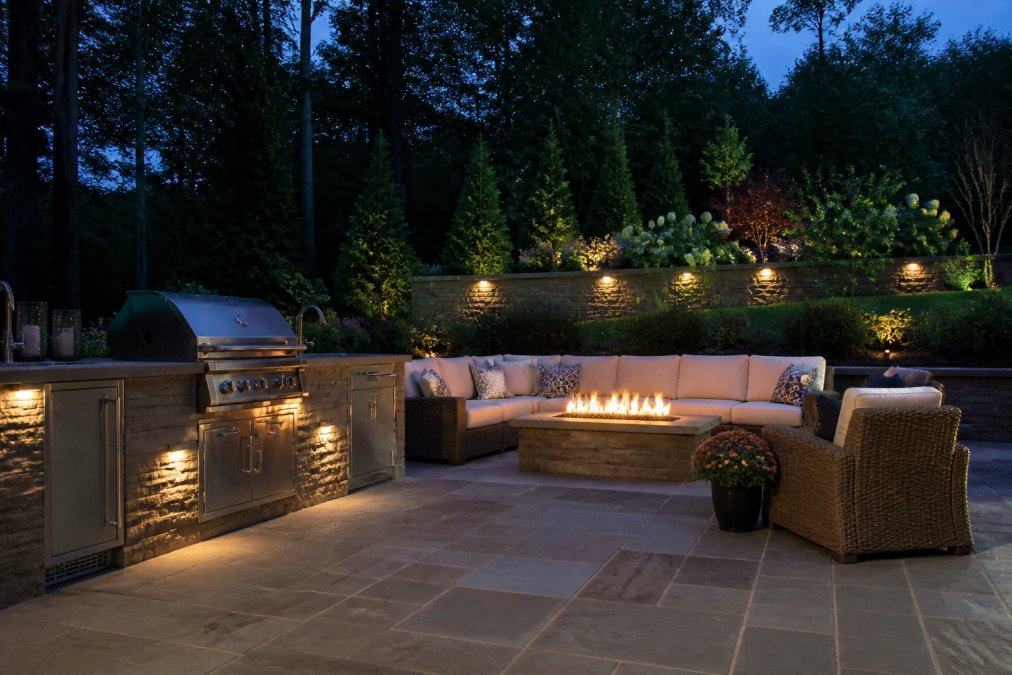
The most successful luxury outdoor living spaces are not collections of expensive features; they are carefully sequenced environments that respond to how you live. The difference between a yard that feels 'decorated' and one that feels like an extension of the home lies in the spatial logic, the flow, sightlines, and microclimates you create.
Designing for the 'Golden Hour' and Beyond
A luxury landscape must perform from morning coffee to late-evening entertaining, which requires thinking in terms of sun paths and seasonal shifts. The most thoughtful designs build in flexibility:
- Dual-Aspect Seating: Instead of one large patio, consider two smaller zones, one for morning sun and another shaded for afternoon reading.
- Wind and Privacy Screening: Strategic placement of a pergola with retractable louvers or a living fence of native evergreens can manage wind and sightlines without a fortress feel.
- The 'Inside-Out' Sightline: Stand at your kitchen and bedroom windows. Framing a view of a water feature or specimen tree from inside ensures the landscape is an asset even when you are not in it.
The Logic of Zoning: Activity, Transition, and Buffer
Professional landscape architects think in three zones; failing to plan for all three is why many projects feel incomplete:
- The Activity Zone: Where the outdoor kitchen, dining table, and fire feature live. The 'work triangle', the distance between grill, sink, and prep area, should be under 10 feet (nkba.org). A covered outdoor kitchen extends usability into light rain.
- The Transition Zone: The connective tissue of walkways, terraced gardens, and steps. On Scarsdale's sloped lots, retaining walls are essential; use a series of landings and gentle grades rather than a single steep stairway.
- The Buffer Zone: The perimeter planting beds that soften hard lines and provide visual breaks. A layered buffer of native groundcovers, shrubs, and understory trees creates habitat and enclosure.
The 'Maintenance-Minded' Design Principle
A common failure is creating a space that is stunning in year one but a burden by year five. Design for lower long-term landscape maintenance without sacrificing aesthetics:
- Specify 'Right-Sized' Plants: Always ask for the mature size of a plant, not its size at installation, to avoid constant pruning and root damage.
- Use Groundcovers Instead of Mulch Beds: Dense native groundcovers suppress weeds, hold soil on slopes, and eliminate the annual mulch refresh cost.
- Invest in Smart Irrigation Controllers: A system that adjusts for rainfall and soil moisture can cut outdoor water use by 20-30% (the EPA).
- Plan for Hardscape Drainage: The most common cause of paver failure is poor drainage. A hidden drainage system or dry creek bed prevents costly settling and frost heave repairs.
A Phased Approach to the Master Plan
For many homeowners, the most practical path is a phased master plan that prioritizes 'must-haves' while keeping a clear blueprint for the future:
- Phase 1 (The Foundation): The hardscape, patio, retaining walls, and walkways, is the most disruptive work and should be done first.
- Phase 2 (The Living Systems): Install the outdoor kitchen, fire feature, and irrigation system to make the space usable.
- Phase 3 (The Environment): Complete the planting design with native trees, shrubs, and perennials to soften the space.
- Phase 4 (The Ambiance): Add custom landscape lighting and final decorative elements.
This approach transforms the design conversation from a simple list of features to a strategic plan for how the property will function and evolve, a perspective that aligns with the long-term stewardship a luxury home demands.
Custom Landscape Lighting Design for Night Appeal
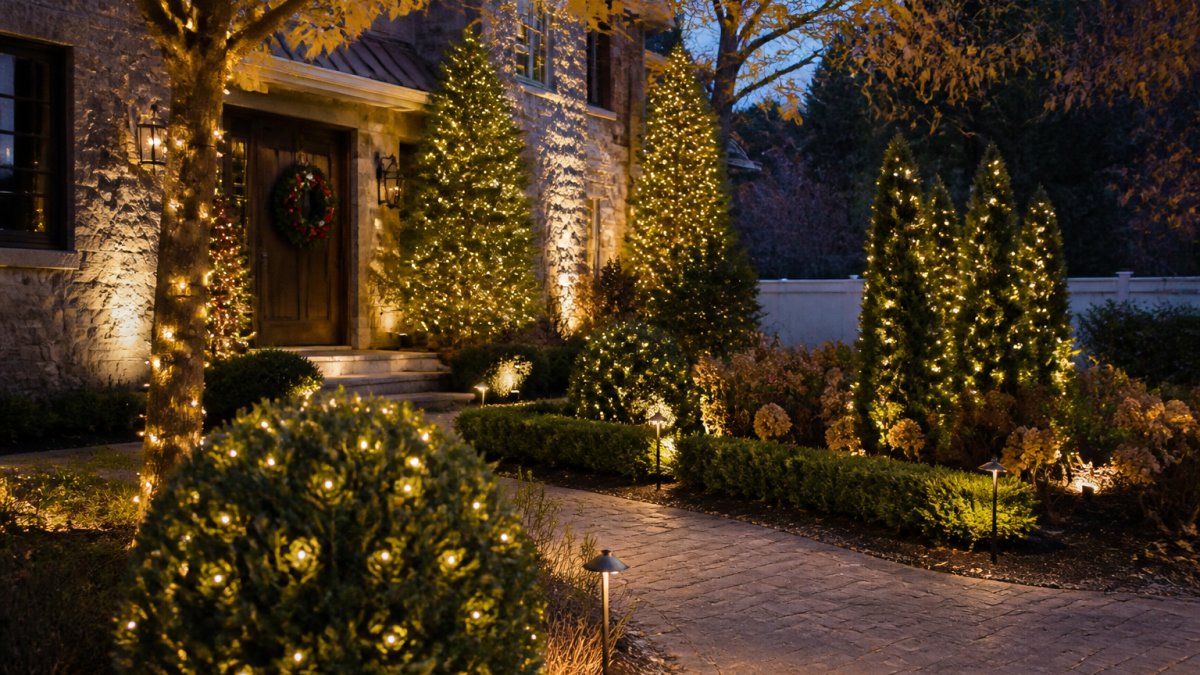
A common mistake is treating lighting as an afterthought. Custom landscape lighting design extends the usability of your outdoor spaces into the evening and increases security. Strategic fixture placement highlights the texture of masonry and the form of specimen trees, creating depth invisible during the day.
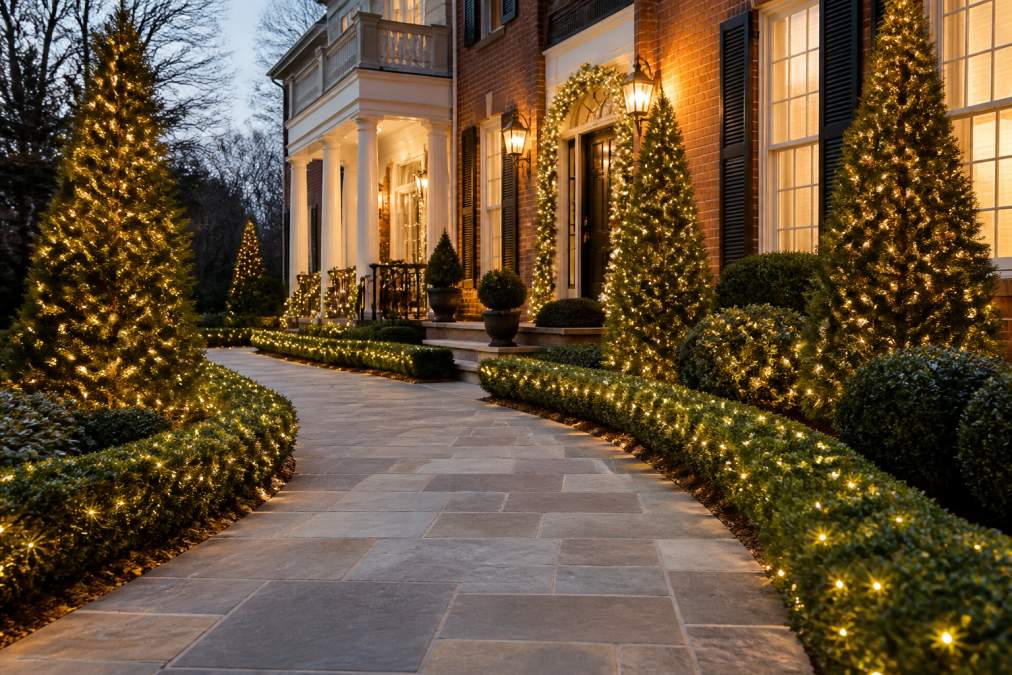
The goal is not to flood the yard with light but to paint with it. Uplighting a mature oak or grazing a stone walkway adds sophistication that defines curb appeal after dark, while deterring intruders. A designer's expertise in voltage, beam spread, and color temperature achieves a subtle glow rather than a harsh stadium effect. The same principle extends to the holiday season, when professional Holiday Lighting and Décor can carry that refined aesthetic into winter, ensuring your property remains a standout even when the landscape is dormant.
High-End Masonry and Hardscaping Elements
High-end masonry and hardscaping forms the skeleton of the luxury landscape. While plantings soften a space, the stone patios, retaining walls, and walkways give it structure and permanence. Premium bluestone, natural fieldstone, and thermal granite offer durability that stamped concrete cannot match.
The craftsmanship lies in the details: joint tightness, color consistency, and cut precision. A landscape installation team that handles masonry in-house ensures structural elements support the land and water flow without shifting over time. The "luxury" price point is justified by the labor and skill required to install them flawlessly.
Navigating Scarsdale Zoning and Permits
Before breaking ground, you must understand the local regulatory landscape. Scarsdale has zoning ordinances governing setbacks, property coverage, and structure heights (scarsdale.com). Skipping permits can lead to fines and "stop work" orders that delay your project and add cost.
A reputable design firm will handle plan submission to the village, including coordination with the architectural review board if you live in a historic district or HOA neighborhood. We handle this legwork, ensuring your landscape planning is compliant from day one and passes inspection the first time.
The Real ROI of Luxury Landscaping
Investing in your property is a strategic financial decision. The ROI of luxury landscaping is realized through increased property value and enhanced marketability. A well-designed outdoor space effectively expands your home's square footage, offering a compelling differentiator if you sell.
Beyond the balance sheet, consider the "lifestyle ROI." Hosting a dinner party in a beautiful outdoor room or relaxing in a private retreat adds a quality of life that is difficult to quantify. Consolidating design, installation, and landscape maintenance with one provider protects that investment year-round.
Which Luxury Landscape Design Approach Fits You?
Deciding on the right scope depends on your immediate needs and long-term vision. Extensive structural work, such as an infinity-edge pool or complete regrading, requires a partner capable of managing heavy residential construction. If your focus is purely aesthetic, a refresh of the planting design and new outdoor lighting might suffice.
Consider the following paths:
- The Complete Overhaul: Best for homeowners who want a full transformation, integrating pools, spas, and extensive masonry into a single cohesive design.
- The Phased Master Plan: Ideal for those who want to manage investment over time, with a master plan guiding future installations to ensure consistency.
- The Aesthetic Refresh: Perfect for homes that need updated plantings, new lighting, and renovated walkways to boost curb appeal without major construction.
Many luxury homeowners in Westchester find a phased approach most practical. It requires a designer who can visualize the end state and sequence the work so each phase stands on its own but builds toward the larger vision.
Transforming a property in Scarsdale demands a partner who understands high-end construction and design. Four Seasons Landscaping NY offers the convenience of a true full-service provider, handling everything from custom design and masonry to irrigation and year-round maintenance with transparent quotes and a fully insured crew. Get started with Four Seasons Landscaping NY and turn your property into the stunning outdoor sanctuary it deserves to be.
Frequently Asked Questions
What are the key elements of luxury landscape design?
Luxury landscape design in Scarsdale goes beyond basic planting. It integrates bespoke hardscaping like natural stone patios and retaining walls, custom outdoor lighting, and functional outdoor living spaces such as kitchens or fire features. A cohesive plan that blends these elements with native plants and considers the home's architecture is essential. The goal is to create a seamless extension of your indoor living space that offers both beauty and function throughout the year.
How much does professional landscape design add to property value?
A professionally executed luxury landscape design can significantly boost curb appeal and property value in Westchester County. While the exact figure varies, high-end landscaping is a sound investment for luxury homeowners. The ROI comes not just from the immediate resale value but also from the enhanced enjoyment and usability of your property. A well-planned design that includes sustainable elements and quality hardscaping often yields a higher return than many other home improvements.
What are the latest trends in sustainable luxury landscaping?
Current trends focus on ecological restoration and environmental stewardship without sacrificing aesthetics. This includes incorporating native plants to support biodiversity, installing efficient irrigation systems to reduce water use, and using permeable paving materials for walkways and patios. A luxury design now often features terraced gardens that manage stormwater naturally. These elements create a beautiful, functional landscape that is also resilient and lower-maintenance over the long term.
Do luxury landscape designs require year-round maintenance?
Yes, a luxury landscape is an investment that requires ongoing care to maintain its appearance and structural integrity. This includes seasonal planting, pruning, lawn care, and the upkeep of irrigation systems. Hardscaping elements like patios and retaining walls may need periodic cleaning or sealing. Many homeowners in Scarsdale partner with a full-service provider for comprehensive year-round maintenance, which can also include holiday lighting and decor to keep the property looking its best in every season.