 how-to
Choosing Durable Materials for Custom Masonry
Table of Contents
- Understanding Your Masonry Material Options
- Masonry Material Comparison: Strength and Longevity
- Weather-Resistant Masonry Materials for Your Climate
- Best Mortar for Masonry: Selection and Compatibility
- Fire Resistance and Safety Considerations
- Masonry Material Selection Checklist for Custom Projects
- Common Mistakes to Avoid When Selecting Masonry Materials
- Frequently Asked Questions
Last Updated: October 17, 2026
Understanding Your Masonry Material Options
The materials you choose determine how your custom masonry project looks, performs, and lasts. At Four Seasons Landscaping NY, we work with luxury homeowners who know durability and aesthetic appeal go hand in hand.
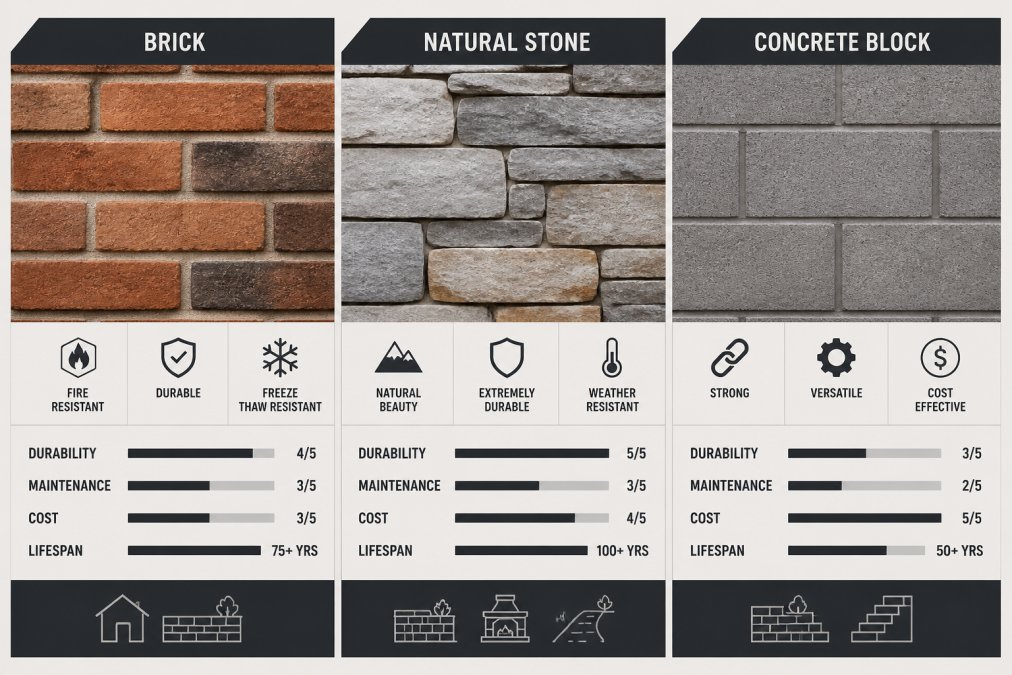
Three materials dominate custom masonry work: brick, natural stone, and concrete block. Your choice depends on your climate, project type, aesthetic goals, and maintenance expectations.
Brick: Classic Durability and Aesthetic Appeal
Brick remains the gold standard for residential masonry, delivering warm color, timeless appeal, and proven longevity. Quality brick lasts 100+ years with minimal maintenance, resists moisture with compatible mortar, handles freeze-thaw cycles, and won't burn or release toxic fumes.
Brick pros:
- Warm, varied color palette suits luxury homes
- Exceptional durability and lifespan
- Low maintenance requirements
- Strong fire and weather resistance
Brick cons:
- Higher initial material cost than concrete block
- Requires skilled installation for proper bonding
- Mortar compatibility is critical, wrong mortar causes failure
- Efflorescence (white salt deposits) can appear temporarily
Natural Stone: Timeless Strength and Character
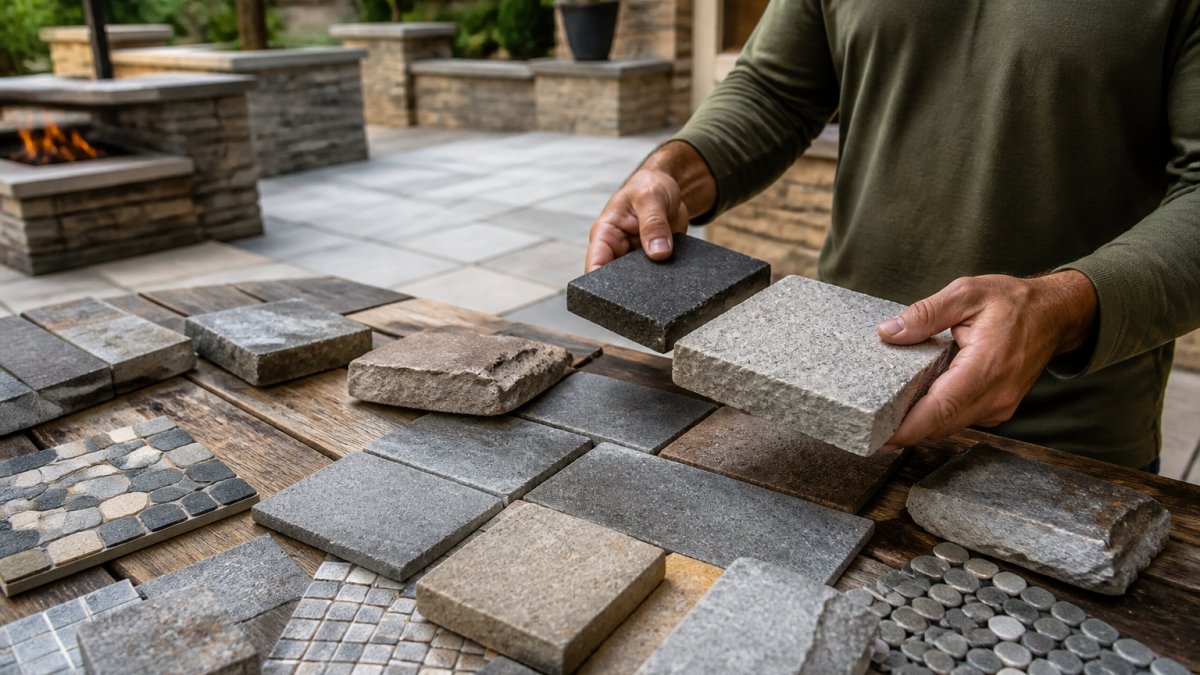
Natural stone conveys permanence and luxury. Granite, limestone, and slate each offer distinct character and performance; stone's weight and density provide exceptional strength and weather resistance, though granite is harder and denser than limestone, affecting durability in harsh climates.
Natural stone pros:
- Unmatched aesthetic uniqueness
- Extreme durability and longevity
- Excellent weather resistance
- High fire resistance
Natural stone cons:
- Highest material cost of the three options
- Requires expert installation and handling
- Some stone types need periodic sealing
- Mortar selection is especially critical
Concrete Block: Structural Performance and Value
Concrete block offers straightforward structural performance at a lower cost, engineered for consistent strength and uniform appearance. It suits structural walls, foundations, and projects where function outranks appearance; modern blocks resist moisture better than older versions with proper mortar and drainage planning.
Concrete block pros:
- Most affordable material option
- Consistent strength and sizing
- Fast installation process
- Good structural performance
Concrete block cons:
- Less visually appealing than brick or stone
- Requires proper mortar for weather resistance
- Can absorb moisture if mortar fails
- Limited color and texture options
Masonry Material Comparison: Strength and Longevity
Comparing masonry materials for strength and longevity means weighing raw structural performance against real-world durability. The best material depends on what you're building and where.
| Material | Typical Lifespan | Structural Strength | Weather Resistance | Best For |
|---|---|---|---|---|
| Brick | 100+ years | Excellent | Excellent | Residential walls, fireplaces, facades |
| Natural Stone | 150+ years | Excellent to Superior | Excellent | High-end features, visible structures |
| Concrete Block | 75-100 years | Good to Excellent | Good (with proper mortar) | Foundations, structural walls |
Brick and natural stone outlast concrete block under typical conditions, but the gap narrows when mortar selection is wrong: poor mortar compatibility can cause brick failure in 20-30 years, faster than well-installed block.
Weather-Resistant Masonry Materials for Your Climate
Weather resistance is measurable, and the numbers matter more than the material category. Here's how to evaluate materials against your actual climate conditions.
The Four Climate Stressors That Drive Material Failure
Masonry fails through a few physical mechanisms.
Freeze-thaw cycling. Water absorbed into a masonry unit expands roughly 9% when it freezes, and repeated cycles cause spalling, cracking, and crumbling.
Driving rain and saturation. Wind-driven rain hitting a saturated wall does the damage, not total rainfall.
Salt exposure. In coastal areas, airborne chloride accelerates mortar deterioration and can cause surface scaling on porous units.
Thermal movement. All masonry expands and contracts with temperature.
Measurable Specifications to Compare Before You Buy
Ask suppliers for these numbers and compare them side by side, materials that look identical in a showroom can differ substantially on paper.
- Water absorption (ASTM C67 for brick, ASTM C97 for stone): lower is better for freeze-thaw and wet climates; severe-weathering brick typically sits at or below 6%.
- Compressive strength (ASTM C90 for load-bearing concrete block, ASTM C216 for facing brick): confirms the unit can carry design loads. Higher strength isn't automatically better if it forces a stronger, less flexible mortar.
- Freeze-thaw durability rating: many brick and block products carry a severity rating (negligible, moderate, severe) tied to the local climate. Match it to your region's expected cycles.
- Abrasion resistance: relevant for pavers, steps, and high-traffic surfaces. Stone and dense brick outperform standard block.
Matching Material to Climate, Concretely
Hot, dry regions: all three perform well, but plan for thermal movement with control joints and watch for efflorescence.
Humid and wet regions: drained cavity construction matters more than the unit itself.
Coastal regions: dense stone and quality brick resist salt spray; mortar selection is where most coastal failures originate. Choose lower-permeability mortar and inspect joints annually.
A Practical Rule for Custom Projects
Before committing to a material, pull the manufacturer's spec sheet and check three numbers against your site: water absorption, freeze-thaw rating, and compressive strength. Then confirm your mason's mortar type is weaker than the unit and appropriate for the exposure. If a supplier can't provide those numbers, that's your answer about the product's suitability for a custom project meant to last generations.
Best Mortar for Masonry: Selection and Compatibility
Mortar is the weakest link in almost every masonry failure and the most misunderstood. The instinct is to pick the strongest mortar, but masonry is engineered so the mortar is deliberately weaker than the units it bonds. Get this backwards and you guarantee failure.
Why Mortar Must Be Weaker Than the Masonry Unit
Masonry moves: units expand and contract with temperature and moisture, and walls settle over time. When movement occurs, something has to give. If the mortar is weaker and more flexible than the units, it cracks at the joint, cosmetic and repairable. If the mortar is stronger, movement transfers into the brick or stone, and the units crack, spall, or shear, structural and expensive damage.
The Four Mortar Types and Where They Belong
Mortar types are defined by compressive strength, with M strongest and O weakest.
Type S (high strength, moderate flexibility). For greater structural demands: load-bearing walls, lateral loads, some below-grade applications.
Type O (low strength, high flexibility). Reserved for non-structural interior work and repointing older, softer masonry.
Type M (highest strength, least flexible). Heavy-duty structural and below-grade work only; rarely appropriate for residential veneer or decorative features.
Matching Mortar to the Unit
Brick, stone, and concrete block have different hardness and absorption characteristics, and the mortar has to match.
- Brick: Type N or S depending on structural demands. Modern brick is hard and dense, so N usually suffices for veneer and S for load-bearing. Very soft historic brick may need O.
- Natural stone: Type N is common because stone is harder than brick and the mortar must yield first. Dense granite and hard limestone tolerate N well; softer stone may need more flexible mixes.
- Concrete block: Type S or M depending on structural requirements. Block is more absorptive than brick, so prep and bonding matter as much as the type.
The Compatibility Problem in Repairs and Additions
When you add new masonry to an existing structure, the new mortar must be compatible with the old. Two rules govern this:
- Never use a stronger mortar on old masonry than the original. Historic brick and stone were often laid with soft lime mortar; repointing with modern Type S or M traps moisture and forces the old units to crack instead of the joint. Match the old mortar's strength and composition, often a lime-rich mix.
- Match movement characteristics at the joint. New and old masonry move differently; a control joint or slip plane at the transition prevents the new work from cracking the old.
Before any repair or addition, have a mason test the existing mortar's composition and hardness, a field scratch test gives a rough sense, but lab analysis is worth it for historic or high-value structures.
Bonding Quality: The Installation Variable
Mortar type is only half the equation; bonding quality determines whether water gets in. The key variables are:
- Initial rate of absorption (IRA): very absorptive units pull water from the mortar before it cures, weakening the bond. Pre-wetting or a bonding admixture addresses this.
- Mortar consistency: too stiff won't fill the joint; too wet loses strength. Masons judge by feel, which is why skill matters.
- Joint filling: voids and gaps are water pathways. Full joints, tooled to compact the surface, shed water and resist freeze-thaw damage.
- Curing: mortar needs moisture to cure. In hot or windy conditions, masons cover or mist the work to prevent premature drying.
A Simple Decision Sequence
- Identify the unit (brick, stone, or block) and its hardness and absorption.
- Identify the application (veneer, load-bearing, below-grade, repair).
- Select a mortar type weaker than the unit and appropriate to the load.
- For repairs or additions, test the existing mortar and match its strength and composition.
- Confirm bonding prep and curing plan with your mason.
When you're choosing durable materials for custom masonry, the mortar decision is inseparable from the material decision. Treat them as one choice, not two.
Fire Resistance and Safety Considerations
Masonry's fire resistance is one of its most valuable properties. Brick, natural stone, and concrete block are all non-combustible and won't burn. Brick and stone release no toxic fumes and maintain structural integrity at high temperatures, making them ideal for outdoor fireplaces, fire features, and structures near fire-prone areas. For outdoor fireplaces and fire features, choosing durable materials for custom masonry means selecting proven materials with compatible mortar.
Masonry Material Selection Checklist for Custom Projects
Use this checklist to evaluate the factors that drive material selection:
- Identify your climate zone and primary weather challenges (freeze-thaw, salt exposure, humidity, heat)
- Define your project type (structural wall, decorative feature, fireplace, foundation, exterior facade)
- Set your aesthetic goals (color palette, texture, visual impact, architectural style compatibility)
- Assess your maintenance commitment (sealed stone requires periodic resealing; brick needs minimal maintenance)
- Evaluate structural requirements (load-bearing capacity, lateral load resistance, foundation support)
This checklist helps ensure informed decisions about choosing durable materials for custom masonry rather than reacting to initial cost or aesthetics alone.
Common Mistakes to Avoid When Selecting Masonry Materials
Most masonry failures don't result from bad materials but from bad decisions during selection and installation.
Mistake 2: Ignoring climate requirements. A material that works in one climate can fail in another.
Mistake 3: Using the wrong mortar type. The single most common failure.
Mistake 7: Assuming all brick is the same. Brick quality varies significantly.
Frequently Asked Questions
What is the difference between brick, natural stone, and concrete masonry?
Brick is fired clay offering consistent color and durability, typically lasting 100+ years. Natural stone includes granite, limestone, and slate with unique textures and exceptional longevity. Concrete block provides cost-effective structural strength and uniform appearance. Each has different weather resistance, maintenance needs, and aesthetic qualities. Your choice depends on project type, climate exposure, and desired appearance.
Which masonry materials hold up best to weather and moisture?
Natural stone and high-quality brick resist moisture and weather exceptionally well when paired with proper mortar. Granite and slate are particularly weather-resistant. Concrete block requires sealing and quality mortar to prevent water penetration. Proper drainage, appropriate mortar selection, and regular maintenance extend the lifespan of any masonry material in wet or freeze-thaw climates.
How do you choose the best mortar for a masonry project?
Mortar type must match your masonry units and project requirements. Softer mortars (Type O, N) work with historic or delicate stone. Harder mortars (Type S, M) suit exposed applications and structural demands. Consider water exposure, climate, and existing structures. Incompatible mortar can damage units or fail prematurely. Professional assessment ensures proper bonding and long-term performance.
What should you consider before choosing materials for a custom outdoor fireplace?
Outdoor fireplaces need fire-resistant materials that withstand high heat and weather exposure. Brick and natural stone are ideal for fireboxes and surrounds. Consider thermal mass, color retention under heat, and frost resistance if your fireplace faces winter moisture. Mortar must handle temperature cycling. Consult with professionals to ensure materials meet safety standards and local building codes for your specific application.