 blog
blog
5 Best Plants for Luxury Landscape Design in NY
Table of Contents
- Why Plant Selection Matters for Luxury Landscape Design
- Structural Plants for Modern Garden Design That Elevate Your Yard
- The 5 Best Plants for Luxury Landscape Design in NY
- Evergreen Plants for Landscaping: Year-Round Appeal
- Plants That Make a Yard Look Expensive: Design Principles
- Maintenance and Seasonal Considerations for NY Climates
- Creating Your Luxury Landscape Design Plan
- Frequently Asked Questions
Last Updated: October 10, 2026
Why Plant Selection Matters for Luxury Landscape Design
The right plants transform a property from ordinary to exceptional. At Four Seasons Landscaping NY, we've learned that luxury landscape design isn't about choosing the most exotic species, it's about selecting plants that work together to create structure, color, and sophistication year-round.
Plant selection is the foundation of any high-end outdoor space. When homeowners invest in a luxury landscape, they're looking for curb appeal that commands attention, privacy screening that feels intentional rather than defensive, and seasonal interest that keeps the property visually stunning from January through December.
The best plants for luxury landscape design share certain characteristics: they maintain their form without constant fussing, they work within regional climate conditions, and they contribute to a cohesive design aesthetic. A single poorly chosen plant can undermine an entire design scheme. Conversely, five well-selected plants can define an entire property's character.
Structural Plants for Modern Garden Design That Elevate Your Yard
Structural plants are the backbone of any sophisticated garden design. These are plants that hold their shape, provide year-round presence, and create the framework that other plantings hang from.
Structural plants do two critical jobs: they establish the bones of your landscape, and they anchor seasonal plantings around them. Think of them as the architectural elements of your garden. A well-placed structural plant creates visual weight, defines space, and provides consistency even when flowering plants fade.
In luxury landscape design, structural plants typically fall into these categories:
- Evergreen shrubs that maintain dense foliage year-round
- Trees with distinctive form that serve as focal points
- Plants with strong silhouettes that read clearly from a distance
- Species that tolerate pruning for formal or contemporary shapes
The difference between a good landscape and a luxury landscape often comes down to how thoughtfully structural plants are used. Rather than dotting plantings randomly around a property, sophisticated design places structural plants strategically to create rhythm, frame views, and guide the eye through the space.
The 5 Best Plants for Luxury Landscape Design in NY
These five plants consistently deliver the refined appearance, durability, and year-round interest that define luxury landscapes in the region. Each offers specific advantages for creating an upscale outdoor environment.
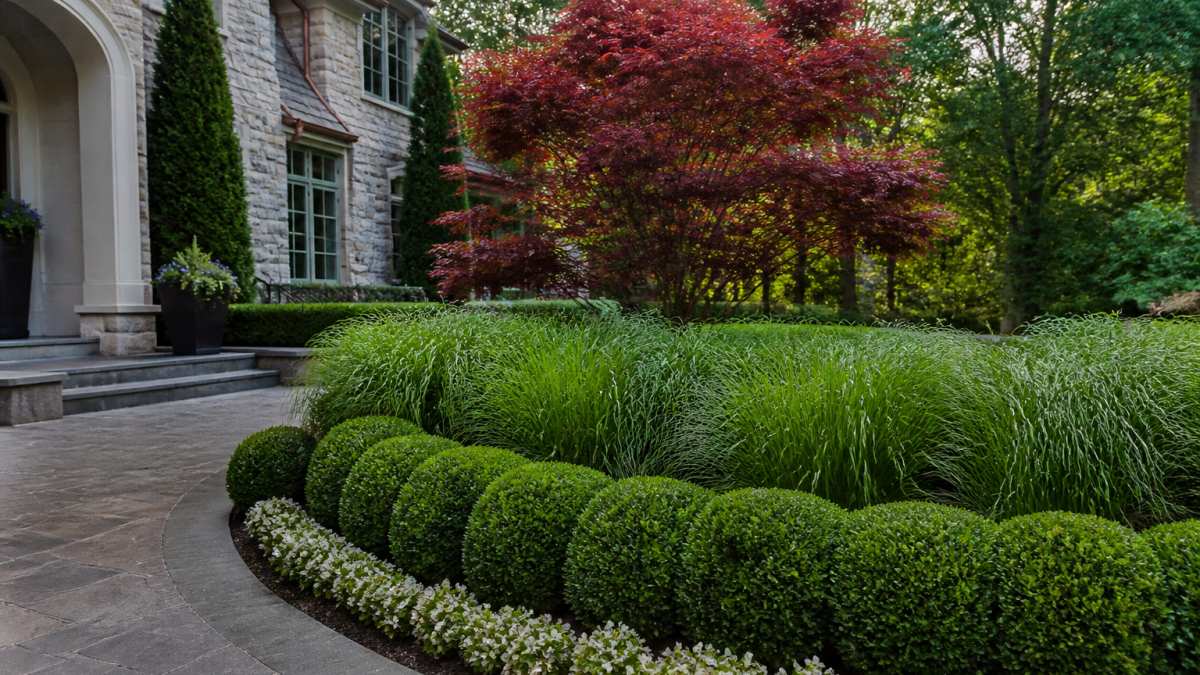
1. Boxwood: The Foundation of Formal Elegance
Boxwood is the plant most associated with high-end residential landscape design. Its dense, fine-textured foliage and ability to hold a clean shape make it the go-to choice for formal gardens and contemporary properties alike.
Boxwood works because it's versatile. You can plant it as a low hedge, shape it into topiaries, or use it as a specimen shrub. The plant tolerates pruning exceptionally well, which means you can maintain crisp lines and geometric forms that read as intentional and refined. In luxury landscapes, that control matters enormously.
Common boxwood varieties for the region include Green Velvet (cold-hardy and dense) and American boxwood (slower-growing but elegant). Both perform reliably in the climate without requiring coddling.
The main consideration with boxwood is spacing. Plant too close together and you create a dense, monotonous wall. Space them thoughtfully and you create rhythm and visual interest. Boxwood also prefers well-draining soil and afternoon shade in hot summers.
2. Arborvitae: Privacy and Year-Round Structure
Arborvitae serves a practical function, screening views and creating privacy, while maintaining the refined appearance expected in luxury landscapes. Unlike many privacy plants that look utilitarian, quality arborvitae varieties have elegant form and fine texture.
The key is selecting the right variety. Emerald Green arborvitae has become the standard for upscale landscapes because it grows narrow and columnar, creates a clean vertical line, and maintains rich green color through winter. This plant doesn't require heavy pruning to look good, which makes maintenance more manageable.
Arborvitae works best when planted in groupings rather than as a single row. Stagger the spacing slightly and vary the height subtly, and you create a living screen that feels intentional rather than like a fence made of plants.
Plant arborvitae in full sun to part shade, and ensure good drainage. These plants can develop issues in poorly drained soil.
3. Hydrangea: Seasonal Color and Refined Beauty
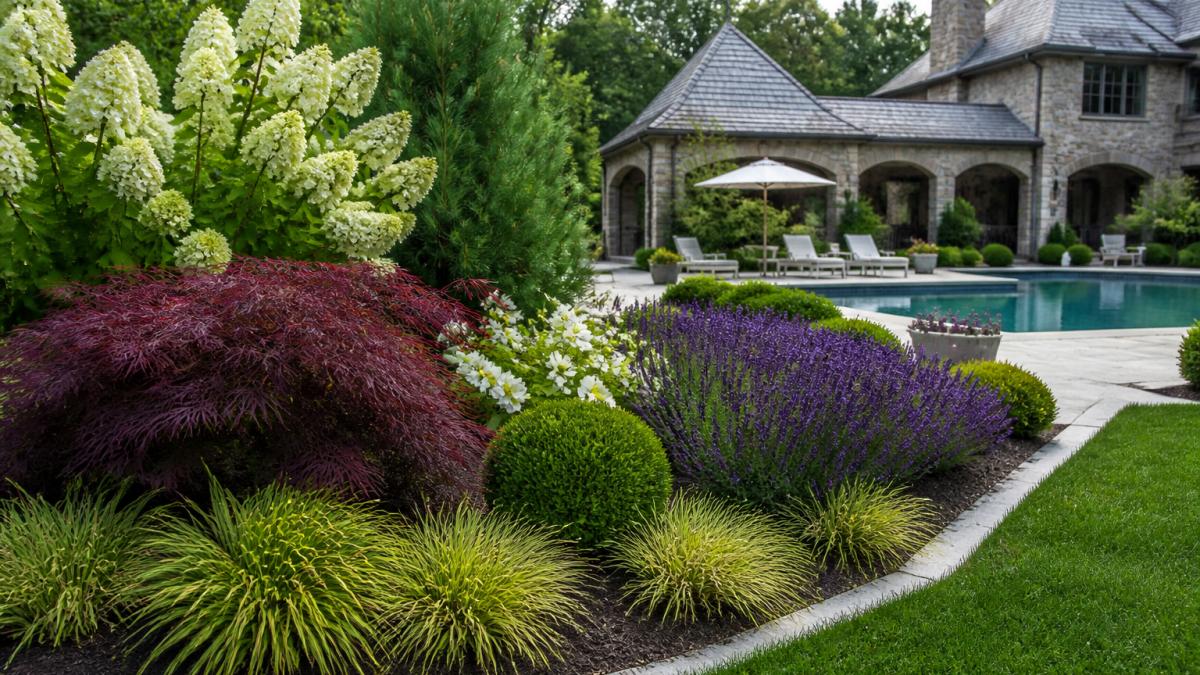
Hydrangea brings seasonal color to a luxury landscape without looking garish or over-planted. The flowers are substantial and impressive, yet sophisticated when used thoughtfully.
Panicle hydrangeas (like Grandiflora) work particularly well in formal settings because their flower form is more restrained than mophead varieties. The blooms emerge white or pale pink and deepen to rose tones as the season progresses, giving you color evolution rather than a static display. This quality appeals to homeowners who want visual interest without theatrical drama.
Oakleaf hydrangea offers another option: deeply lobed foliage that's attractive even before flowers appear, plus white flower panicles that age to bronze. This variety adds textural interest to a planting scheme in ways that go beyond just seasonal color.
Hydrangeas require consistent moisture and do best in morning sun with afternoon shade. In the region's climate, they're reliable performers that don't demand excessive fussing.
4. Ornamental Grass: Texture and Movement
Ornamental grasses add a dimension to luxury landscapes that woody plants cannot: movement, texture, and seasonal transformation. A well-placed ornamental grass catches light, moves with the breeze, and adds visual rhythm to the landscape.
Panicum (switchgrass) and miscanthus varieties work well in the region. These grasses provide fine texture in summer, turn striking colors in fall (purples, oranges, reds depending on variety), and maintain their dried form through winter for architectural interest.
The key to using ornamental grass in luxury landscapes is restraint. One or two specimens placed as focal points is more sophisticated than scattering them throughout. Pair ornamental grass with structural plants like boxwood or arborvitae, and you create a planting combination that feels intentional and balanced.
Ornamental grasses prefer full sun and well-draining soil. They're relatively low-maintenance once established, which aligns with the luxury homeowner's preference for beautiful results without constant work.
5. Japanese Maple: Focal Point and Year-Round Interest
Japanese maple is the plant that draws the eye and anchors a landscape design. Its delicate branching structure, fine foliage, and stunning fall color make it a natural focal point.
In luxury landscapes, Japanese maple works best as a specimen plant, placed where it can be appreciated from key vantage points. The tree's form is so distinctive that it doesn't need competition; it benefits from space around it and a background of darker foliage (like evergreens) that makes its form read more clearly.
Bloodleaf varieties maintain reddish color through the growing season, while green-leaved varieties offer spring emergence color and fall transformation. Both approaches work; the choice depends on your overall color palette.
Japanese maple requires afternoon shade in hot climates and consistent moisture. These aren't difficult requirements to meet, and the payoff in visual impact justifies the attention.
Evergreen Plants for Landscaping: Year-Round Appeal
The plants that make a luxury landscape look polished in January are evergreens. While deciduous plants offer seasonal drama, evergreens provide the consistent visual presence that prevents a landscape from looking bare or neglected during dormant months.
Evergreen plants for landscaping serve multiple functions simultaneously. They provide color when deciduous plants are bare. They screen views year-round. They anchor planting combinations and create visual weight that balances lighter seasonal plantings.
The best evergreens for luxury landscapes are those with refined form and fine texture. Coarse, heavy evergreens can look utilitarian. Fine-textured evergreens like boxwood, arborvitae, and certain hollies read as intentional and sophisticated.
Consider layering evergreens by height: tall varieties (arborvitae, columnar hollies) in the back, medium shrubs (boxwood, inkberry holly) in the middle, and low-growing evergreens in front. This layered approach creates depth and visual interest while maintaining the refined aesthetic that defines luxury landscape design.
Plants That Make a Yard Look Expensive: Design Principles
Certain design principles separate a luxury landscape from an ordinary one. The plants you choose matter, but how you use them matters equally.
Maturity and scale. Luxury landscapes feature plants that have had time to reach their mature size.
Repetition and rhythm. Rather than using many different plants, luxury landscapes often repeat key plants throughout the space. Three boxwoods placed thoughtfully create more visual impact than seven different shrubs scattered randomly.
Negative space. High-end landscapes don't overcrowd plantings. Space between plants allows each to be appreciated individually and prevents the "too much stuff" feeling that reads as cluttered rather than curated.
Textural variety. Combine fine textures (boxwood, ornamental grass) with bolder foliage (Japanese maple, oakleaf hydrangea) and you create visual interest without relying on color alone.
Seasonal planning. Plants that make a yard look expensive deliver interest across all seasons. Choose species that offer spring emergence color, summer structure, fall transformation, and winter form.
Maintenance and Seasonal Considerations for NY Climates
The region's climate demands plants that tolerate cold winters, variable spring conditions, and hot summers. The five plants we've highlighted all perform reliably in these conditions, but each has specific maintenance needs.
Boxwood benefits from late-winter pruning to maintain shape and encourage dense growth. Spring is the time to address any winter damage.
Arborvitae requires minimal pruning beyond removing dead branches. These plants are relatively low-maintenance, which appeals to homeowners who want beautiful results without constant work.
Hydrangea needs pruning after flowering to maintain shape and encourage next year's blooms. Consistent moisture is critical; inconsistent watering leads to stressed plants and fewer flowers.
Ornamental grass should be cut back in late winter before new growth emerges. This annual maintenance keeps plants vigorous and prevents them from becoming overgrown and unkempt.
Japanese maple requires minimal pruning beyond removing crossing or damaged branches. The natural form is usually more beautiful than any shape you could impose.
Creating Your Luxury Landscape Design Plan
A successful luxury landscape doesn't happen by accident. It requires thoughtful planning, quality plant selection, and professional installation.
Start by assessing your property's conditions: sun exposure, soil type, drainage, and existing trees or structures that influence microclimates.
Next, define your design goals. Are you seeking formal elegance, contemporary sophistication, or something between? Your plant selections should support that aesthetic consistently.
Consider the view from inside your home as well as from the street. The best luxury landscapes are beautiful from multiple vantage points.
Finally, think about maintenance realistically. A luxury landscape should enhance your life, not become a burden. Choose plants that perform well in your conditions and align with the level of maintenance you're willing to provide.
At Four Seasons Landscaping NY, we've spent over 20 years designing and installing luxury landscapes throughout the region.
Creating a luxury landscape that stands out requires more than choosing attractive plants.
Frequently Asked Questions
What plants make a luxury landscape design look more expensive?
Plants that make a yard look expensive share three qualities: mature form, structural presence, and year-round visual interest. Boxwoods, arborvitaes, and Japanese maples deliver refined geometry and layered depth. Evergreen plants for landscaping provide consistent backbone; flowering specimens like hydrangeas add seasonal polish. The key is selecting plants suited to your site conditions and spacing them to allow mature growth, crowded plantings read as budget-conscious, while properly spaced plants signal confidence and investment.
Which evergreen plants for landscaping work best in NY's climate?
Boxwood and arborvitae thrive in NY's cold winters and variable spring weather. Arborvitae handles both wet and dry soils; boxwood prefers well-draining beds. Plant in fall or early spring to establish roots before heat or hard frost. Mulch newly planted evergreens to protect shallow root systems during their first winter.
How do I choose plants for a high-end landscape design?
Start with site conditions: sun exposure, soil type, drainage, and salt tolerance matter more than aesthetics alone. Select structural plants first, evergreens and trees that define garden form year-round. Layer in seasonal color and texture with perennials and flowering shrubs. Consider mature size to avoid overcrowding; a single well-spaced specimen reads luxury better than a dense mixed planting. Finally, commit to consistent maintenance; polished landscapes require regular pruning, watering during establishment, and seasonal care.
What is the difference between luxury landscape design and standard landscaping?
Luxury landscape design prioritizes plant quality, spacing, and long-term structure over quick visual impact. It emphasizes foliage texture, form, and year-round interest rather than relying on seasonal color alone. High-end designs use premium materials in hardscaping. Maintenance is built into the plan from the start, ensuring the landscape matures beautifully rather than declining over time.