 blog
blog
Is Bluestone Worth It for Luxury Patios?
Table of Contents
- The Case for Bluestone in Luxury Outdoor Spaces
- Durability of Bluestone in Freeze-Thaw Climates
- Cost Per Square Foot and Long-Term Financial Value
- Natural Stone vs Concrete Pavers for Luxury Patios
- Bluestone Patio Maintenance Tips and Sealing Strategy
- Installation Methods: Dry-Laid vs Wet-Laid
- Is Bluestone the Right Choice for Your Property?
- Frequently Asked Questions
The Case for Bluestone in Luxury Outdoor Spaces
Last Updated: September 27, 2026
The Case for Bluestone in Luxury Outdoor Spaces
Whether is bluestone worth it for luxury patios depends on your climate, traffic patterns, and maintenance commitment. It delivers genuine character and ages beautifully, but requires thoughtful care and realistic expectations about weathering.
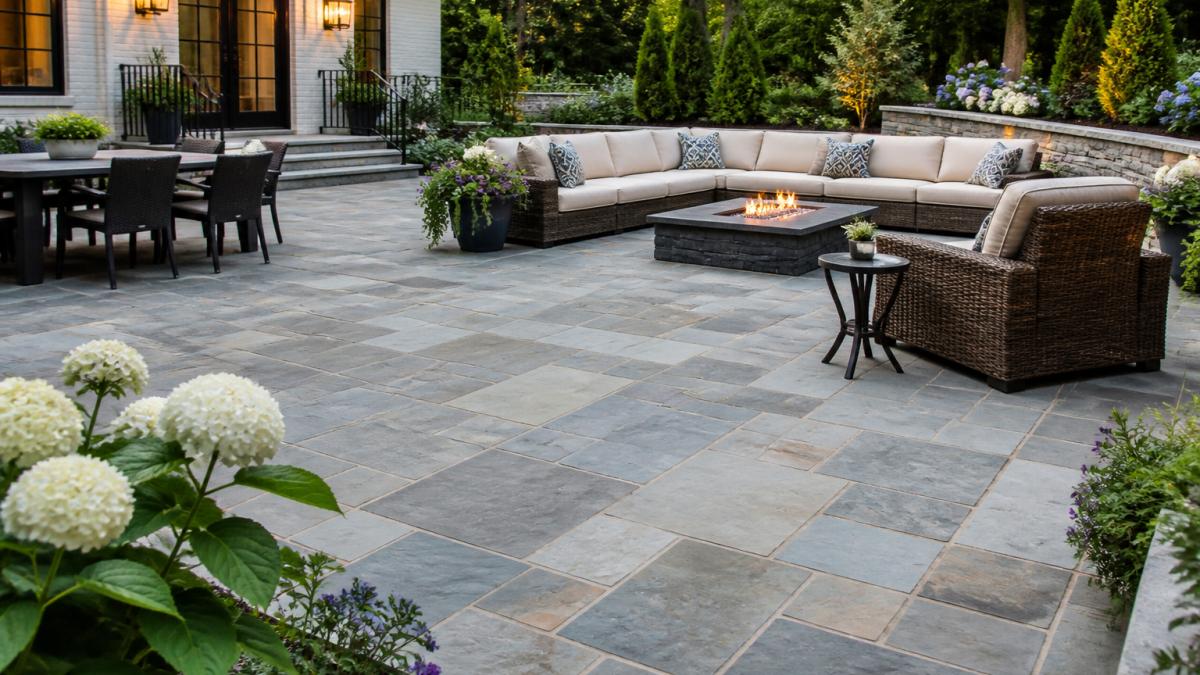
Bluestone's blue-gray tones and natural variation create understated elegance that concrete cannot match. Each stone is unique, with subtle color shifts and texture that photograph beautifully. Unlike manufactured materials, bluestone signals quality and permanence.
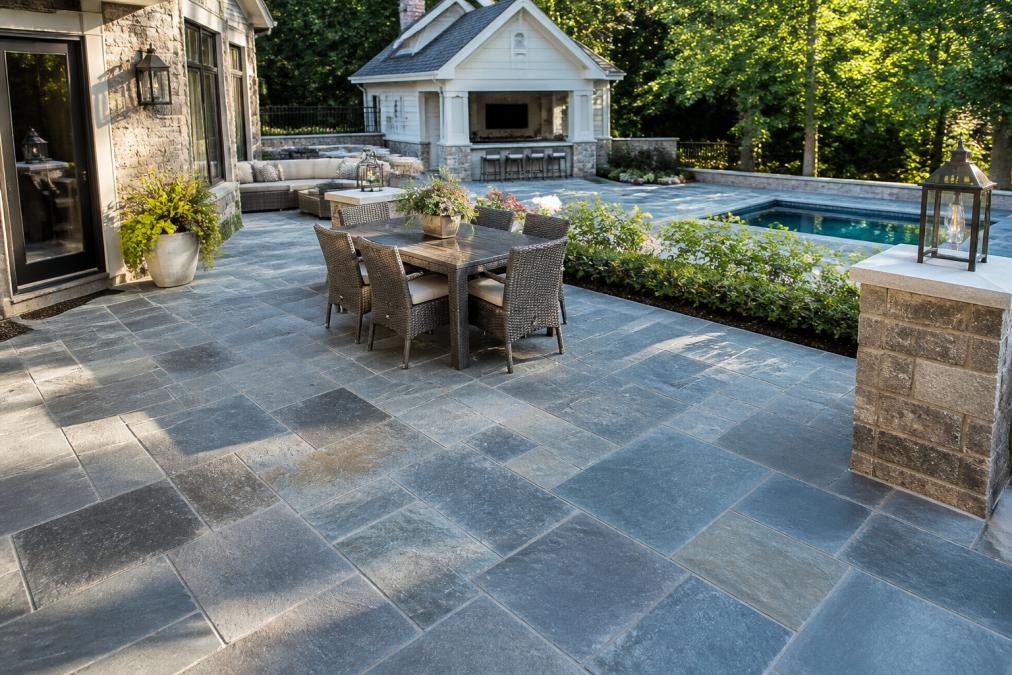
A smart investment requires understanding the long-term reality: bluestone is porous, absorbs water, stains easily, and can spall in freeze-thaw climates without proper sealing and maintenance. The material is durable when installed and cared for correctly.
Durability of Bluestone in Freeze-Thaw Climates
Bluestone holds up well in freeze-thaw cycles when properly sealed and installed with adequate drainage. Denser bluestone with lower water absorption performs better in cold climates. Water trapped inside the stone expands when it freezes, causing spalling and deterioration.
Natural cleft bluestone is slightly more resistant to freeze-thaw damage than thermal finishes, which can trap water in surface irregularities. Both require sealing to minimize water penetration.
Installation method matters as much as the stone itself. A properly constructed sub-base with drainage allows water to move through rather than pooling beneath the stones. Dry-laid installation with permeable jointing sand performs better in cold climates because it allows drainage; wet-laid installation can trap moisture if the mortar isn't breathable.
Cost Per Square Foot and Long-Term Financial Value
Understanding where your stone originates directly affects price and performance. Pennsylvania bluestone typically commands a premium over imported stone, but the trade-off is worth examining for luxury properties.
Pennsylvania bluestone is denser and more freeze-thaw resistant than many imported varieties, with lower transportation costs and regional supply-chain benefits. Imported bluestone may cost less but often requires longer lead times and carries higher environmental impact. Density and color consistency vary more widely with imported stone, complicating aesthetic uniformity.
The financial case depends on how long you plan to stay in the home and whether you value the aesthetic premium over maintenance. The decision hinges on three factors: initial cost, ongoing maintenance, and long-term repairability.
Concrete pavers cost less upfront and require minimal maintenance, but they fade over time. A well-maintained bluestone patio develops character and looks intentional after a decade, translating to higher perceived property value in the luxury market.
Maintenance costs are real: sealing every 2-3 years, addressing stains, and replacing damaged stones add up. Budget for ongoing sealing and repairs. However, bluestone's repairability advantage, individual stones can be replaced without affecting the entire patio, becomes financially significant over time.
Individual damaged bluestone can be replaced without affecting the entire patio, costing far less than resetting large concrete sections. Bluestone's repairability extends your investment indefinitely with targeted maintenance, lowering cost-per-year-of-use over a 20+ year horizon.
For homeowners staying 10+ years and committed to maintenance, bluestone's long-term value exceeds concrete. For shorter time horizons or maintenance-averse homeowners, concrete delivers better value.
Natural Stone vs Concrete Pavers for Luxury Patios
Natural stone and concrete pavers serve the same function but deliver different value propositions. Concrete pavers offer predictability, uniform sizing, and lower maintenance. They're manufactured for consistency, which appeals to homeowners who want a clean, modern aesthetic that stays looking new.
Bluestone and other natural stone options prioritize character and luxury feel. The variation in color, texture, and aging is the point. Natural stone develops a patina, weathering that enhances rather than detracts. Concrete fades and can crack unpredictably.
For high-traffic areas, both perform well if installed correctly. Bluestone's density (when properly selected) is comparable to or exceeds concrete. The difference is in maintenance philosophy. Concrete requires less active care but looks dated faster. Bluestone requires regular maintenance but improves with age.
The luxury market strongly favors natural stone for patios. It's what distinguishes a high-end property from a standard one. Concrete pavers work for contemporary designs, but they don't convey the same level of craftsmanship or permanence.
| Characteristic | Bluestone | Concrete Pavers |
|---|---|---|
| Aesthetic aging | Improves with patina | Fades over time |
| Hardscape maintenance intensity | High (sealing, stain care) | Low (occasional cleaning) |
| Repairability | Individual stones replaceable | Often requires section reset |
| Luxury perception | Premium, natural character | Modern, uniform, practical |
| Freeze-thaw performance | Excellent when sealed | Good, minimal maintenance |
Bluestone Patio Maintenance Tips and Sealing Strategy
Sealing is non-negotiable for bluestone in most climates, but not all sealers perform equally. Understanding the difference between sealer types directly affects whether your patio maintains its natural texture and color or becomes darkened, slick, or prone to peeling.
Penetrating vs. Film-Forming Sealers
Penetrating sealers absorb into the stone and protect from within, blocking water and oil penetration without creating a visible surface coating. These are the gold standard for luxury bluestone patios because they preserve the stone's natural appearance, texture, and color variation. Penetrating sealers are typically siloxane or silane-based and allow the stone to breathe, which is critical in freeze-thaw climates where trapped moisture accelerates spalling.
Film-forming sealers (acrylic or polyurethane-based) create a protective layer on the surface. While they offer excellent stain resistance, they darken the stone, create a glossy or plastic appearance, and can peel or flake over time, especially in high-traffic areas. For luxury patios where aesthetic integrity matters, film-forming sealers are generally inappropriate.
Sealing Schedule and Reapplication
Penetrating sealer should be applied every 2-3 years, depending on climate and foot traffic. High-traffic patios and those in harsh freeze-thaw regions need more frequent reapplication. A simple water-drop test reveals when sealing is due: if water beads on the surface, the sealer is still effective; if water absorbs into the stone, resealing is overdue.
Proper surface preparation before sealing is critical. The stone must be clean and completely dry. Dirt, algae, or residual moisture trapped under sealer will cause discoloration and reduce sealer effectiveness. Many luxury patio failures result from sealing over a dirty or damp surface.
Stain Prevention and Removal
Clean spills promptly. Bluestone's porosity means that wine, oil, acidic substances, or rust-bearing materials can stain if left sitting. A soft brush and mild soap handle most fresh stains. For set-in stains, a poultice (a paste of baking soda and water, or specialized stone poultice products) can draw stains from the pores over 24-48 hours. Avoid harsh chemicals, vinegar, or pressure washing above 1500 PSI, which can damage the stone surface and force water deeper into the material.
Rust stains from metal furniture or planters are common on bluestone. Prevent them by using felt pads under metal legs and moving planters seasonally. If rust stains develop, specialized rust removers formulated for natural stone can address them without damaging the sealer.
Drainage and Freeze-Thaw Protection
In freeze-thaw climates, ensure proper drainage. Water should not pool on the surface or underneath. If you notice areas where water sits after rain, address the grading or sub-base drainage before sealing. Trapped water is the primary cause of spalling in cold climates, and no sealer can fully compensate for poor drainage.
De-icing salts damage bluestone.
Annual Inspection and Targeted Repair
Installation Methods: Dry-Laid vs Wet-Laid
Dry-laid installation (also called sand-set) places bluestone on a prepared sub-base with sand joints. This method allows water to drain through rather than pooling beneath the stones. For freeze-thaw climates and areas where drainage matters, dry-laid is superior. It's also more forgiving for repairs, individual stones can be lifted and reset without disturbing the entire patio.
Is Bluestone the Right Choice for Your Property?
Is bluestone worth it for luxury patios? Yes, if you meet three criteria: you plan to stay in the home long enough to appreciate the investment (ideally 10+ years), you're committed to maintenance (sealing every few years and addressing issues promptly), and you value the aesthetic premium enough to justify the ongoing care.
Frequently Asked Questions
What are the main disadvantages of using bluestone for patios?
Bluestone requires regular sealing to prevent water absorption and staining, can develop efflorescence (white mineral deposits) over time, and may crack in extreme freeze-thaw cycles if not properly installed on a stable sub-base. Its porous nature means it demands more maintenance than concrete pavers, and individual stone replacement can be difficult if damage occurs. Initial installation costs also run higher than many alternatives.
How does bluestone compare to concrete pavers in terms of durability?
Bluestone offers superior aesthetic appeal and natural stone longevity when properly sealed and maintained, but concrete pavers provide more predictable freeze-thaw resistance and require less maintenance. Bluestone's durability depends heavily on regional climate and installation quality, in areas with intense freeze-thaw cycles, concrete may prove more reliable. However, bluestone's natural density and stone thickness give it decades of life with proper care, while concrete often shows wear after 15-20 years.
What maintenance is required to keep a bluestone patio looking new?
Bluestone patio maintenance includes annual or bi-annual sealing with appropriate stone sealers, regular sweeping to prevent debris accumulation, prompt removal of spills to avoid staining, and occasional power washing at low pressure. Jointing sand between stones may need refreshing over time. Long-term chemical maintenance involves monitoring for efflorescence and using appropriate cleaners designed for natural stone. Professional resealing every 2-3 years extends the patio's lifespan and preserves its appearance significantly.
Is bluestone too hot to walk on barefoot in summer?
Bluestone's surface temperature rises in direct sunlight but typically stays cooler than concrete or asphalt due to its natural stone composition and thermal properties. The thermal finish (textured surface) provides better traction and can feel less hot underfoot than smooth finishes. However, in peak summer heat, any dark stone will absorb significant warmth. Strategically placed shade structures or plantings can help manage surface temperature if this is a concern for your luxury patio design.