 blog
blog
Hardscaping Materials Cost Per Square Foot: 2026 Guide
Table of Contents
- Hardscaping Materials Cost Per Square Foot: What You Need to Know
- How Material Types Affect Your Hardscaping Costs
- Hardscaping Labor Cost Per Square Foot Breakdown
- Site Preparation, Excavation, and Base Installation Impact
- Design Complexity and Project Scope: What Changes Your Budget
- Hidden Costs: Permits, Sealing, and Long-Term Maintenance
- Estimating Your Total Hardscaping Investment
- Conclusion
- Frequently Asked Questions
Last Updated: September 29, 2026
Hardscaping Materials Cost Per Square Foot: What You Need to Know
Understanding hardscaping materials cost per square foot is essential before committing to any outdoor project. Costs vary dramatically based on material choice, site conditions, and design complexity, not just square footage alone.
Most homeowners ask: "How much per square foot?" The answer depends on material type, design complexity, and site conditions. A basic concrete slab costs far less than interlocking pavers with custom patterns and drainage systems, which is why understanding the breakdown matters before you commit.
How Material Types Affect Your Hardscaping Costs
Material choice is the single largest driver of your hardscaping materials cost per square foot, with each option offering different durability, aesthetics, and price points.
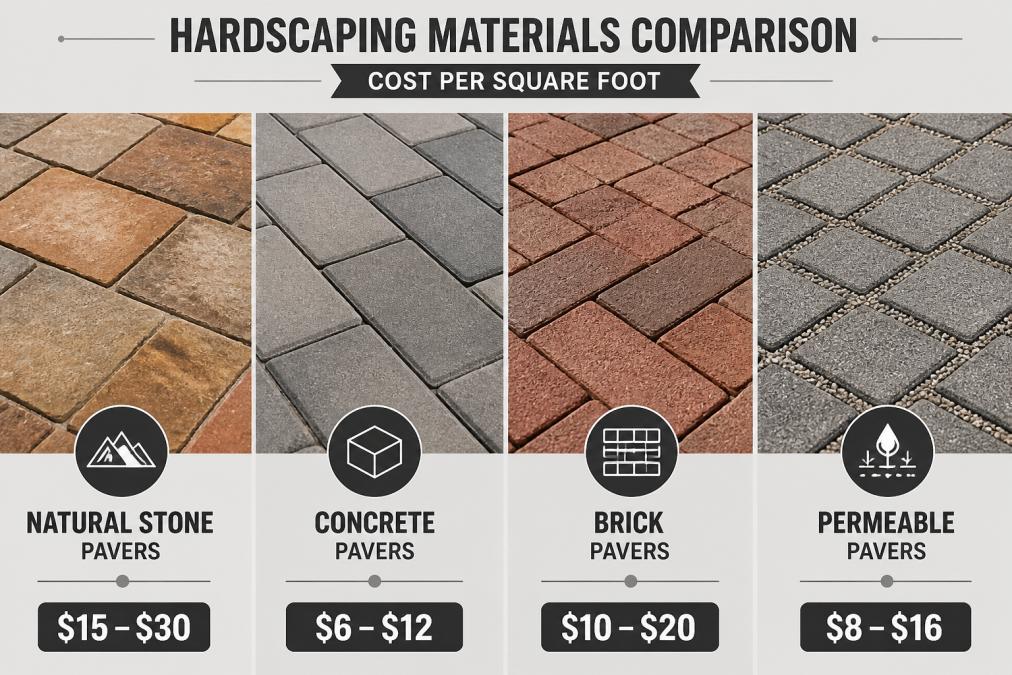
Natural Stone vs Concrete Pavers: Price and Performance
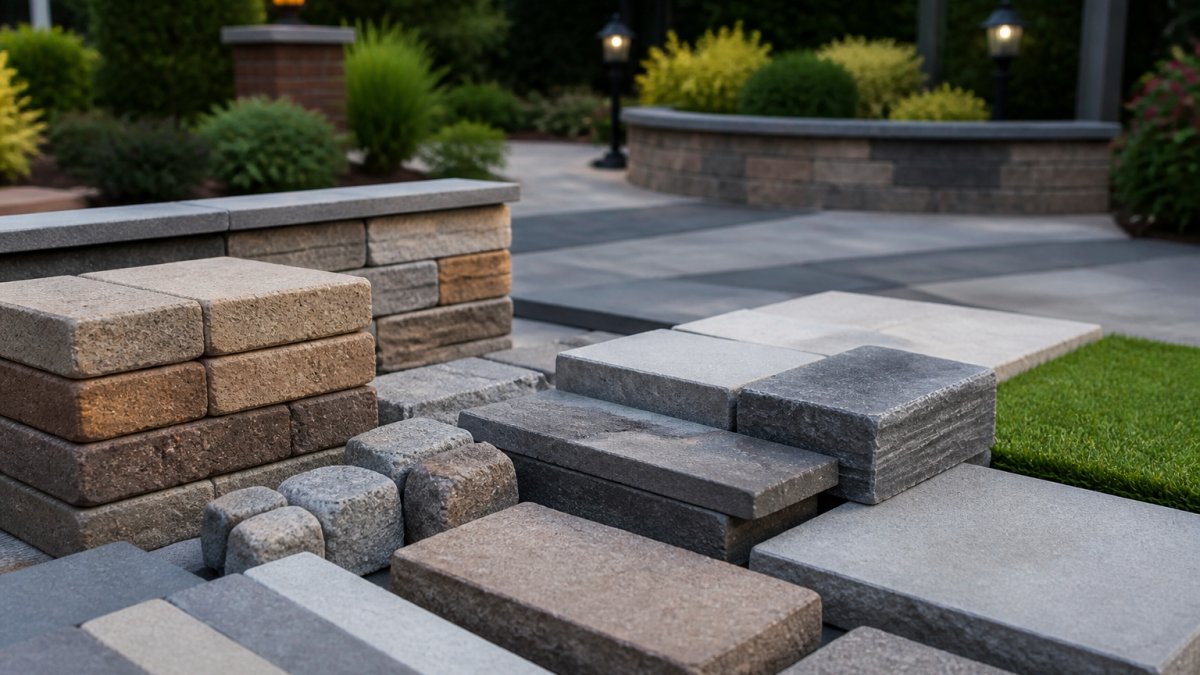
Natural stone pavers (flagstone, slate, granite) command higher costs than concrete but offer superior durability and aesthetic aging. Installation requires more care due to variable thickness and irregular shapes, increasing labor demands.
Concrete pavers offer consistency, faster installation, and design flexibility at lower cost. The trade-off: concrete requires resealing every 2-3 years, adding long-term maintenance expenses.
Natural stone ages gracefully while concrete fades more visibly. For luxury properties where curb appeal impacts value, natural stone often justifies higher initial cost through superior longevity.
Interlocking Pavers, Brick, and Aggregate Options
Interlocking pavers lock together without mortar, creating a flexible surface that resists cracking in freeze-thaw climates. Installation requires proper base preparation and compaction.
Brick pavers deliver classic charm, durability, and permeability. They cost more than concrete but less than premium stone.
Aggregate (crushed stone, pea gravel) offers the most budget-friendly option but requires regular raking and replenishment. Maintenance costs accumulate, making aggregate less economical for high-traffic areas.
Hardscaping Labor Cost Per Square Foot Breakdown
Labor represents 40-60% of your total hardscaping investment. Understanding what drives labor costs helps you make informed decisions about material selection and design.
Basic paver installation requires less labor than complex projects with retaining walls, curved patterns, or drainage systems.
Site accessibility matters significantly. Projects on steep slopes, tight spaces, or requiring hand-finishing work demand more labor hours.
Site Preparation, Excavation, and Base Installation Impact
Site preparation and base installation are where unexpected costs often emerge. Poor preparation causes settling, cracking, and premature failure. Understanding soil composition and drainage requirements helps you anticipate hidden expenses.
How Soil Type Determines Base Preparation Depth and Cost
Clay-heavy soils are problematic: they compact unevenly, retain water, and cause cracking. Clay requires 4-6 inches of compacted gravel base plus geotextile fabric, or 8-12 inches in severe cases, effectively doubling site preparation costs.
Sandy soils are ideal: they drain quickly and compact predictably, requiring only 2-4 inches of base material and reducing excavation costs.
Loamy soils (sand, silt, clay mix) require standard 3-4 inch base preparation and serve as the baseline for most estimates.
A soil test revealing clay-heavy conditions can increase base preparation costs 30-50% beyond initial estimates, making pre-quote site assessment essential.
Drainage System Requirements and Hidden Water Damage Costs
Drainage is the silent killer of hardscaping investments. Standing water beneath hardscaping causes freeze-thaw damage, material deterioration, and structural failure. In regions with significant seasonal water or poor natural drainage, proper drainage systems are non-negotiable, and they add cost.
Subsurface drainage systems include perforated drain pipe, aggregate layers, and sometimes sump collection points. These systems prevent water from pooling beneath the hardscape. Installation requires excavation below the hardscape level, adding labor and material costs. A basic subsurface drainage system adds $1-3 per square foot to your project, depending on complexity and site conditions.
Geotextile fabric separates base material from soil, preventing clay or silt from migrating upward and contaminating the drainage layer. This inexpensive material ($0.10-0.30 per square foot) prevents costly failures and is standard in professional installations.
Grading and slope management ensure water flows away from the hardscape rather than pooling on its surface. Improper grading causes water to collect in low spots, leading to algae growth, freeze-thaw damage, and accelerated material deterioration. Correcting grading problems after installation is expensive; getting it right during site preparation is cost-effective insurance.
Permeable vs. impermeable materials change drainage requirements. Permeable pavers and porous concrete allow water infiltration, reducing the need for complex subsurface drainage infrastructure. This environmental benefit appeals to property owners concerned with stormwater management and can offset the slightly higher material cost by reducing drainage system complexity. Impermeable surfaces (solid concrete, natural stone without permeable base) require more robust drainage systems to prevent water damage.
Excavation Depth and Soil Removal Costs
Excavation depth depends on material type, base requirements, and site conditions. A simple paver patio typically requires 4-6 inches of excavation (accounting for base material and finished surface height). Retaining walls, integrated drainage, or significant grading changes can require 12-24 inches of excavation.
Soil removal is often overlooked in cost estimates. Excavated soil must go somewhere: reused on-site for grading, hauled away, or stockpiled. Hauling soil off-site adds $10-30 per cubic yard depending on distance and local disposal fees. A 500-square-foot patio with 6 inches of excavation generates roughly 10 cubic yards of soil. If that soil cannot be reused on-site, removal costs add $100-300 to your project.
Site accessibility affects excavation efficiency. Properties with tight access, steep slopes, or limited equipment space require hand-excavation or smaller equipment, increasing labor hours and cost. Properties with easy access and flat terrain allow larger equipment to work efficiently, reducing per-square-foot excavation costs.
The Cost Multiplier Effect of Poor Site Assessment
Projects that encounter unexpected soil conditions, drainage challenges, or utility conflicts during installation often see cost overruns of 20-40%. Professional site assessment before quoting, including soil composition evaluation and drainage pattern observation, prevents these surprises. While a formal soil test costs $200-500, it often saves thousands by revealing conditions that affect base preparation depth, drainage requirements, and material selection.
Design Complexity and Project Scope: What Changes Your Budget
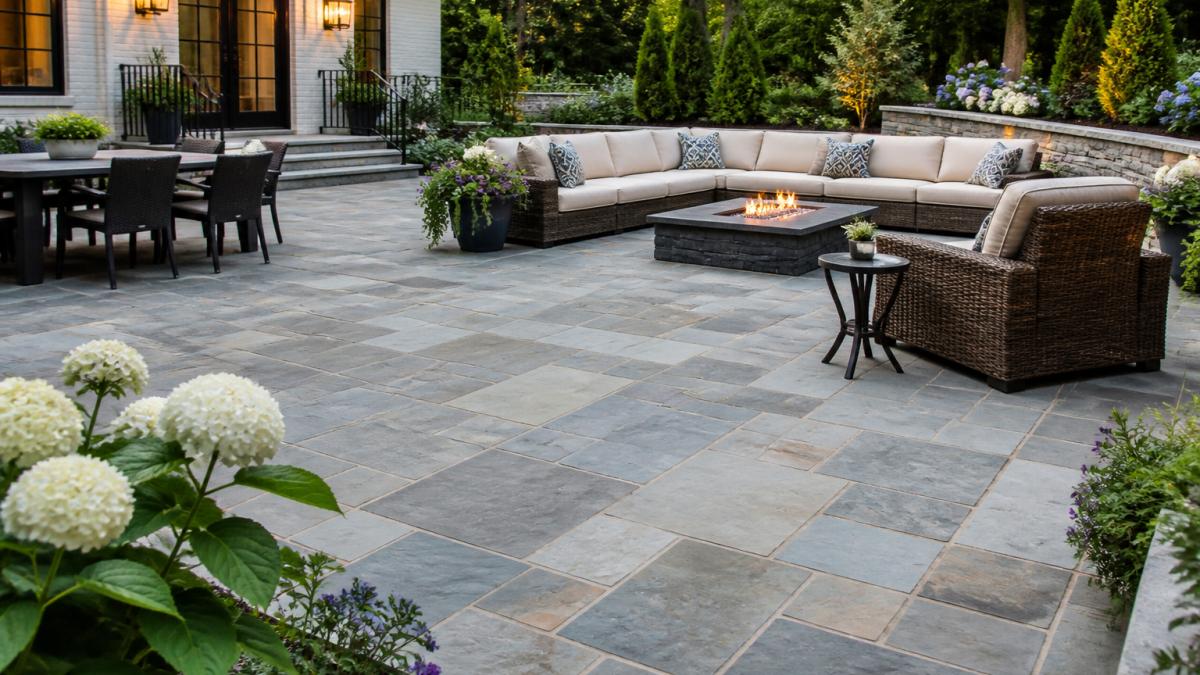
A simple rectangular patio costs far less than a multi-level hardscape with curved edges, integrated seating, and landscape transitions. Design complexity directly impacts both material waste and labor hours.
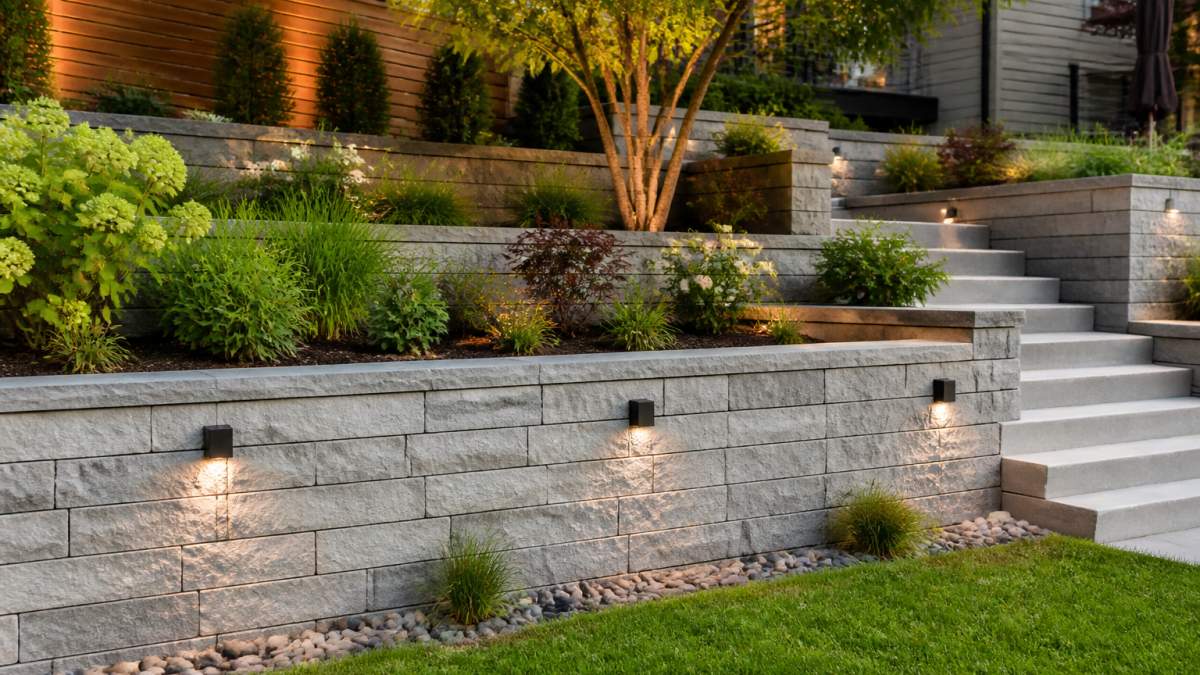
Custom patterns require more cuts and precise alignment, increasing labor time. Curved elements are more challenging to execute than straight lines. Multi-level designs with steps, retaining walls, or integrated features demand skilled coordination and often require additional structural considerations.
Project scope extends beyond the hardscape itself. Landscape integration, how the hardscape connects to existing plantings, irrigation, and overall property design, affects installation complexity. A hardscape that requires regrading, irrigation adjustments, or landscape modifications costs more than one that fits neatly into existing conditions.
Four Seasons Landscaping NY specializes in luxury residential design where aesthetic cohesion and functional excellence matter equally. We approach each project as part of your overall property transformation, not as an isolated installation. Whether you're envisioning a stunning patio for summer entertaining or planning year-round curb appeal with Holiday Lighting and Décor, we coordinate every element to create a cohesive outdoor sanctuary.
Hidden Costs: Permits, Sealing, and Long-Term Maintenance
Beyond material and labor, several hidden costs often surprise homeowners. More importantly, understanding the long-term cost-per-year-of-life for different materials reveals which upfront investments deliver the best value over time.
Permits, Inspections, and Regulatory Costs
Permits and inspections vary by municipality and project scope. Larger projects, retaining walls above certain heights, and work near property lines typically require permits. Building permits ensure installations meet local codes and safety standards. Inspection fees are modest but add to your project budget.
Material Longevity and Cost-Per-Year Analysis
This is where most hardscaping guides fall short. A material's upfront cost tells only half the story; its lifespan and maintenance burden determine true cost-effectiveness.
Concrete pavers typically last 15-25 years with proper maintenance. However, they require resealing every 2-3 years, and the cumulative cost of sealant applications, cleaning, and eventual replacement of damaged sections adds up.
Sealing, Cleaning, and Maintenance Schedules
Sealing costs apply to most hardscaping materials. Natural stone and concrete benefit from protective sealing that extends lifespan and maintains appearance. Initial sealing happens during installation; resealing occurs every 2-3 years for concrete and brick, and every 3-5 years for natural stone, depending on traffic and climate exposure.
Estimating Your Total Hardscaping Investment
Calculate your total hardscaping materials cost by combining three components: materials, labor, and contingency.
Conclusion
Hardscaping materials cost per square foot depends on far more than material price alone. Site conditions, labor complexity, design sophistication, and long-term maintenance all influence your final investment. Understanding these factors helps you make informed decisions that balance budget, aesthetics, and durability.
Frequently Asked Questions
What is the least expensive hardscape material?
Concrete slab and basic aggregate are typically the most budget-friendly hardscaping options. However, cost per square foot varies significantly based on quality, thickness, and installation complexity. Permeable pavers cost more upfront but reduce long-term drainage maintenance. Your choice depends on durability expectations and how long you plan to keep the hardscaping in place. Request a detailed quote to compare material-specific pricing for your project scope.
How much does hardscaping labor cost per square foot?
Hardscaping labor cost per square foot depends on site conditions, design complexity, and local contractor rates. Labor typically represents 40-60% of total hardscaping project cost. Factors like excavation depth, sub-base preparation, geotextile fabric installation, and compaction requirements all affect labor hours. Contractor markup and overhead also vary. Get quotes from multiple installers to understand labor pricing in your area, and ask contractors to itemize labor separately from materials.
How much would a 20x20 paver patio cost?
A 20x20 patio is 400 square feet. Total cost depends on material choice, site preparation, and labor rates. Concrete pavers typically cost less per square foot than natural stone. Budget must also include excavation, base preparation, joint sand, sealing, and potential drainage systems. Site conditions, soil type, existing grade, and drainage needs, significantly impact final pricing. Contact a hardscaping professional for a site-specific estimate rather than relying on generic per-square-foot averages.
What factors influence the cost of premium hardscaping materials?
Premium hardscaping materials cost more due to sourcing, durability, and aesthetic appeal. Natural stone, permeable pavers, and specialty brick command higher prices than standard concrete. Material thickness, finish quality, color options, and availability also affect cost. Installation complexity increases when using premium materials, they may require specialized techniques, additional base preparation, or expert craftsmanship. Design complexity and customization further influence material pricing. Longevity ROI often justifies premium material investment over time.