 listicle
Year Round Property Maintenance Plans: A 2026 Guide
Table of Contents
- What a Year Round Property Maintenance Plan Includes
- Your Seasonal Landscape Maintenance Checklist
- The Benefits of Professional Property Maintenance
- DIY vs. Professional Service ROI: A Cost-Benefit Analysis
- Maintenance Plan Contract Red Flags to Avoid
- How to Choose the Right Year Round Property Maintenance Plan
- Build a Plan That Protects Your Property's Value
- Frequently Asked Questions
Last Updated: September 4, 2026
A year round property maintenance plan is a scheduled, proactive approach to preserving your home's systems, landscape, and structural integrity across all four seasons. The Four Seasons Landscaping NY team has spent over 20 years helping luxury homeowners protect their investments, and the most common thread among properties that hold their value is consistency. Instead of reacting to problems as they surface, these plans prevent the small issues that become costly emergency repairs.
What a Year Round Property Maintenance Plan Includes
A comprehensive year round property maintenance plan coordinates routine inspections, scheduled maintenance, and preventative care so no part of your property is neglected for more than a few weeks. The goal is asset protection: catching a failing gutter system or stressed tree before it damages your foundation or roof.
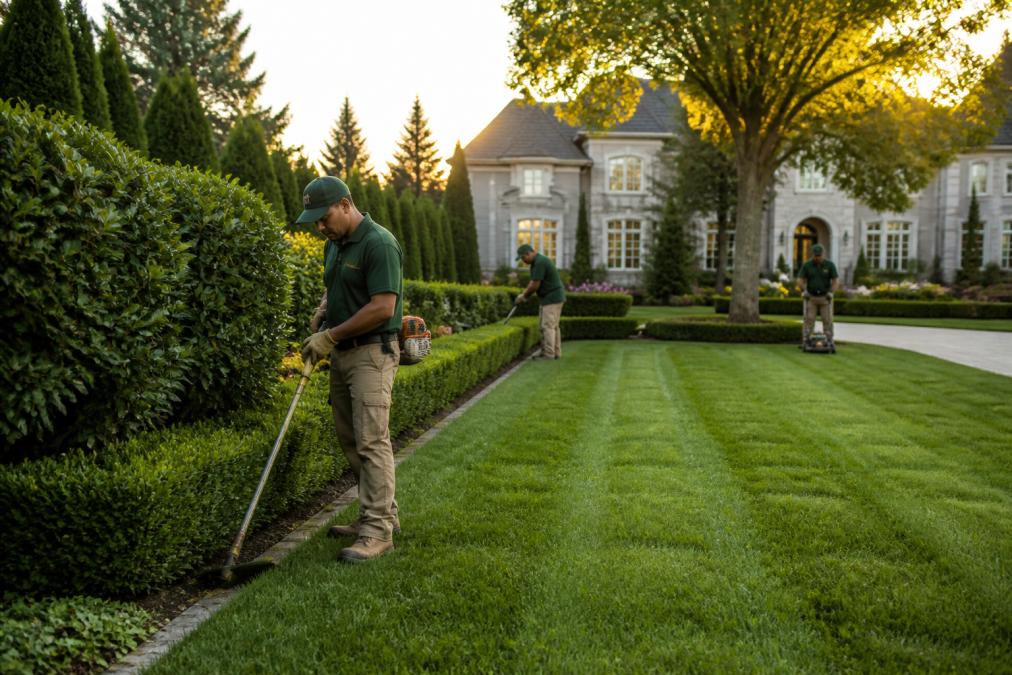
Most plans operate on a service agreement that defines what happens each month. The best agreements specify visit frequency, scope of work, and how weather-related changes are handled.
Service Tiers: From Basic Care to Full-Service Management
Property maintenance plans generally fall into three tiers. A basic plan covers lawn mowing, fertilization, and leaf removal. A mid-tier plan adds seasonal services like pruning, mulch installation, and gutter cleaning. Full-service management bundles everything, including snow removal, holiday lighting and décor installation, masonry repair, and irrigation system maintenance.
Your Seasonal Landscape Maintenance Checklist
The most effective way to understand year round property maintenance is to map tasks to the calendar. Each season creates different demands, and missing the window for a task often means waiting a full year for the next opportunity.
| Season | Core Tasks | Frequency |
|---|---|---|
| Spring | Cleanup, mulch beds, start irrigation, first fertilization | Weekly visits |
| Summer | Mowing, pruning, pest monitoring, irrigation adjustment | Weekly visits |
| Fall | Leaf removal, gutter cleaning, winterization, final fertilization | Bi-weekly to weekly |
| Winter | Snow management, ice control, holiday lighting and décor | On-demand per storm |
Spring: The Reset (March - May)
Spring begins with a critical debris cleanup. Winter leaves and matted grass smother new growth and create a haven for pests and fungal diseases. As soon as the ground is workable, thorough raking and thatch removal is non-negotiable. This is also the time to inspect hardscaping for frost heave, where freezing and thawing cycles have shifted pavers or cracked walkways.
Once nighttime temperatures consistently stay above freezing, start the irrigation system (the EPA). Before turning on the water, a professional will inspect each head for winter freeze damage. The first fertilization should use a slow-release nitrogen formula to encourage deep root growth rather than a quick green-up that leaves the lawn vulnerable to summer drought.
Summer: The Vigilance Window (June - August)
Summer shifts from restoration to vigilance. The primary job is monitoring. Irrigation controllers need adjustment as rainfall patterns shift; a system set for spring will overwater in a dry July or underwater during a wet June.
Pest monitoring becomes critical in summer. Grubs, chinch bugs, and Japanese beetles emerge in the heat. The key is catching an infestation before it spreads; a brown patch in the lawn is often the first sign. A professional will identify the specific pest and apply a targeted treatment, protecting beneficial insects and pollinators. This is also the season for structural pruning, removing dead or crossing branches to prevent storm damage later in the year.
Fall: The Winterization Sprint (September - November)
Fall is the busiest and most consequential window. The work you do here determines how well your property survives winter. Leaf removal is not just about curb appeal; a thick layer of wet leaves suffocates the lawn, leading to bare patches in spring.
Gutter cleaning is a non-negotiable fall task. Clogged gutters cause water to back up under the roofline, leading to ice dams in winter that can damage shingles and cause interior leaks. It needs to happen after most leaves have fallen but before the first hard freeze.
Irrigation winterization is the most technical fall task. A professional will use an air compressor to blow out water from the lines, preventing freeze damage that can crack underground pipes. The final fertilization of the year, often called a winterizer, is applied in late fall. This formula is high in potassium, which strengthens the root system and helps the lawn survive the cold and green up faster in spring.
Winter: The Protection Phase (December - February)
Winter shifts from active growth management to protection. The focus is on snow and ice management, not just for convenience but for safety and liability. A proactive plan includes pre-treatment of walkways and driveways before a storm hits, using de-icing agents safe for concrete and landscaping.
Winter is also the time for planning. It is the ideal season to schedule holiday lighting and décor installation, which adds curb appeal and security during the darkest months. A dormant landscape also offers a clear view of tree structure, making it easier to spot dead limbs that need removal before they become a hazard in a spring storm.
The Benefits of Professional Property Maintenance
Professional property maintenance delivers results that DIY efforts rarely match, particularly for high-end properties where curb appeal directly influences property value. Consistent professional care prevents deferred maintenance, the slow accumulation of neglected tasks that eventually forces expensive repairs.
What most guides miss is the liability angle. Snow and ice management on commercial properties is not just about convenience; it is about safety and reducing slip-and-fall risk. Similarly, professional crews carry insurance that protects you if a tree limb drops during pruning or a worker is injured on your property. The U.S. Consumer Product Safety Commission's guidance on outdoor property hazards underscores why routine professional inspections matter for safety.
DIY vs. Professional Service ROI: A Cost-Benefit Analysis
The honest answer is that DIY maintenance saves money on labor but costs you in three areas: time, equipment, and expertise. A full year of property upkeep requires a mower, edger, blower, pruning tools, fertilizer, mulch, and the knowledge to apply each correctly.
Professional services make financial sense when you factor in the cost of mistakes. A homeowner who prunes shrubs at the wrong time can destroy a season of blooms. An improperly winterized irrigation system can crack underground, requiring excavation to repair.
The ROI calculation changes for commercial properties. Property management companies and business owners face a different standard: their landscape represents their brand. A retail property with patchy turf or unmanaged snow sends a message to customers.
Maintenance Plan Contract Red Flags to Avoid
A year round property maintenance plan is a service agreement, and like any contract, the language dictates the quality of the experience. Most property owners skim the scope of work and the price, but the real risk lies in the fine print.
Red Flag #1: Vague Scope Language
The most common red flag is a scope of work that relies on ambiguous terms. If the agreement says "seasonal cleanup" or "routine landscape care" without defining specific tasks, you are setting yourself up for disputes. A reputable provider will list every task, its frequency, and what constitutes completion.
Ask for a detailed schedule of services by month. If the provider cannot or will not specify what happens in November versus May, that is a sign the plan is not truly year-round.
Red Flag #2: The Missing Weather Contingency Clause
Weather is the one variable guaranteed to disrupt a maintenance schedule. A plan that does not explain how snow events, extreme heat, or heavy rain affect the schedule leaves you exposed.
A strong contract will have a clear weather policy. It will state that services will be rescheduled within a specific timeframe (e.g., 48 hours) and that snow removal is triggered by a specific accumulation threshold (e.g., 2 inches).
Red Flag #3: The Long-Term Lock-In with No Performance Guarantee
Many plans require a seasonal or annual commitment to secure a lower rate. This is not inherently a problem, but it becomes one if there is no exit clause for poor performance. Look for a contract that includes a trial period or satisfaction guarantee.
Red Flag #4: The Reactive Service Disguised as a Plan
Finally, check whether the plan includes routine inspections or only reactive visits. A plan that only sends crews when you call is not a maintenance plan; it is a repair service with a retainer. A true year round plan includes scheduled inspections, often quarterly, where a crew lead walks the property, identifies potential issues, and performs preventative maintenance.
How to Use This Information
When you receive a proposal, compare it against this list. If you see any red flags, ask the provider to amend the contract. A professional company will be willing to clarify the scope and add a weather contingency clause.
How to Choose the Right Year Round Property Maintenance Plan
Choosing the right plan starts with an honest assessment of your property's needs and your own tolerance for oversight. A full-service provider like Four Seasons Landscaping NY consolidates landscape design, masonry, irrigation, and seasonal services under one roof, meaning one point of contact and consistent quality standards across every task.
When evaluating providers, ask about their track record with properties similar to yours. Request references and confirm they are fully insured. Clarify how they handle change orders, since unexpected work is where many relationships sour.
Guidance from the American Society of Landscape Architects on selecting and working with landscape professionals recommends verifying credentials and reviewing a portfolio before committing to a long-term agreement. The right partner should feel like an extension of your property team, not a vendor you must supervise.
Build a Plan That Protects Your Property's Value
A year round property maintenance plan is ultimately an investment in your property's long-term value and your own peace of mind. The properties that command the highest prices in any market share one trait: they are meticulously maintained, season after season. Schedule the work, catch problems early, and never let deferred maintenance take root.
Frequently Asked Questions
How does a year-round maintenance plan differ from seasonal cleanup?
A seasonal cleanup is a one-time service, like clearing leaves in the fall or planting annuals in the spring. A year-round maintenance plan is a proactive, scheduled program that includes routine inspections, preventative maintenance, and recurring tasks like mowing, pruning, and irrigation checks. The goal of a plan is to prevent small issues from becoming costly repairs, protecting your property's long-term value.
Is an extended maintenance plan worth it for a property?
For many property owners, a year-round maintenance plan is worth the investment because it shifts the focus from reactive repairs to proactive care. Consistent maintenance prevents deferred maintenance, which can lead to expensive emergency repairs and reduced property value. A plan also offers predictable budgeting, as you know your property upkeep costs in advance, and it ensures tasks are completed on schedule by professionals.
What home maintenance should be done yearly?
Annual maintenance typically includes tasks like HVAC system servicing, gutter cleaning, roof inspections, and exterior painting or staining. For the landscape, it involves pruning trees and shrubs, aerating the lawn, and winterizing the irrigation system. A professional property maintenance plan bundles these tasks into a logical schedule, ensuring nothing is missed and that work is done at the right time of year.
What are the benefits of professional property maintenance for high-end homes?
For high-end homes, professional property maintenance protects a significant financial asset. Benefits include preserving architectural details, maintaining manicured curb appeal, and ensuring specialized systems like lighting and irrigation function perfectly. It also offers discretion and convenience for time-conscious owners. A reputable company provides a consistent team that understands the property's specific aesthetics and standards, delivering a level of care that generalist providers cannot.
The challenge is not finding a maintenance provider; it is finding one you can trust to show up consistently and deliver work that matches your standards. Four Seasons Landscaping NY has provided full-service outdoor solutions for Westchester County properties for over 20 years, handling everything from custom design to year-round care with a fully insured, family-owned team. Get your free quote and put a plan in place that protects your property's value through every season.
This article was written using GrandRanker