 how-to
Prepare Commercial Grounds for Winter: A 2026 Guide
Table of Contents
- Why Winter Preparation Matters for Commercial Properties
- Commercial Snow and Ice Management Services: Your First Line of Defense
- Winterize Drainage and Hardscapes Before the Freeze
- Prepare Entryways and Walkways for Safety Compliance
- De-Icing Protocols and Liability Mitigation Strategies
- Enhance Winter Curb Appeal with Holiday Lighting and Décor
- Benefits of Consolidated Landscaping Services for Year-Round Winter Management
- Create Your Winter Storm Preparedness Checklist
- Frequently Asked Questions
Last Updated: September 30, 2026
Why Winter Preparation Matters for Commercial Properties
Winter brings frozen pipes, slippery walkways, and snow accumulation that damage buildings and create liability risks. Proactive planning costs far less than reactive repairs.
Commercial Snow and Ice Management Services: Your First Line of Defense
Professional snow and ice management prevents slip-and-fall liability, property damage, and operational disruptions, freeing your team to focus on business.
Here's what a comprehensive service covers:
- Snow removal: Clearing parking lots, walkways, and emergency exits within hours of snowfall
- De-icing application: Treating surfaces to prevent ice formation and improve traction
- Storm response: 24/7 availability during winter weather events
- Equipment staging: Pre-positioning salt, sand, and removal equipment on your property
- Documentation: Recording all service dates and conditions for liability protection
Winterize Drainage and Hardscapes Before the Freeze
Freeze-thaw cycles damage pavement, walkways, and drainage systems as water enters cracks, freezes, expands, and breaks surfaces, damage that compounds yearly.
Inspect and Clear Drainage Systems
Clogged drains trap water that freezes, creating ice dams and water backup into buildings. Clear gutters, downspouts, and storm drains before winter.
Steps to winterize drainage:
- Walk your entire property and identify all drainage points
- Remove leaves and debris from gutters and downspouts
- Check underground drains for blockages using a camera inspection if needed
- Verify grading slopes water away from your building foundation
- Install gutter guards to prevent debris accumulation during winter
Protect Pavement and Walkways from Freeze-Thaw Damage
Asphalt and concrete expand and contract with temperature swings. Small cracks become large fissures. Seal cracks before winter to keep water out.
Actions to take now:
- Seal all visible cracks in pavement and walkways
- Fill potholes that trap water and ice
- Apply sealant to protect the surface from salt and moisture
- Mark edges of parking areas so snow removal crews can see them under snow
- Remove trip hazards like loose pavement or tree roots
Prepare Entryways and Walkways for Safety Compliance
Slip-and-fall liability concentrates at entryways; a single lawsuit costs tens of thousands of dollars. Professional preparation reduces this risk significantly.
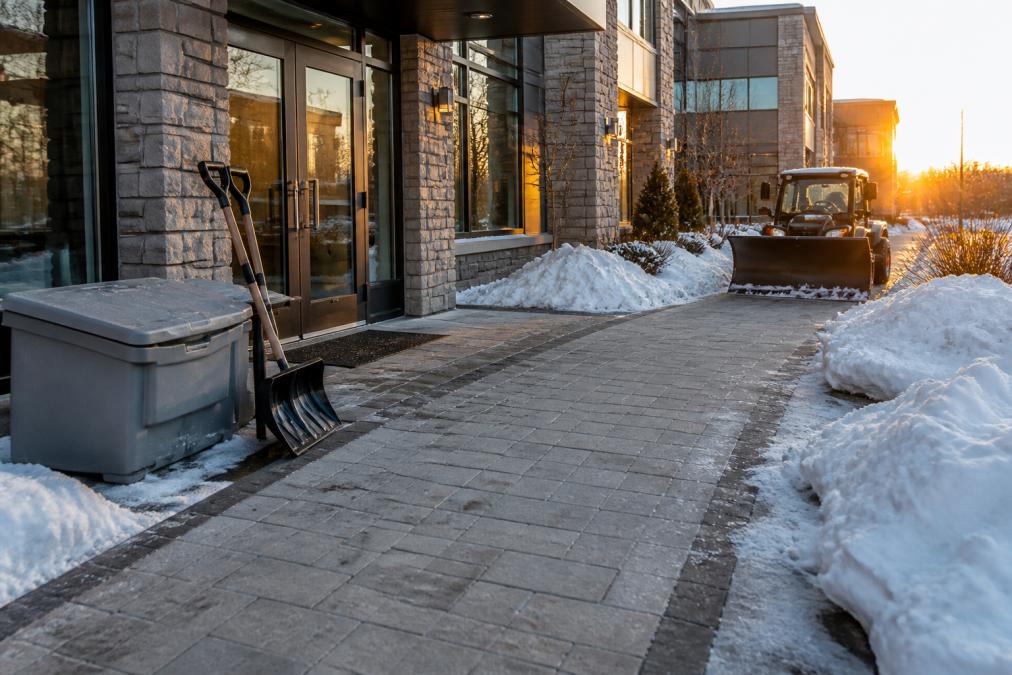
Create a winter entryway protocol:
- Install slip-resistant mats at all doors to capture moisture and salt
- Position salt or sand dispensers near entries for immediate traction treatment
- Establish a clearing schedule that removes snow within 2 hours of snowfall
- Mark hazards with high-visibility signs during ice or snow events
- Inspect lighting so entryways are well-lit during early morning and evening hours
- Create a salt or sand station with supplies clearly labeled and easy to access
De-Icing Protocols and Liability Mitigation Strategies
De-icing agents are essential for winter safety but governed by local ordinances and environmental regulations. Ignoring requirements risks fines, liability, and property damage. Understanding rules before winter protects your business.
Regulatory Compliance and Local Ordinances
Municipalities have adopted snow removal and de-icing standards. Common regulations include:
- Snow removal deadlines: Most jurisdictions require removal from sidewalks and parking areas within 24 hours of snowfall cessation. Failure to meet this deadline can result in citations and fines.
- Salt application limits: Some areas restrict the amount of salt applied per storm or per season to protect groundwater and local water tables. Excessive application may trigger environmental violations.
- Chemical de-icing restrictions: Certain municipalities prohibit or limit calcium chloride and other corrosive chemicals near sensitive areas such as wetlands, streams, or drinking water sources.
- Documentation requirements: Many jurisdictions require property owners to maintain records of all snow removal and de-icing applications, including dates, products used, and quantities applied. These records must be available for inspection.
Develop a Compliant De-Icing Protocol
A written de-icing protocol ensures compliance and best practices:
- Match product to conditions: Salt (sodium chloride) works on pavement down to about 15°F; calcium chloride functions in extreme cold below 0°F but is more corrosive; sand and kitty litter provide traction without melting and are ideal for areas where salt use is restricted.
- Apply only when necessary: Over-application damages concrete, kills plants, contaminates groundwater, and wastes money. Apply de-icing only after snow removal and only when temperatures are cold enough for the product to be effective.
- Create application zones: Establish buffer zones (typically 10-15 feet) around trees, shrubs, planting beds, and storm drain inlets to minimize salt exposure and environmental impact.
- Document every application: Record the date, time, product type, quantity applied, areas treated, weather conditions, and contractor name. This documentation protects you if a slip-and-fall claim arises and demonstrates compliance with local regulations.
- Train staff and contractors: Untrained application is the leading cause of over-salting and environmental violations.
- Plan for spring cleanup: Schedule post-winter cleanup to remove salt residue from pavement, landscaping, and drainage systems. Salt left behind damages plants and contaminates soil.
Liability Mitigation Beyond De-Icing
Comprehensive liability reduction requires a broader approach:
- Maintain clear records: Document all maintenance activities, inspections, and repairs. A detailed record demonstrates you took reasonable precautions and significantly strengthens your legal position if a claim arises.
- Post warning signs: During active snow or ice events, place high-visibility warning signs in hazardous areas. Signs alert visitors to conditions and show you're aware of the hazard.
- Address hazards promptly: Respond to reported hazards (icy patches, debris, damaged walkways) within 24 hours. Delayed response increases liability exposure.
- Inspect regularly: Walk your property daily during winter to identify new hazards. Early detection allows you to address problems before someone is injured.
- Maintain insurance: Ensure your general liability policy covers snow and ice liability. Review your coverage limits annually and discuss winter-specific risks with your insurance agent.
- Coordinate with contractors: If you hire a snow removal or de-icing contractor, confirm they carry adequate liability insurance and name your property as an additional insured on their policy. This protects you if their work causes injury or damage.
Enhance Winter Curb Appeal with Holiday Lighting and Décor
Winter is the season when commercial properties either stand out or fade into the background. While drainage winterization and snow removal protect your property, strategic Holiday Lighting and Décor transforms it into an asset that drives customer traffic, improves tenant retention, and extends your competitive advantage through the slowest retail season.
Why Holiday Lighting Matters for Commercial Properties
Professional holiday lighting improves aesthetics and security with measurable benefits:
- Increased foot traffic: Festive lighting attracts customers during peak holiday shopping season and boosts retail tenant sales.
- Enhanced security: Strategic lighting deters theft and vandalism while improving visibility during early morning and evening hours.
- Extended business hours visibility: Lighting keeps signage and architectural features visible during winter's shorter daylight hours.
- Tenant morale and retention: Holiday lighting signals management investment in property appearance and tenant experience.
- Professional appearance: Well-lit properties justify premium lease rates and attract quality tenants.
Timing and Integration with Winter Preparedness
Coordinate holiday lighting installation with winter preparation to avoid conflicts and maximize impact:
- Plan installation by mid-October: Schedule before November to ensure completion before holidays and avoid contractor backlogs.
- Coordinate with drainage and hardscape work: Complete drainage winterization and pavement sealing before lighting installation begins. This prevents contractors from damaging newly sealed surfaces or interfering with drainage work.
- Ensure electrical safety: Have an electrician inspect outdoor wiring before installation to prevent hazards.
- Plan for snow removal compatibility: Position lighting fixtures above typical snow accumulation heights to avoid interference with plowing.
- Schedule maintenance checks: Plan mid-winter inspections to ensure fixtures function and prevent dark spots during peak season.
Strategic Lighting Placement for Maximum Impact
Focus on high-visibility areas that enhance aesthetics and function:
- Building facades and architectural details: Uplighting on corners, rooflines, and features creates visual interest, especially for multi-story buildings.
- Entryway pathways and walkways: Pathway lighting improves safety and signals professionalism.
- Parking lot perimeters: Perimeter lighting improves security and visibility during low-light hours.
- Landscaping features and trees: Uplighting adds depth and visual interest to mature landscaping.
- Business signage: Accent lighting ensures visibility 24/7, extending brand visibility through winter.
- Canopy and awning areas: Lighting under covered entryways improves visibility and creates a welcoming atmosphere.
Quality Standards and Seasonal Durability
Professional installations differ from consumer-grade decorations in durability and reliability:
- Commercial-grade fixtures: Weather-sealed, UV-resistant fixtures withstand freeze-thaw cycles, wind, and heavy snow loads.
- Proper wiring and connections: Outdoor-rated wiring and waterproof connectors prevent flickering, outages, and fire hazards.
- Seasonal reliability: Quality installations maintain consistent brightness throughout winter without flickering or burnout.
- Energy efficiency: LED lighting reduces energy consumption by 75% compared to incandescent bulbs.
- Professional removal and storage: Professional contractors safely remove and store equipment for next year.
Getting on the Calendar Early
Holiday lighting contractors book up quickly. Schedule in September and October to secure preferred dates, avoid the rush, and allow time for design consultation and electrical upgrades.
Benefits of Consolidated Landscaping Services for Year-Round Winter Management
Managing winter maintenance across multiple contractors creates coordination problems and inconsistent quality. A consolidated service handles everything under one roof.
Benefits of consolidation:
| Service Area | Benefit |
|---|---|
| Snow and ice management | Single point of contact for all winter weather response |
| Drainage and hardscape care | Coordinated winterization of interconnected systems |
| Entryway maintenance | Consistent protocols across all building access points |
| Holiday lighting and décor | Professional installation integrated with overall property aesthetics |
| Spring cleanup | Seamless transition from winter to spring maintenance |
Create Your Winter Storm Preparedness Checklist
A written checklist ensures nothing gets overlooked. Review in September and October, complete items by November.
Pre-Winter Preparation (September-October):
- Schedule drainage inspection and cleaning
- Seal all pavement cracks and fill potholes
- Trim tree branches that hang over buildings or walkways
- Test backup generators and heating systems
- Stock salt, sand, and de-icing supplies
- Inspect and service snow removal equipment
- Install or repair slip-resistant entryway mats
- Check all exterior lighting for function
- Plan holiday lighting and décor installation
- Confirm snow removal contractor availability
During Winter (December-March):
- Monitor weather forecasts and alert contractors of incoming storms
- Document all snow removal and de-icing applications
- Inspect entryways daily for ice or hazards
- Clear gutters and drains after storms
- Maintain holiday lighting throughout the season
- Respond to maintenance requests within 24 hours
Post-Winter Cleanup (April-May):
- Remove all salt and sand residue from pavement
- Inspect for freeze-thaw damage and repair as needed
- Remove holiday lighting installation
- Assess landscaping for winter damage
- Plan spring maintenance and repairs
Frequently Asked Questions
When should commercial properties in the region begin winterization?
Start winterization in late September or early October, before the first hard freeze. This timing allows you to prepare commercial grounds for winter while contractors are still available and before emergency demand spikes. Schedule drainage inspections, hardscape repairs, and de-icing procurement during this window. Waiting until November or December significantly limits contractor availability and increases costs.
What are the most important tasks for commercial property winter maintenance?
Prioritize drainage clearing, hardscape inspection, entryway safety upgrades, de-icing stockpiling, and emergency response planning. These tasks directly reduce liability, prevent infrastructure damage from freeze-thaw cycles, and maintain safe access. Secondary priorities include landscape winterization and equipment servicing. Consolidating these under one contractor ensures consistency and accountability across your entire property.
How does professional snow and ice management protect my liability?
Professional commercial snow and ice management services document all treatments, maintain service level agreements, and follow safety compliance standards that reduce slip-and-fall claims. Documented de-icing protocols, regular entryway inspections, and prompt storm response demonstrate reasonable care. This creates a liability defense if incidents occur and often reduces insurance premiums. Unmanaged properties face significantly higher exposure.
Why should I consolidate winter services with one landscaping company instead of hiring separate contractors?
Consolidated landscaping services eliminate coordination gaps, reduce response time during storms, and ensure consistent safety standards across your entire property. A single contractor owns accountability for drainage, hardscapes, entryways, and storm cleanup, no finger-pointing between vendors. You receive one transparent quote, one point of contact, and coordinated scheduling that keeps your property operational year-round.