 how-to
How to Prevent Landscape Drainage Problems in 2026
Table of Contents
- How to Spot Drainage Problems Before They Worsen
- Grading a Yard for Drainage: The First Line of Defense
- Landscape Drainage Systems That Work Year-Round
- Best Plants for Wet Soil: A Natural Drainage Solution
- DIY vs. Professional Drainage: Cost, Permits, and Long-Term Value
- Maintenance Schedule to Prevent Future Drainage Issues
- Conclusion
- Frequently Asked Questions
Last Updated: September 16, 2026
How to Spot Drainage Problems Before They Worsen
Water that lingers after a storm is the clearest sign of a landscape drainage problem, and catching it early is far cheaper than repairing a foundation later. Water that lingers after a storm is the clearest sign of a landscape drainage problem, and catching it early is far cheaper than repairing a foundation later. This guide covers how to prevent landscape drainage problems, from reading the first warning signs to building systems that last.
Signs of Poor Drainage You Should Never Ignore
Landscape drainage is the managed movement of surface runoff and subsurface water away from your home, hardscapes, and plant beds. When it stalls, damage follows.
Watch for these signals:
- Water pooling near the foundation or along the base of retaining walls
- Soil erosion gullies cutting across the lawn after heavy rain
- Yellowing grass in low spots, even when surrounding turf is healthy
- A musty smell in the basement or crawl space
- Mosquitoes that never seem to leave one corner of the yard
Grading a Yard for Drainage: The First Line of Defense
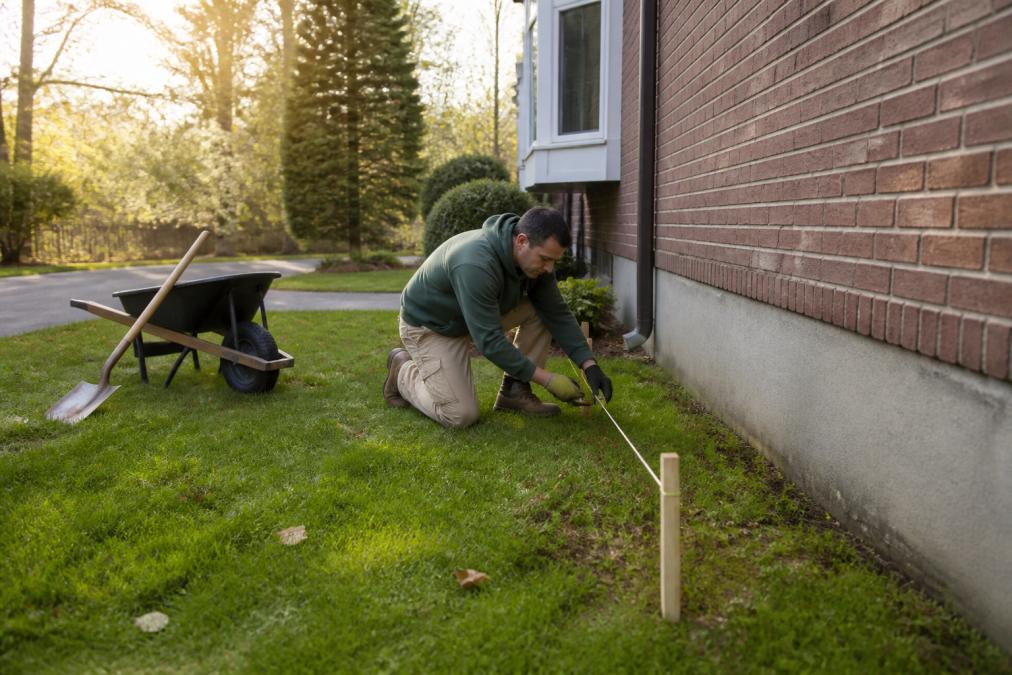
Grading a yard for drainage means shaping soil so water flows away from structures at a consistent slope, the single most effective preventive measure you can take. The target is a drop of about 6 inches over the first 10 feet from your foundation, continuing downhill.
Landscape Drainage Systems That Work Year-Round
Landscape drainage systems range from surface swales to buried pipe networks, and the right combination depends on your soil type, water table, and runoff volume. In Westchester County, heavy clay soils drain slowly enough that surface solutions alone often fall short.
French Drains, Catch Basins, and Swales
A French drain is a gravel-filled trench with a perforated pipe that collects subsurface water and redirects it to a safe discharge point. It handles the groundwater problems surface grading can't touch.
| System | Best For | Water Type | Maintenance Need |
|---|---|---|---|
| French drain | Saturated soil, foundation protection | Subsurface | Annual flush |
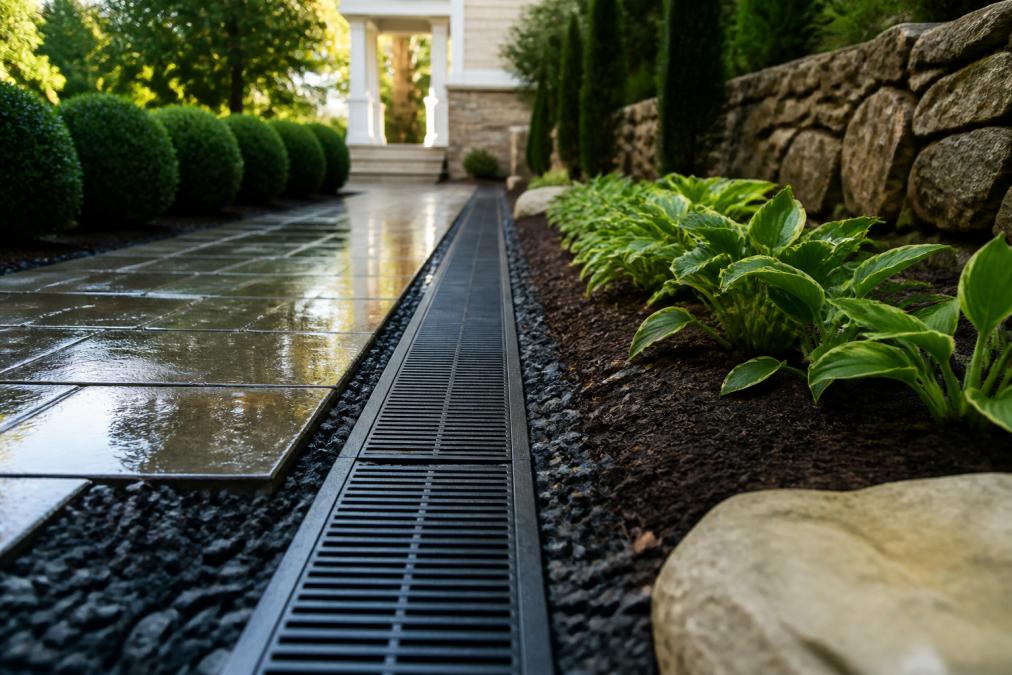
| Catch basin | Driveway and patio runoff | Surface | Seasonal debris clearing |
| Swale | Large yards, surface diversion | Surface | Occasional regrading |
| Downspout extension | Roof runoff | Surface | Twice-yearly check |
Downspout Extensions and Gutter Maintenance
Downspouts that dump roof runoff right at the foundation undo every other drainage improvement you've made. An extension carrying water at least 6 feet from the house is one of the cheapest, highest-payoff fixes.
Best Plants for Wet Soil: A Natural Drainage Solution
The best plants for wet soil tolerate periodic saturation and turn a drainage liability into a functioning rain garden, a shallow depression that slows runoff and filters sediment before it reaches storm systems.
Reliable choices for wet areas include:
- Swamp milkweed and Joe-Pye weed for pollinator-friendly beds
- Sedges and rushes for consistent moisture at pond edges
- Winterberry holly for color and structure in saturated ground
- Blue flag iris for rain garden centers
DIY vs. Professional Drainage: Cost, Permits, and Long-Term Value
Most homeowners can handle downspout extensions and gutter cleaning. French drains, regrading, and catch basin installation come down to three questions: scope, jurisdiction requirements, and what happens when the system fails.
What You Can Reasonably Do Yourself
- Extending downspouts 6 feet or more from the foundation
- Cleaning gutters and clearing catch basin grates
- Aerating compacted turf and topdressing low spots with screened topsoil
- Building a small rain garden in a naturally low, well-draining corner
These tasks share a trait: if they fail, the consequence is a wet lawn, not a wet basement.
What Belongs With a Professional
- Regrading within 10 feet of the foundation
- French drain and buried pipe installation
- Catch basin and dry well placement
- Any work that changes where water leaves your property
Three factors drive that recommendation. Equipment: a proper French drain needs a trenched, sloped bed with washed stone and filter fabric, and the pipe must maintain continuous fall, hand-dug trenches rarely hold grade. Disposal: excavated clay and rock must be hauled away. Risk transfer: a professional installation gives you recourse if it fails; a DIY failure leaves you the repair and any damage.
The Permit Question Most Guides Skip
Drainage work is regulated locally, and rules vary dramatically between municipalities. Common permit triggers include:
- Grading that alters the direction or volume of stormwater leaving your lot
- Any discharge point within a set distance of a property line
- Work inside a regulated wetland buffer, floodplain, or shoreline zone
- Connection to a municipal storm sewer or curb inlet
- Construction of a retaining wall over a height threshold (often 3 to 4 feet, but confirm locally)
Before you dig, do three things:
- Call your local building or planning department and describe the project in plain terms.
- Call 811 before any excavation, regardless of depth. It is free and required in most states.
- Check your deed, HOA covenants, and any recorded drainage easements on the plat.
When to Bring in a Professional
Bring in a pro when any of these apply:
- Water is entering the basement, crawl space, or garage
- The lot slopes toward the house rather than away
- You have clay soil, a high water table, or a history of failed DIY fixes
- The discharge point is unclear or contested
- The project touches a property line, easement, or regulated buffer
A professional assessment is also the fastest way to learn whether your problem is surface, groundwater, or both, they require different systems, and guessing wrong means paying twice.
Maintenance Schedule to Prevent Future Drainage Issues
Prevention is a calendar, not a one-time project. Drainage systems fail quietly, and by the time you notice, you're usually looking at erosion gullies or foundation damage. Adjust this schedule to your local frost dates.
Seasonal Maintenance Calendar
Early spring (as soon as the ground thaws)
- Clear gutters and downspout strainers of winter debris
- Inspect catch basin grates and remove leaves, grit, and ice damage
- Walk the yard after the first heavy rain and mark any new low spots with a stake
- Check that downspout extensions still discharge at least 6 feet from the foundation
- Look for frost heave around retaining walls and along buried pipe runs
Late spring
- Flush French drain lines with a hose from the highest cleanout
- Confirm the discharge point is flowing freely and not submerged
- Aerate compacted turf and topdress thin areas with screened topsoil
- Re-seed bare patches before summer heat stresses them
Summer
- Watch for mosquito breeding in any standing water; it signals a stalled system
- Inspect swales for sediment buildup and re-grade if the channel has flattened
- Trim vegetation that has grown over catch basins or drainage grates
- Photograph the yard after a heavy storm to document flow paths
Fall (before the first freeze)
- Remove leaves from gutters, downspouts, and catch basins, this is the single highest-impact task of the year
- Extend downspouts if they were shortened for summer mowing
- Aerate compacted areas before the ground hardens
- Clear swales of leaf litter so meltwater has a path in spring
- Drain and winterize any irrigation lines that share a trench with drainage pipe
Winter
- Keep snow piles away from the foundation and off swales
- Watch for ice dams at the roofline; they signal gutter or insulation problems
- After a thaw, check for redirected meltwater pooling near the foundation
- Avoid piling snow over catch basins or drainage grates
Diagnostic Cues That Something Is Failing
Maintenance is not just cleaning, it is reading the system. These signals mean a component is underperforming:
- Water pooling at a catch basin after rain: the outlet pipe is clogged or the basin has settled out of grade
- A French drain that no longer flows at the discharge point: the perforated pipe is silted in, or the filter fabric has clogged
- New gullies in the lawn: the surface grade has changed, or a swale has filled with sediment
- Damp basement walls in spring: hydrostatic pressure is building, and the subsurface system is not keeping up
- Soggy soil in one specific zone: a buried line may have collapsed or a root intrusion has blocked flow
Long-Term Horizon
One maintenance visit per season catches most problems while they are still minor. Skipping a season is how a functioning landscape drainage system becomes a flooded yard.
Conclusion
Drainage problems rarely announce themselves. They start as a soft spot in the lawn, a damp basement corner, or a gutter that overflows once a year, and compound from there.
Frequently Asked Questions
How do I stop water from draining into my yard?
Start by checking your gutters and downspouts. Extend downspouts at least 6 feet away from the foundation to direct water toward a drainage ditch or rain garden. If the problem persists, regrade the yard so it slopes away from the house at a 2% to 5% grade. For severe issues, a French drain or catch basin may be needed to redirect surface runoff and groundwater.
What are the most effective ways to fix poor yard drainage?
The most effective fixes combine several approaches: grading to create a proper slope, installing a French drain or swale to channel water, adding downspout extensions, and amending soil with organic matter to improve water infiltration. For chronic standing water, a rain garden or bioswale can absorb runoff naturally. A professional can assess your soil type and water table to recommend the right system.
What plants or materials soak up standing water in the yard?
Plants like swamp milkweed, Joe Pye weed, and winterberry thrive in wet soil and help absorb excess water. For materials, consider permeable pavers, gravel, and landscape fabric combined with perforated pipe to create subsurface drainage. A rain garden filled with native plants is one of the best long-term solutions for areas with poor drainage and frequent standing water.
When should I hire a professional for landscape drainage?
Hire a professional if you see water pooling near your foundation, soil erosion, or a soggy yard that persists days after rain. These signs suggest a serious drainage problem that DIY fixes may not solve. A professional can evaluate grading, soil compaction, and the water table, then design a landscape drainage system that protects your foundation and prevents long-term damage.