 blog
blog
Hiring Reliable Masonry Contractors in Westchester
Table of Contents
- Why Hiring Reliable Masonry Contractors in Westchester Matters
- Signs of Quality Masonry Work You Can Spot Before Hiring
- Questions to Ask Masonry Contractors Before You Sign
- Your Masonry Contractor Vetting Checklist
- Licensing, Insurance, and Permits in Westchester County
- Red Flags That Signal an Unreliable Masonry Contractor
- Conclusion
- Frequently Asked Questions
Last Updated: September 15, 2026
Why Hiring Reliable Masonry Contractors in Westchester Matters
Hiring reliable masonry contractors in Westchester is the difference between a patio that settles gracefully over decades and one that heaves, cracks, and drains toward your foundation within two winters. This guide from Four Seasons Landscaping NY covers how to vet masons the way professionals do, from reading mortar joints to checking insurance certificates before a single paver moves.
Masonry is unforgiving work. Every wall, walkway, and retaining structure carries a load, manages water, and expands and contracts through freeze-thaw cycles that hit this county hard. When site preparation or drainage is rushed, the failure shows up years later, usually after the contractor is gone. That's why the vetting process matters more than the quote.
Below, we'll show you exactly how to evaluate craftsmanship, what to ask before signing, and the red flags that separate a professional crew from a liability. The New York State Department of State Division of Consumer Protection publishes homeowner guidance on contractor contracts worth reading before you commit.
Signs of Quality Masonry Work You Can Spot Before Hiring
Quality masonry shows in the details: uniform mortar joints, level courses, clean edges, and stone that sits flat without lippage. You can assess all of this on a contractor's existing projects before you ever request an estimate. But the details that matter most are the ones you can't see once the work is finished, base preparation, drainage, and material selection, so learn to read the visible clues that point back to them.
Walk or drive past their recent work and look closely:
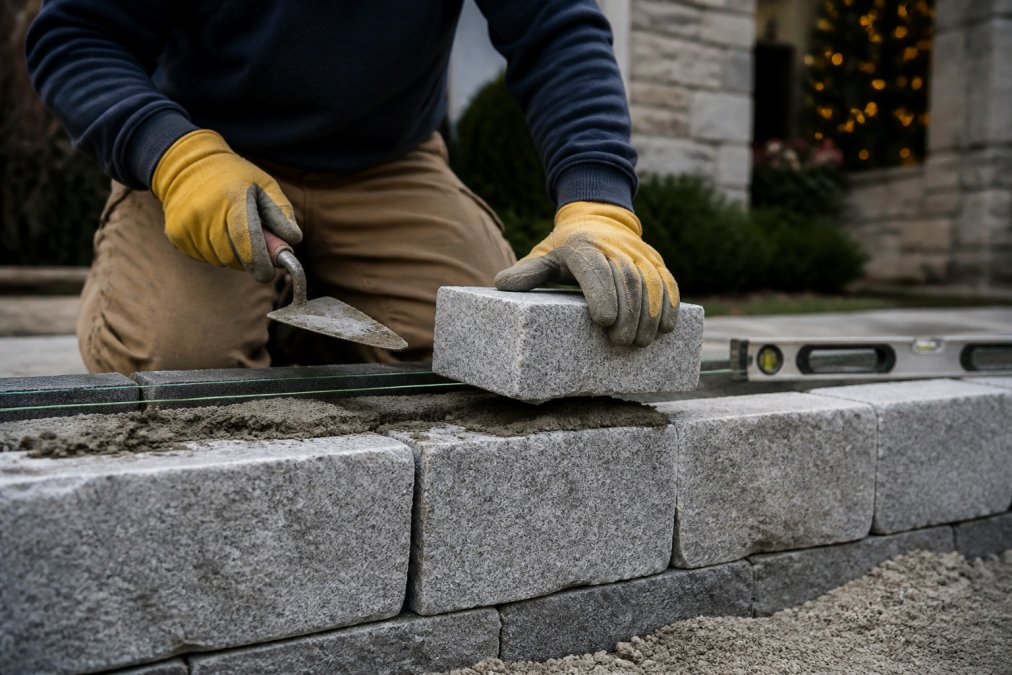
- Mortar joints should be consistent in width and fully tooled, not smeared across the brick face
- Course lines should run level and true, checked with a spirit level rather than the eye
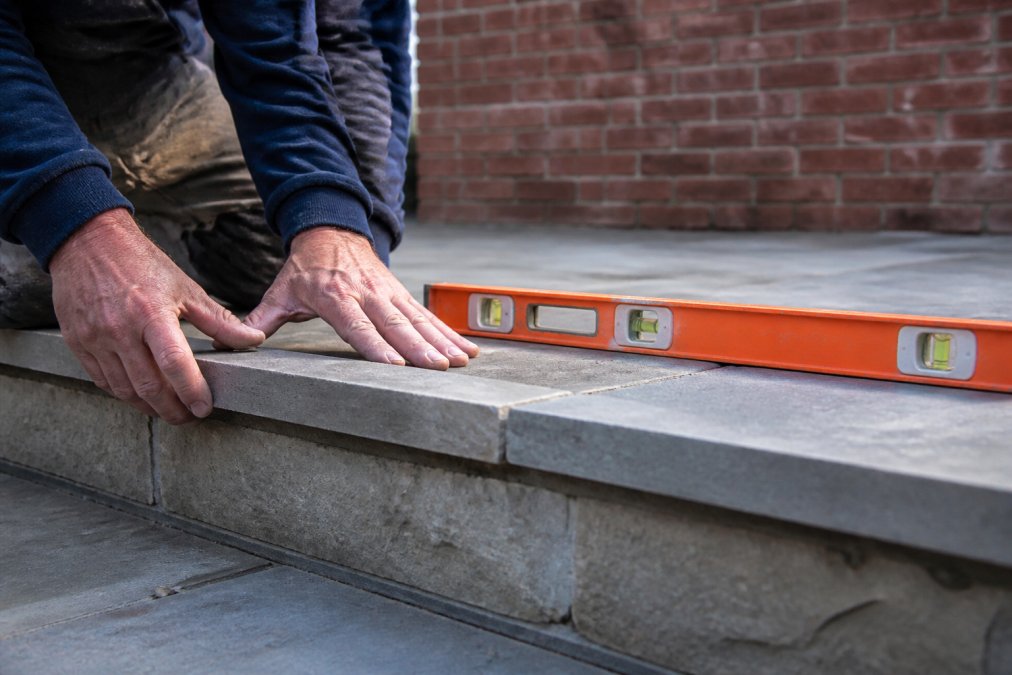
- Stone and paver surfaces should sit flush, with no rocking or visible height differences
- Edges and corners should be crisp, with cuts that follow the design rather than jagged breaks
- Drainage should move water away from the house, not pool against it
- Weep holes and flashing on brick veneer should be visible and clear, not mortared shut
What the Visible Work Tells You About the Hidden Work
Every surface flaw traces back to something buried. A paver that rocks means the base wasn't compacted in lifts. A joint that crumbles after two winters usually means the mortar was mixed too dry or the wrong type for the application. Water staining at the base of a retaining wall signals that drainage stone or a weep path was skipped. When you inspect a project, ask the contractor to explain how they built the base, depth of excavation, type and compaction of aggregate, and how water exits the system. A crew that can describe this in specific terms built it that way.
Material Durability in a Freeze-Thaw Climate
Material choice drives longevity more than workmanship alone, and the differences are large enough to change your decision. A few practical comparisons:
- Clay brick holds up for generations when it's a severe-weathering grade and the mortar is matched for flexibility rather than pure hardness. Soft mortar in a hard brick wall is a common failure point.
- Natural stone such as bluestone and granite resists freeze-thaw well because it absorbs very little water. Its performance depends heavily on how it's bedded and whether the base drains.
- Concrete pavers are engineered for freeze-thaw and typically carry a manufacturer's rating for it. They can be lifted and reset if the base shifts, which is a real advantage over poured surfaces.
- Poured concrete is the most prone to cracking in this climate. Proper air entrainment, control joints, and reinforcement reduce the risk, but a poured slab is difficult to repair invisibly once it fails.
- Manufactured veneer stone varies widely by product. Ask for the freeze-thaw rating and confirm it's rated for exterior use in a cold climate.
Ask any contractor to justify the material they're proposing for your specific application, not just the look. A mason who can explain why one stone suits a retaining wall and another suits a walkway is a mason who has thought about how the work will age.
Judge Aged Work, Not Fresh Work
Ask to see a project that's at least three to five years old. New work looks good on day one. Work that has survived several freeze-thaw seasons tells you whether the base, drainage, and materials were specified correctly. A common mistake is judging a contractor by a freshly finished patio instead of one that has aged.
Questions to Ask Masonry Contractors Before You Sign
The questions to ask masonry contractors should cover licensing, insurance, materials, timeline, and how change orders get handled. A professional answers all of them without hesitation and puts the important ones in writing.
Start with these:
- Are you licensed to work in this county, and can I see the certificate?
- Can you provide a certificate of insurance for general liability and workers' compensation?
- What materials will you use, and who manufactures them?
- How will you handle drainage and site preparation?
- What does your workmanship warranty cover, and for how long?
- How do you price changes if the scope shifts mid-project?
- Who will be on site daily, and who is my point of contact?
That last question matters more than most homeowners expect. A crew that rotates unfamiliar subcontractors in and out produces inconsistent work. Ask who actually lays the stone.
Your Masonry Contractor Vetting Checklist
A masonry contractor vetting checklist turns a gut feeling into a documented decision. Use it before you sign anything, and keep copies of every document.
Masonry Contractor Vetting Checklist
- Verified license status through the appropriate county or state authority
- Current certificate of insurance for general liability and workers' compensation
- At least three local references from projects completed 3+ years ago
- Written, itemized proposal with materials, dimensions, and timeline
- Clear payment schedule tied to project milestones, not large upfront deposits
- Written workmanship warranty with a defined coverage period
- Confirmed plan for permits and code compliance
- Documented approach to site preparation and drainage
- Physical business address and a reachable phone number
- Signed contract before any work begins
Run every candidate through the same list. The contractor who resists putting details in writing is telling you something important.
Licensing, Insurance, and Permits in Westchester County
Licensing, insurance, and permits are where amateur masonry work becomes a legal problem. Many masonry and hardscaping projects require permits, and unpermitted structural work can complicate a future home sale, trigger a stop-work order, or force a tear-out at your expense.
How Licensing Actually Works Here
There is no single statewide masonry license. Instead, requirements are set town by town and village by village, and some municipalities require registration or a home improvement contractor license while others do not. That means the right question isn't "are you licensed?" but "are you licensed or registered for work in my specific municipality?" Ask for the license or registration number and the issuing authority, then verify it directly with that office rather than relying on a photocopy. A contractor who works across the county should be able to tell you which towns require what.
What Typically Triggers a Permit
Permit thresholds vary by municipality, so always confirm with your local building department before work starts. As a general pattern, these projects commonly require a permit and inspection:
- Retaining walls above a certain height, which varies by town
- Any work that changes drainage, grade, or the flow of stormwater
- New patios or walkways with structural elements, footings, or attached features
- Chimneys, stoops, steps, and any masonry tied to the home's structure
- Work in or near a floodplain or wetland buffer
Ask the contractor who is pulling the permit. On a legitimate job, the contractor pulls it, not you.
Verifying Insurance the Right Way
A Simple Verification Workflow
Red Flags That Signal an Unreliable Masonry Contractor
Watch for:
Conclusion
Frequently Asked Questions
How do I verify a masonry contractor's license and insurance?
Ask for their license number and a certificate of insurance showing general liability and workers' compensation coverage. Call the insurance carrier directly to confirm the policy is active. In Westchester County, check with your local building department to confirm any required registrations. A reliable masonry contractor will provide these documents without hesitation.
What questions should I ask before hiring a masonry contractor?
Ask whether they pull permits, who handles excavation and site preparation, and what their workmanship warranty covers. Request two or three local references for projects similar to yours. Also ask whether they use subcontractors, since that affects accountability and scheduling. Clear answers to these questions separate reliable masonry contractors from the rest.
How much does professional masonry work typically cost?
Pricing depends on the scope, materials, site access, and excavation needs. A small mortar repair costs far less than a full patio with retaining walls and drainage solutions. Because every project differs, request a written estimate that itemizes labor, materials, and site preparation. Four Seasons Landscaping NY provides transparent quotes with no hidden fees, so you know exactly what you are paying for.
Do masonry contractors in this area require permits for hardscaping?
It depends on the project. Retaining walls above a certain height, structures with footings, and work that changes drainage or grade often require permits in Westchester County. Patios and walkways may not. Ask your contractor whether permits apply to your project and who files them. A reliable masonry contractor will handle the paperwork and know your local building codes.