 how-to
Hiring Local Landscape Design Experts: 2026 Guide
Table of Contents
- What Hiring Local Landscape Design Experts Actually Involves
- Landscape Design Consultation Checklist: What to Prepare Before You Call
- Questions to Ask Landscape Designers Before You Sign Anything
- How to Vet Credentials, Portfolios, and Insurance
- The Landscape Design Project Management Process, Step by Step
- Small Projects, Sustainable Planting, and Year-Round Value
- Frequently Asked Questions
Last Updated: September 17, 2026
What Hiring Local Landscape Design Experts Actually Involves
Hiring local landscape design experts means bringing in a trained professional to plan, document, and often install changes to your outdoor space. At Four Seasons Landscaping NY, we've spent more than 20 years watching homeowners in Westchester County go through this process, and the pattern is always the same: the people who prepare well get better results.
Designer, Architect, or Design-Build Firm: Which Do You Need?
A landscape designer plans plantings, hardscape, and outdoor living space. A landscape architect holds a state license and handles larger projects that involve grading, drainage, or structural work. A design-build firm handles both the plan and the installation under one contract.
Which one fits you?
- Small planting refresh or bed redesign: a designer is usually enough
- Grading, retaining walls, or major drainage: look for a licensed landscape architect
- Full outdoor living space with masonry and irrigation: a design-build firm saves you the coordination headache
Why Local Matters for Permits, Zoning, and Site Conditions
Local knowledge is not a nice-to-have. It decides whether your project sails through approvals or stalls for months.
Landscape Design Consultation Checklist: What to Prepare Before You Call
A landscape design consultation checklist turns a vague first meeting into a productive one. The best consultations cover more ground in 45 minutes than most homeowners expect, but only if you arrive prepared.
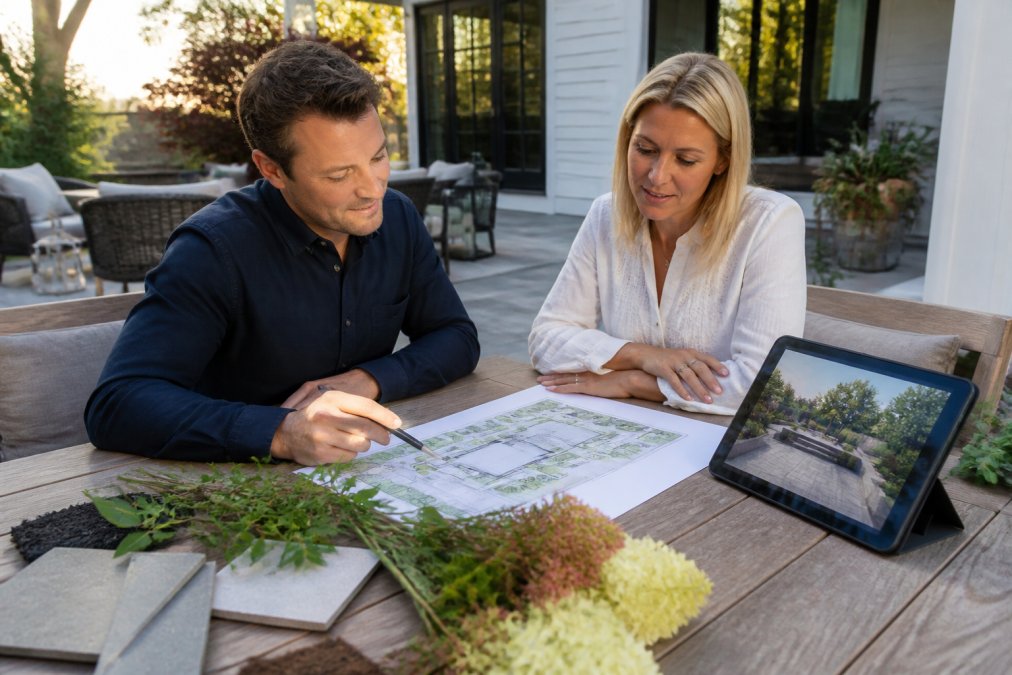
Bring these to your first meeting:
- Photos of your property from every angle, including problem spots
- A rough budget range, even if it's wide
- Your must-haves versus nice-to-haves
- How you want to use the space: entertaining, play, quiet, curb appeal
- Any survey or plot plan you already have
- A list of maintenance tasks you're willing to keep up with
- Questions about timeline and seasonal scheduling
Questions to Ask Landscape Designers Before You Sign Anything
The right questions to ask landscape designers fall into four buckets: credentials, process, communication, and money. Ask all four before you commit to anything.
Start with credentials:
- Are you licensed or certified, and can I see proof?
- How long have you worked in this area?
- Who will actually be on site, and are they employees or subcontractors?
- Are you insured, and can I get a certificate?
Then move to process and money:
- What does your design fee structure look like?
- Is the design fee credited toward installation if I hire you?
- How do you handle changes once work begins?
- What's the project timeline, and what could delay it?
- What happens if we hit a problem mid-project?
How to Vet Credentials, Portfolios, and Insurance
Vetting comes down to three checks: licensing and certification, a professional portfolio, and proof of insurance. Skip any one of them and you are carrying risk you do not need to carry. The difference between a good hire and a bad one is usually not the answers a designer gives, but whether you verified them.
Verify Licensing and Certification
Requirements vary by state, so verify rather than assume. Ask for the license or certification number in writing, then confirm it with the issuing body. A landscape architect license is issued at the state level and can be checked through the state licensing board. Industry certifications, such as those offered by professional landscape associations, can be confirmed through the issuing organization.
Verify Insurance Directly
For insurance, request a certificate of insurance directly from the provider, not a photocopy from the contractor. Photocopies are easy to alter and easy to let lapse. The certificate should show general liability coverage and, if the firm has employees, workers' compensation coverage. Call the number on the certificate and confirm the policy is active and the dates cover your project window.
Read a Portfolio for Depth, Not Beauty
Most portfolios show finished photos. That is the easy part. What you want is evidence of depth:
- Before-and-after shots of the same property
- Projects that match your scale, not just showcase estates
- Plant choices appropriate to the region
- Hardscape materials that have weathered at least one full season
- References you can actually call
Call the References, and Ask These Questions
References are the step most homeowners skip, and it is the one that catches the most problems. Call at least two, and ask:
- Did the project finish on the timeline you were given?
- How did the designer handle changes once work started?
- Were the crew members on site the same people you met during the consultation?
- Would you hire them again for a different project?
- What would you do differently if you started over?
The Landscape Design Project Management Process, Step by Step
A clear landscape design project management process has seven stages. Knowing them helps you spot when a project is drifting.
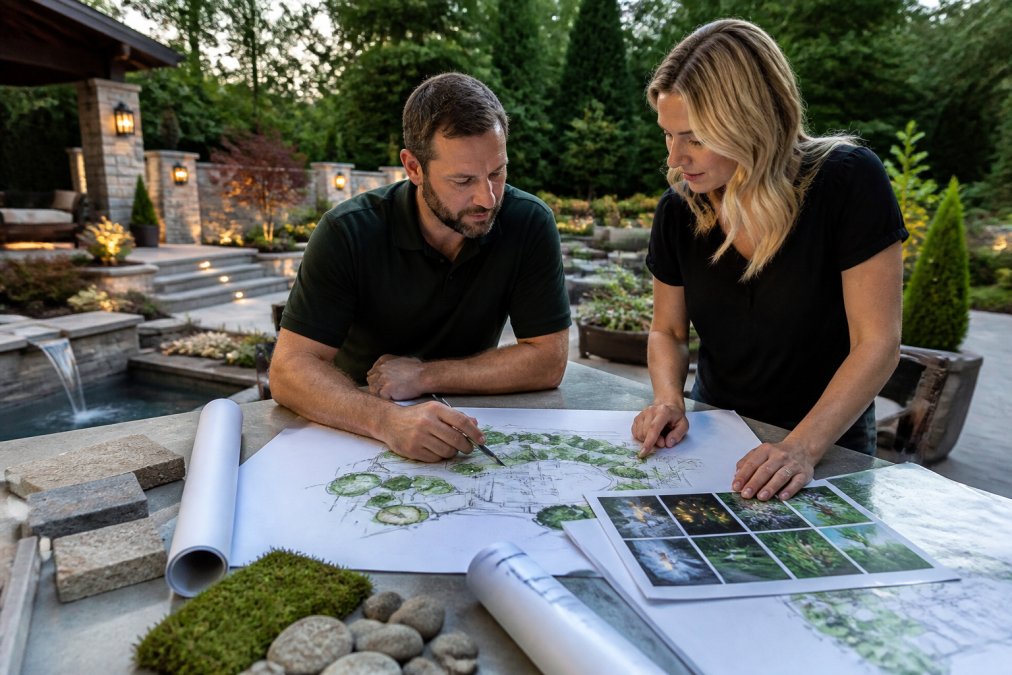
- Consultation and site visit - walk the property, discuss goals and budget
- Site analysis and survey - assess grading, drainage, sun, and soil
- Design concept and master plan - drawings, plant lists, materials
- Estimate and contract - itemized scope, timeline, payment schedule
- Permitting - submissions and approvals where required
- Installation - hardscape first, then softscape and irrigation
- Walkthrough and maintenance plan - final review plus a care schedule
Small Projects, Sustainable Planting, and Year-Round Value
Small projects deserve the same rigor as large ones, and this is where most guides fall short. A single bed redesign, a front-entry refresh, or a holiday lighting install still needs site analysis, a clear scope, and a real timeline. Small-scale project management is its own skill, and not every firm handles it well.
- Ask for a minimum project size. Firms that only take full-property builds will say so. That is useful information, not a rejection.
- Ask who runs a small job. On a large build, a project manager may never visit your property. On a small job, you want to know the designer themselves will be on site.
- Ask how they schedule small jobs. Many firms slot small projects into gaps between larger installs. That can mean a long wait or a rushed crew. Get the window in writing.
- Ask for a small-project reference. A designer who can point to three recent single-bed or front-entry jobs has a repeatable process, not a one-off favor.
Sustainable Planting: What to Actually Ask
Sustainable landscaping is the other angle worth pursuing, and it is more than a buzzword. Native planting reduces watering needs, supports local pollinators, and holds up better against regional weather swings. But "we use native plants" is easy to say. Push for specifics:
- Which species do you specify for this region, and why those?
- How do you group plants by water need so irrigation zones match?
- Do you amend soil, or design around what is already there?
- How do you handle the first two summers, when new plantings need the most water?
- Do you offer a maintenance plan that keeps the design intact after year one?
Planning for Year-Round Value
Year-round value comes from thinking past installation day. A property that looks its best in December needs planning in September. Holiday lighting and décor, seasonal cleanups, and winter care all belong in the same conversation as your design, because the same crews, the same ladders, and often the same power access are involved.
| Stage | What Happens | When to Start |
|---|---|---|
| Consultation | Site visit, goals, budget | 3-6 months before install |
| Design and plan | Drawings, plant lists, estimate | 2-4 months before install |
| Permitting | Submissions, approvals | 1-3 months before install |
| Installation | Hardscape, softscape, irrigation | Best in spring or fall |
| Seasonal services | Lighting, cleanups, winter care | Book 2-3 months ahead |
Frequently Asked Questions
What should I look for when hiring a landscape designer?
Look for three things: proof of licensing or certification where your state requires it, a portfolio of projects similar in scale to yours, and current liability insurance. Ask how they handle permitting, grading and drainage, and irrigation planning. A designer who can explain the project scope in plain language and put every deliverable in writing is a safer hire than one who only shows pretty photos.
How do I verify the credentials of a local landscape design expert?
Ask for their license or certification number and check it against your state's licensing board database. Request a certificate of insurance and call the insurer to confirm it is active. For design-build firms, confirm whether they carry workers' compensation coverage. You can also ask for two or three recent client references and call them, focusing on how the firm handled changes and timelines rather than just the finished result.
What is the difference between a landscape architect and a landscape designer?
Landscape architects are licensed by the state and can stamp construction documents, which matters for projects involving grading, drainage, retaining walls, or zoning approvals. Landscape designers handle planting plans, hardscape layout, and outdoor living space design but may not be licensed to sign off on structural or permit-heavy work. For a full property makeover with site analysis and a master plan, you often want a design-build firm that includes both.
What is the landscape design project management process?
A typical process runs through five phases: initial consultation and site survey, design concept and master plan, project estimate and contract, permitting and scheduling, then installation and a final walkthrough. Ask who manages each phase and who your single point of contact is. A firm with a defined process will tell you what happens at each step, when you will hear from them, and how change orders are priced before work begins.