 listicle
Best Landscape Maintenance for Businesses: 2026 Guide
Table of Contents
- What Sets the Best Landscape Maintenance for Businesses Apart
- Commercial Landscape Maintenance Checklist: Services That Matter
- The Benefits of Consolidated Landscaping Services for Property Managers
- How We Evaluated the Best Landscape Maintenance Providers
- Commercial Holiday Lighting and Decor Services: A Seasonal Extension
- Common Bad Advice About Commercial Groundskeeping
- Which Landscape Maintenance Model Fits Your Property?
- Conclusion
- Frequently Asked Questions
Last Updated: September 6, 2026
Commercial properties lose curb appeal fast when maintenance is reactive instead of planned. Best landscape maintenance for businesses depends on finding a partner who manages the full scope of grounds care with consistent quality. This guide from Four Seasons Landscaping NY breaks down what to evaluate, which services matter most, and how consolidated programs deliver better results.
Think of landscape maintenance as preventative care for your property, not an expense line to minimize. A well-kept exterior signals professionalism and protects your investment.
What Sets the Best Landscape Maintenance for Businesses Apart
The strongest commercial landscape maintenance providers combine technical skill with operational reliability, requiring scheduled site inspections, documented service logs, and a crew that shows up when promised.
Choosing a provider based solely on the lowest bid often leads to missed visits, subpar work, and emergency calls that cost more than a quality contract. The best providers bring the same crew each visit and communicate proactively.
Vendor Vetting Checklist
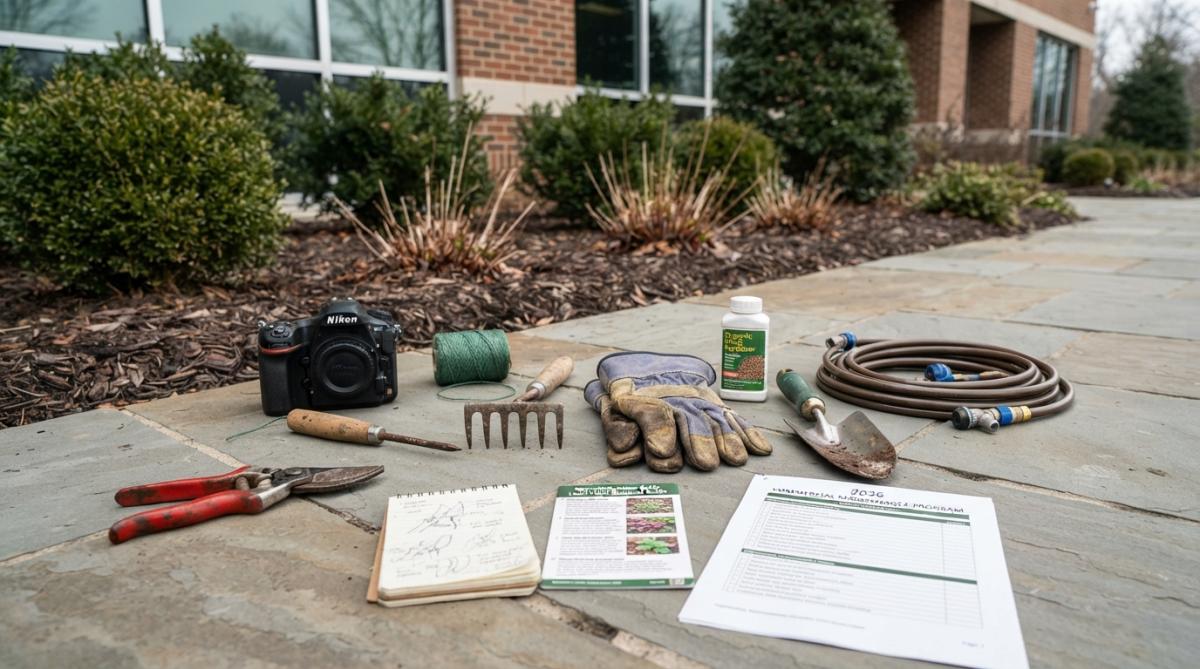
Before signing a service level agreement, verify these essentials:
- Insurance and licensing: Confirm general liability and workers' compensation coverage, then ask for certificates naming your property as additionally insured.
- References: Request contact information for two or three current commercial clients with properties similar to yours.
- Site inspection: A reputable provider walks your property before quoting, noting drainage issues, plant health, and irrigation coverage.
- Written scope: The contract should list specific services, visit frequency, and response times for urgent requests.
- Communication plan: Establish who handles your account and how you reach them during off-hours.
Commercial Landscape Maintenance Checklist: Services That Matter
A year-round maintenance plan is a calendar-driven system that anticipates seasonal stress on your property, built on measurable standards and proactive scheduling.
The Core Service Categories and What 'Quality' Actually Means
A full-service contract should clearly define expectations for each area. Vague language like 'mow as needed' is a red flag. Look for measurable commitments:
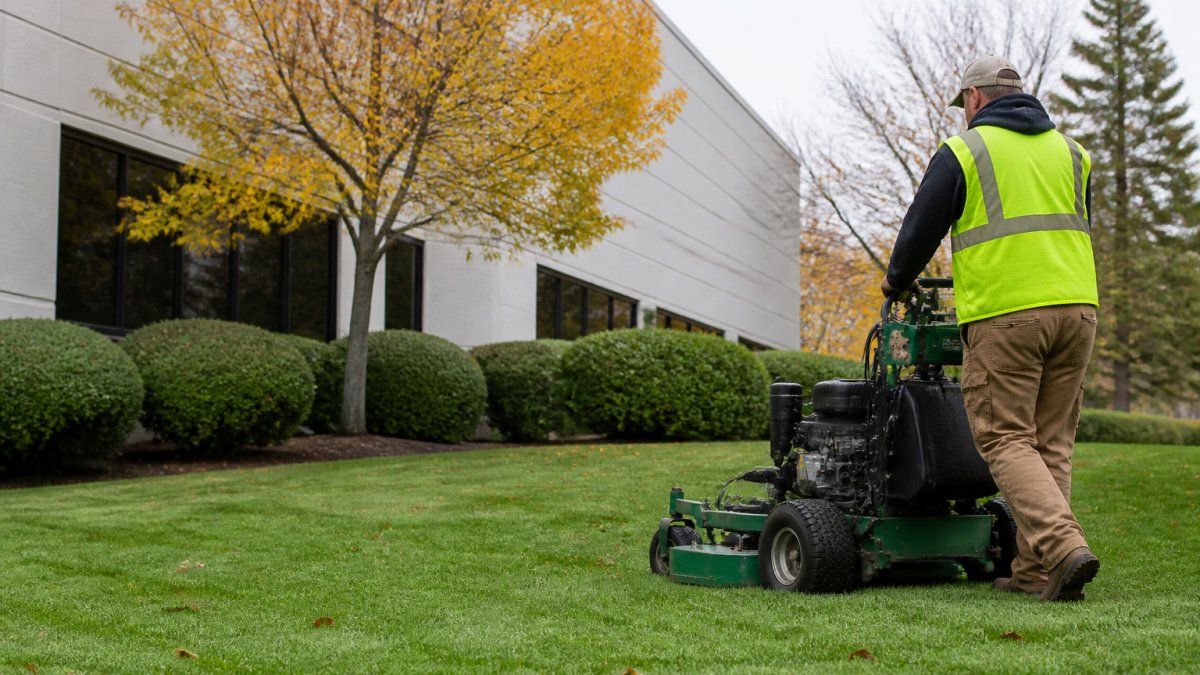
- Turf & Lawn Care: This goes beyond mowing. A robust program includes mowing height specifications (typically 3-4 inches for cool-season grasses), edging along hardscapes, line trimming, and aeration and overseeding in the fall to relieve soil compaction and fill in thin areas (extension.psu.edu).
- Fertilization & Weed Control: A soil test should be the first step. A provider that guesses at fertilizer blends is not managing your turf. Look for a program that uses slow-release nitrogen and pre-emergent herbicides applied in early spring and fall to prevent crabgrass and other weeds before they germinate (extension.umn.edu).
- Tree & Shrub Care: This is not just pruning. It includes a plant health care program that monitors for pests and diseases specific to your region, such as emerald ash borer or boxwood blight (usda.gov). Proper pruning is species-specific and timed to avoid stressing the plant or disrupting flowering.
- Irrigation Management: A modern provider should offer 'smart' irrigation controllers that use local weather data and soil moisture sensors to adjust watering schedules automatically, supporting water-use reduction goals in LEED v4.1 and other green building certifications. A provider that only fixes broken heads but doesn't optimize the schedule is leaving savings on the table.
- Seasonal Color & Planting: A successful rotation is planned months in advance. Spring annuals are planted after the last frost date, while fall color goes in during late summer to establish roots before the first hard freeze. A provider should present a plan for color schemes and plant varieties that thrive in your specific microclimate, not just a generic tray of petunias.
- Hardscape & Site Cleanup: This includes power washing walkways, removing weeds from paver joints, and keeping parking lot islands free of litter and debris. These details are often the first thing visitors notice and are frequently the most neglected by low-bid contractors.
The Seasonal Maintenance Calendar: A Proactive Framework
A best-in-class provider will present a detailed calendar of services at the start of the contract. This is a critical tool for budgeting and for holding the vendor accountable. Here is a framework:
| Season | Critical Tasks | Why It Matters |
|---|---|---|
| Spring (Mar-May) | Cleanup, prune winter damage, apply pre-emergent weed control, start mowing schedule, audit irrigation system, plant spring annuals. | Prevents weeds from establishing, ensures irrigation is ready for peak demand, and sets the tone for the growing season. |
| Summer (Jun-Aug) | Monitor irrigation closely, raise mowing heights to reduce heat stress, treat for grubs and chinch bugs, prune summer-flowering shrubs after bloom, maintain mulch depth. | Protects turf during the most stressful months and prevents pest populations from exploding. |
| Fall (Sep-Nov) | Core aeration and overseeding, apply winterizer fertilizer, plant spring bulbs and fall annuals, remove leaves, prune trees and shrubs for structure, winterize irrigation system. | The most important season for turf health. Aeration and overseeding repair summer damage and build a strong root system for the following year. |
| Winter (Dec-Feb) | Remove snow and ice from walkways, monitor for salt damage, prune dormant trees, plan for spring renovations. | Protects hardscapes and plant health from winter injury and ensures your property is safe and accessible. |
Technology Integration: The New Standard for Vendor Accountability
Modern facility managers expect more than a paper invoice. A forward-thinking provider should offer a client portal or digital reporting system that logs every visit, including:
- Photo documentation of completed work and any issues found.
- Time-stamped service logs for each crew visit.
- Digital work orders for any requested or reactive services.
- Irrigation run-times and water usage reports to track conservation efforts.
This transparency transforms the relationship from a 'trust me' model to a 'verify me' model, providing an auditable trail invaluable for multi-site portfolios.
The Benefits of Consolidated Landscaping Services for Property Managers
Property managers often juggle separate contractors for mowing, tree care, irrigation, and seasonal color. Each vendor has its own schedule, invoice, and communication style, creating coordination overhead and accountability gaps.
Consolidation means one crew understands the full property, from turf health to tree canopy to irrigation coverage. They catch issues early because they see the site weekly and understand how each system interacts, such as noticing when irrigation overspray damages shrubs.
The service level agreement becomes simpler too: one contract, one invoice, and one accountable party for the entire grounds, leading to fewer emergency calls and better outcomes.
How We Evaluated the Best Landscape Maintenance Providers
Our evaluation focuses on capabilities that predict long-term performance rather than flashy equipment or low introductory pricing, assessing service breadth, response times, crew consistency, and track record.
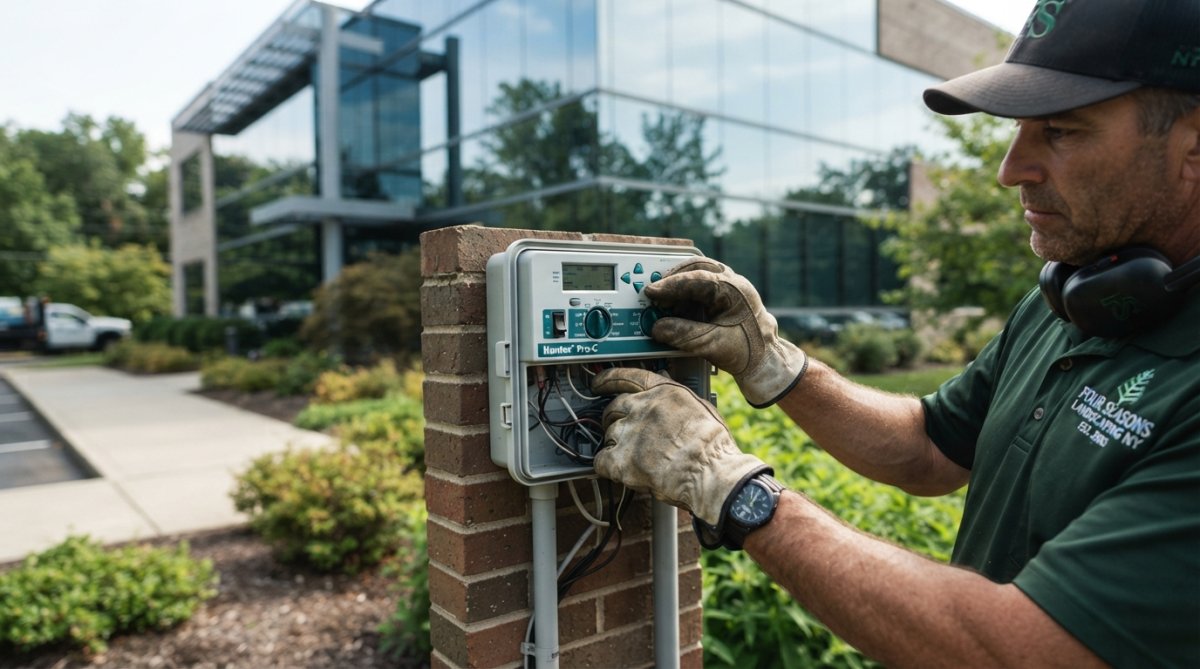
For this guide, Four Seasons Landscaping NY stands out because of its full-service model. With over 20 years of experience and a family-owned operation dating to 2004, the company handles everything from landscape design to year-round maintenance. Fully insured professional crews and transparent quotes with no hidden fees address the biggest concerns property managers raise: reliability and cost certainty.
Serving commercial clients across Westchester County, including office parks and retail properties in White Plains and New Rochelle, the company's integrated approach means the same team that designs a landscape also maintains it.
Commercial Holiday Lighting and Decor Services: A Seasonal Extension
Landscape maintenance does not pause when temperatures drop. Commercial holiday lighting and decor services extend the value of your grounds contract into winter, keeping your property visible when plantings go dormant.
Professional holiday lighting installation matters because safety and aesthetics are both at stake. Trained crews handle rooflines, trees, and entry features with commercial-grade equipment, and the service typically includes design, installation, takedown, and storage.
Booking holiday lighting early is essential because installation schedules fill quickly. A full-service landscape provider that also handles holiday decor simplifies vendor management: the same crew that maintains your grounds installs and removes your seasonal lighting.
Common Bad Advice About Commercial Groundskeeping
The most persistent bad advice is that maintenance is a commodity service where price should drive the decision. This leads property managers to switch providers annually chasing savings, only to discover hidden costs: skipped visits, untrained crews, and damage requiring expensive remediation.
Another myth is that landscaping is purely cosmetic and can be deferred during budget constraints. In reality, neglected landscapes accelerate deterioration: overgrown shrubs damage facades, clogged drainage creates foundation issues, and dead turf invites weeds.
A related misconception is that sustainability and aesthetics are incompatible. Sustainable practices, including native plantings, efficient irrigation, and organic fertilization, produce attractive results while reducing water usage and chemical inputs.
Which Landscape Maintenance Model Fits Your Property?
The choice between a basic mowing contract and a comprehensive full-service program depends on your internal capacity, risk tolerance, and the level of aesthetic performance your business requires. Here is a framework for evaluating options based on value, not just the lowest monthly fee.
The Three Primary Service Models
Most providers offer three tiers of service. Understanding the true cost and benefit of each is the first step.
-
The Basic Mowing & Cleanup Contract: This is a transactional relationship where the provider mows, edges, and blows clippings off hardscapes. This model leaves all other landscape health responsibilities, weed control, fertilization, pruning, irrigation, to you or other vendors. The risk is that small problems go unnoticed and become large, expensive ones.
-
The Full-Service Maintenance Program: This is a partnership model where one provider is accountable for the health and appearance of the entire landscape. They are on-site frequently, which means they see problems early. The cost is higher than a mowing-only contract, but it replaces the hidden costs of coordinating multiple vendors and the risk of reactive, emergency spending.
-
The Enhanced Service Level Agreement (SLA): This is a premium tier for properties where the landscape is a critical brand asset, including more frequent visits, a dedicated account manager, guaranteed response times for urgent requests, and a more aggressive seasonal color program. This model is common for high-end retail, medical office buildings, and corporate headquarters.
A Decision Framework: Cost-Benefit, Not Just Cost
To decide which model is right for you, evaluate the total cost of ownership for your landscape, not just the monthly price tag.
| Decision Factor | Questions to Ask Yourself |
|---|---|
| Internal Capacity | Does your facility team have the time to manage and inspect the work of multiple vendors? Do they have the horticultural knowledge to diagnose problems? If not, the coordination cost of a multi-vendor approach is high. |
| Risk Tolerance | What is the cost of a landscape failure? A dead tree falling on a car, a slip-and-fall on an icy walkway, or a severely neglected entrance that drives away customers are all risks. A full-service provider mitigates these risks through proactive care. |
| Vendor Management Overhead | How many hours per month does your team spend scheduling, chasing, and inspecting separate contractors for mowing, tree care, and irrigation? At a fully loaded labor rate, that time is a direct cost. A single point of contact eliminates this overhead. |
| Performance Metrics | How will you measure success? Is it just 'grass is cut,' or is it 'turf is dense and free of weeds, shrubs are healthy and properly pruned, and irrigation is efficient'? The latter requires a partner with a higher level of expertise and accountability. |
Structuring the Contract for Value
Once you have chosen a model, the contract structure determines whether you get value or just a list of services. Critical elements to negotiate:
- Performance Standards: Define what 'acceptable' looks like. For example, 'turf shall be mowed when it reaches 4 inches in height, and clippings shall not be left on walkways.' This prevents disputes over quality.
- Response Time SLAs: Define the response time for urgent requests. A standard might be 24 hours for non-emergency issues and 4 hours for safety hazards like fallen trees or irrigation leaks flooding a walkway.
- Change Order Process: Define how out-of-scope work is handled. A clear process for approving additional work prevents surprise invoices and ensures you have control over the budget.
- Audit Rights: Ensure the contract allows you to audit their insurance certificates and request proof of licensing for all subcontracted labor.
Conclusion
Choosing the best landscape maintenance for businesses requires evaluating providers on reliability, service breadth, and communication, not just price. A documented checklist, clear service level agreement, and consolidated vendor model reduce coordination burden and keep your property presentable year-round. Seasonal services like holiday lighting extend that value into winter.
Four Seasons Landscaping NY brings over 20 years of experience to commercial properties throughout Westchester County. Our full-service approach covers design, maintenance, irrigation, and holiday lighting with one accountable team and transparent quotes. Get your free quote and put your property on the calendar before prime installation slots fill.
Frequently Asked Questions
What services are typically included in commercial landscape maintenance?
Standard commercial landscape maintenance includes turf mowing and edging, fertilization, weed control, pruning of trees and shrubs, mulching, seasonal flower rotation, irrigation system checks, and debris removal. A full-service provider handles these on a scheduled basis. Look for a contract that specifies the frequency of each service, such as weekly mowing during the growing season and quarterly pruning. This clarity prevents disputes and ensures the property keeps its curb appeal year-round.
How often should commercial properties be landscaped?
Most commercial properties need weekly or biweekly visits during the growing season for mowing and bed maintenance. Spring and fall require additional visits for cleanup, fertilization, and aeration. Irrigation systems should be checked at spring startup and before winter shutdown. A professional landscape maintenance provider will recommend a schedule based on your property's specific plant material and local climate, with the goal of preventative maintenance rather than reactive fixes.
What are the benefits of consolidated landscaping services?
Consolidated landscaping services mean one vendor handles mowing, pruning, irrigation, hardscape repairs, snow removal, and even holiday lighting. The main benefit is accountability: a single company coordinates the schedule and stands behind every crew that touches your property. You avoid the situation where a mason blames the irrigation contractor for a damaged bed. It also simplifies invoicing and contract management, which saves facility managers significant administrative time.
Is $100 an hour too much for landscape work?
Hourly rates vary widely based on the scope of work, crew size, and equipment. For commercial maintenance, many providers quote a flat monthly rate rather than an hourly figure. That rate reflects overhead like insurance, equipment, and trained labor. Instead of comparing hourly prices, evaluate the total contract value: what services are included, how often crews visit, and what happens if a service is missed. A slightly higher rate often buys reliability and a lower risk of property damage.
What should be included in a commercial landscape maintenance contract?
A strong contract lists every service, its frequency, and the standard for completion. It should name who is responsible for irrigation repairs, how much notice is required for schedule changes, and the process for adding seasonal work like holiday lighting. It should also cover insurance certificates and a site safety plan. A service level agreement that defines response times for urgent issues protects you throughout the year.