 ultimate-guide
Transforming Westchester Luxury Outdoor Spaces: 2026 Guide
Table of Contents
- Start With a Site Analysis, Not a Pinterest Board
- Luxury Outdoor Living Space Ideas That Fit How You Actually Live
- Custom Landscape Design in Westchester: What the Process Looks Like
- High-End Masonry and Hardscaping That Holds Up to Freeze-Thaw Cycles
- Planting Design: Climate-Resilient Choices for a Changing Growing Season
- Seasonal Outdoor Lighting Installation for Evening Ambiance
- Budgeting, ROI, and the Mistakes That Blow Up a Timeline
- Conclusion: Plan the Whole Property, Then Build It in Phases
- Frequently Asked Questions
Last Updated: September 17, 2026
Start With a Site Analysis, Not a Pinterest Board
Transforming Westchester luxury outdoor spaces starts with reading the land, not scrolling inspiration feeds. A site analysis maps sun exposure, drainage, grade changes, soil conditions, and existing mature trees before a single paver is ordered. Four Seasons Landscaping NY has spent more than 20 years designing full-property plans across the county, and the projects that hold up are the ones that began with a survey.
Luxury Outdoor Living Space Ideas That Fit How You Actually Live
Luxury outdoor living space ideas only work when they match your daily routines. A family that hosts large summer gatherings needs different zones than a couple who wants a quiet morning coffee spot. The design should follow the lifestyle, not a catalog.
Zoning the Yard: Dining, Fire, Water, and Quiet Corners
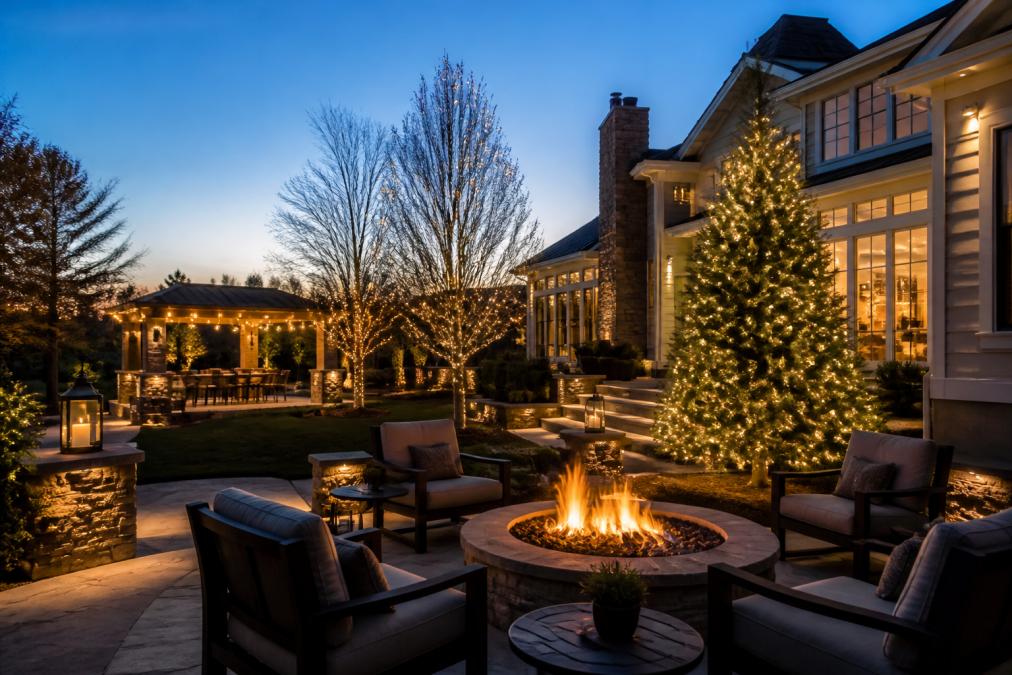
Think of the property as a series of connected rooms. An outdoor kitchen and dining area anchors entertaining. A fire feature draws people in after sunset. A water element or poolscape adds sound and visual depth. A quiet corner with seating and plantings gives the space somewhere to breathe.
- Dining zone: outdoor kitchen, bar seating, covered pergola for shade
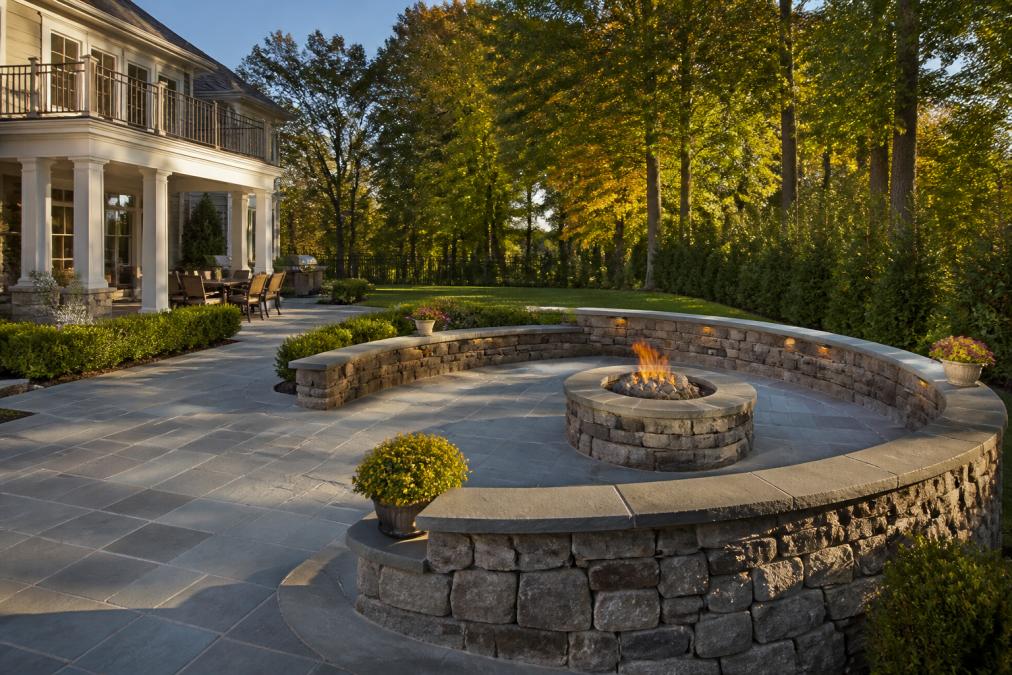
- Fire zone: fire pit or outdoor fireplace with built-in seating
- Water zone: pool, spa, or reflecting feature with surrounding hardscape
- Quiet zone: native plantings, a bench, low landscape lighting
Smart Home Integration for Outdoor Rooms
Outdoor rooms now run on the same systems as the house. Lighting scenes, irrigation schedules, heaters, and audio can all be controlled from a single app or voice command. Planning conduit and wiring during construction costs far less than retrofitting later.
Custom Landscape Design in Westchester: What the Process Looks Like
Custom landscape design Westchester projects follow a defined sequence. Skipping steps is what produces change orders and blown timelines. Most firms compress this into a sales pitch; the projects that hold up treat it as a checklist that gets signed off at each stage.
- Site analysis and survey, grading, drainage, sun, soil, and existing features
- Concept and 3D rendering, you see the finished space before work begins
- Material selection, stone, plantings, lighting, and finishes
- Permitting and approvals, local zoning, wetlands, and utility review
- Phased construction, hardscape first, then planting and lighting
- Walkthrough and maintenance plan, seasonal care to protect the investment
Permits, Zoning, and Wetlands Rules You Need to Check First
This is where most luxury projects stall, and it is the step competitors gloss over. Nearly every property in the county sits inside a village or town with its own review process, and the rules change from one municipality to the next. A design that sails through one building department can trigger a variance two towns over.
Common review triggers:
- Setbacks, pools, spas, and accessory structures each have their own distance-from-property-line rules.
- Impervious surface limits, patios, driveways, and pool decks count toward a coverage cap in many zoning codes. Exceeding it requires a variance or permeable alternatives.
- Pool barriers, safety fencing, alarms, and self-latching gates are typically required and inspected.
- Retaining walls, walls above a height threshold usually need engineering and a permit.
- Wetland buffers, properties near streams, ponds, or tidal areas often fall under additional jurisdiction. Confirm with your local building department and the New York State Department of Environmental Conservation before design begins.
- Utility and gas connections, outdoor kitchens and heaters require licensed connections and sometimes separate inspection.
| Project Element | Typical Review Trigger | What to Confirm |
|---|---|---|
| Pool or spa | Barrier and safety code | Fencing, alarms, setbacks |
| Retaining walls | Height thresholds | Engineering, permits |
| Impervious surfaces | Coverage limits | Patio and driveway area |
| Wetland-adjacent work | Buffer jurisdiction | State and local approval |
| Outdoor kitchens | Utility and gas lines | Licensed connections |
3D Rendering and Design Visualization
A rendering is not a sales tool, it is a decision tool. Seeing the finished space in three dimensions before excavation lets you catch proportion problems, sightline issues, and material clashes while they are still on paper. Most practitioners find that clients who review a rendering make fewer mid-build changes, which protects both the schedule and the budget.
Smart Home Integration for Outdoor Rooms
Outdoor rooms now run on the same systems as the house. Lighting scenes, irrigation schedules, heaters, and audio can all be controlled from a single app or voice command. Planning conduit and wiring during construction costs far less than retrofitting later.
Sustainable and Low-Maintenance Landscaping
Sustainability in this climate is less about ideology and more about survival. Native and adapted plantings establish faster, need less irrigation once mature, and hold up through wetter springs and drier summers. Pairing them with drip irrigation zoned to plant needs, rather than one blanket schedule, reduces waste and keeps beds healthier. Low-maintenance does not mean plain; it means the design still looks intentional in year five without constant replanting.
High-End Masonry and Hardscaping That Holds Up to Freeze-Thaw Cycles
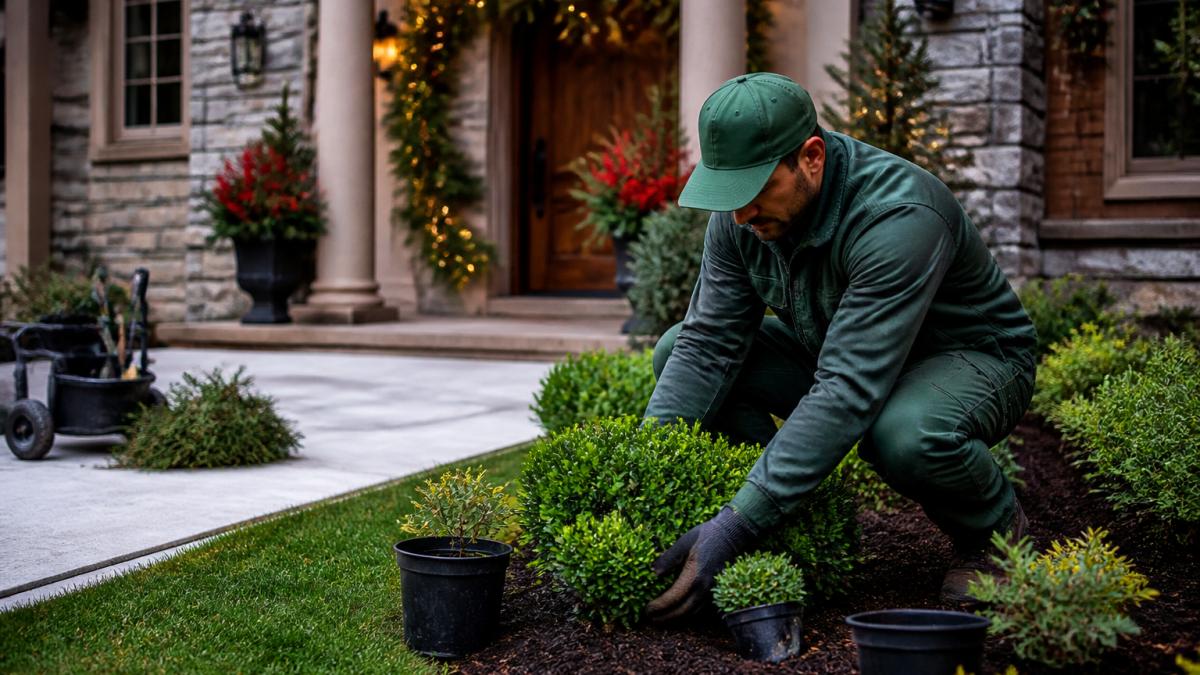
High-end masonry and hardscaping in this region has to survive repeated freezing and thawing. That means proper base depth, correct drainage pitch, and materials rated for the climate. Bluestone, granite, and natural stone set on a compacted, well-drained base outperform thin-set veneers and lightweight pavers over time.
Planting Design: Climate-Resilient Choices for a Changing Growing Season
Planting design should favor species that tolerate shifting temperatures, wetter springs, and drier summers. Native and adapted plantings establish faster, need less irrigation once mature, and support the local ecosystem. Layering trees, shrubs, and perennials creates year-round structure rather than a single-season display.
Seasonal Outdoor Lighting Installation for Evening Ambiance
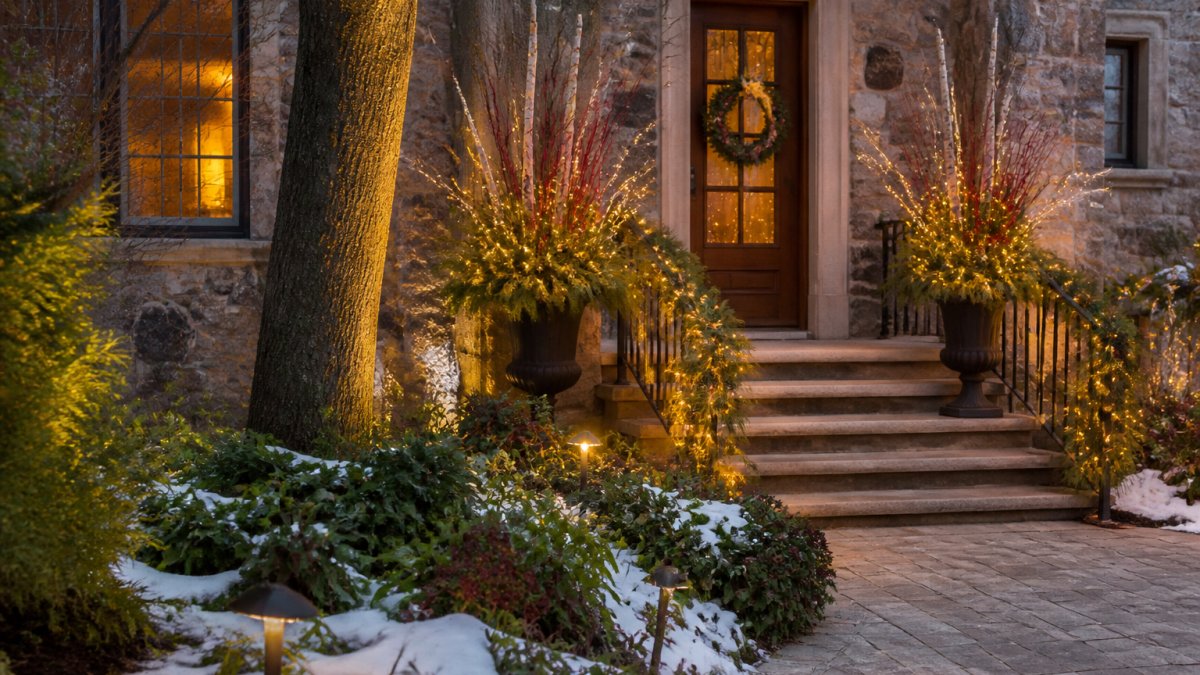
Seasonal outdoor lighting installation does more than illuminate. It shapes how the property reads at night, highlights architecture and mature trees, and extends the hours you can use the space.
- Path and step lighting for safety and wayfinding
- Uplighting on trees and facades for depth
- Hardscape lighting integrated into walls and steps
- Accent lighting on water features and plantings
Budgeting, ROI, and the Mistakes That Blow Up a Timeline
Budget frameworks work better than single lump-sum estimates. Break the project into phases and assign a range to each: hardscape, planting, lighting, irrigation, and any structures. This keeps decisions grounded and makes it easier to phase work across seasons.
Investment Tiers for a Luxury Outdoor Project
Most luxury projects in the county fall into three broad tiers. Exact figures vary by property size, site conditions, and material selection, but the tiers help you self-qualify before you ever call a firm.
- Refresh tier, planting upgrades, lighting additions, and minor hardscape repairs. Lowest disruption, fastest timeline, and the easiest to phase across a single season.
- Build tier, a new patio, outdoor kitchen, fire feature, or pergola, often with integrated lighting and irrigation. This is the most common scope and typically spans multiple phases across a season or two.
- Full-property tier, pool or spa integration, structural retaining walls, full hardscape and planting, smart controls, and lighting throughout. Longest timeline, highest coordination, and the tier where site analysis and permitting matter most.
Where the Return Comes From
Curb appeal and usable outdoor living space consistently rank among the improvements buyers notice most, according to remodeling industry research on exterior projects. A well-built patio, kitchen, and lighting package reads as finished, maintained, and move-in ready. The return is not just resale, it is the years of use you get before you ever list the property.
Mistakes That Blow Up a Timeline
| Mistake | What It Costs You | The Fix |
|---|---|---|
| No site analysis | Redesign and rework | Survey before design |
| Skipping permits | Stop-work and fines | Confirm zoning early |
| Change orders mid-build | Budget overruns | Lock scope and materials |
| Lowest-bid base work | Heaving and repairs | Verify build specs |
| Single-season planting | Bare winters | Layer for four seasons |
The biggest timeline killer is a moving scope. Every material change after excavation ripples through the schedule. Decide finishes before the crew breaks ground.
Planning for Holiday Lighting and Décor
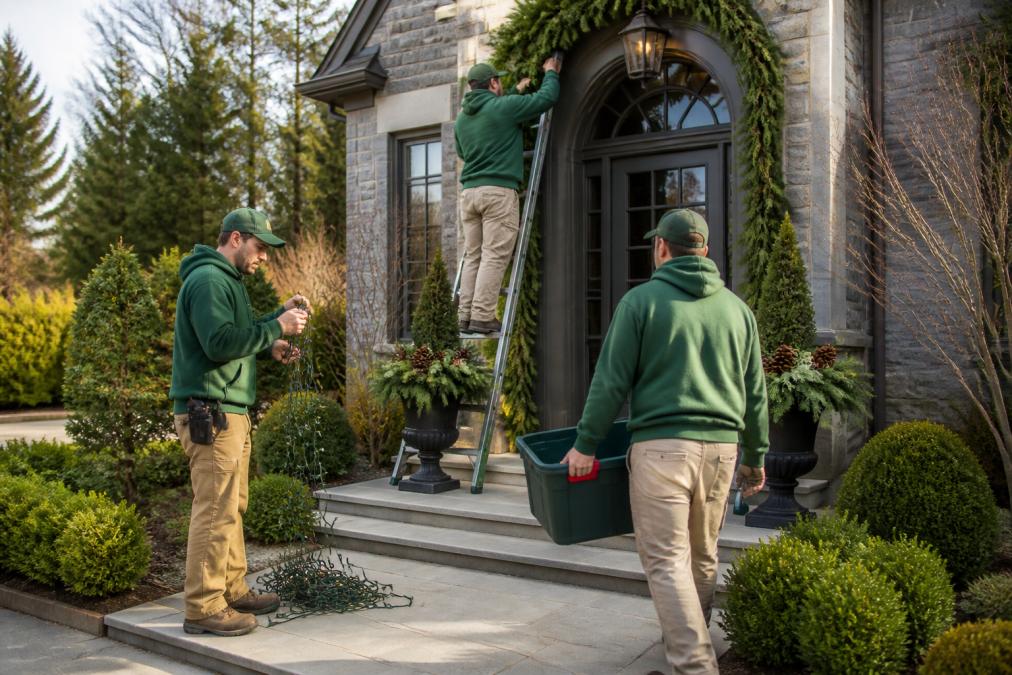
One of the most overlooked budget lines is seasonal. Holiday lighting and décor is not an afterthought, it is a recurring investment that benefits from the same infrastructure as everyday landscape lighting. If you plan conduit, outlets, and mounting points during the build, adding holiday displays later becomes a matter of plugging in rather than running new lines.
Conclusion: Plan the Whole Property, Then Build It in Phases
The challenge with a property this size is that everything connects: drainage affects masonry, masonry affects planting, and lighting ties it all together. Treating each element as a separate project is how budgets and timelines fall apart.
Frequently Asked Questions
How long does a full-scale landscape transformation take?
Most full-property projects run in phases across several months, not weeks. Design and permitting come first, then hardscaping and masonry, then planting, irrigation, and lighting. Weather, material lead times, and town review schedules all affect the calendar. Splitting the work into stages lets you use part of the yard while the rest is under construction, and it spreads the investment over a longer window.
What features add the most value to a luxury backyard?
Patios, walkways, and other hardscape elements tend to hold value best because they expand usable square footage and last for decades. A well-built outdoor kitchen, fire feature, or pergola extends the season you can actually use the space. Landscape lighting improves security and evening appeal at a lower cost than most structural work. Plantings add the most value when they are mature, climate-appropriate, and matched to the site.
How do I choose the right materials for high-end outdoor masonry?
Match the material to how the surface will be used and to the local freeze-thaw cycle. Natural stone and clay pavers handle repeated freezing and thawing better than some poured surfaces when they are installed over a properly compacted base with correct drainage. Ask about the base depth, joint material, and how water will move away from the house. Request samples and view them outdoors in daylight before committing.
Do I need permits for a patio, pergola, or retaining wall?
It depends on the town and the scope of work. Many municipalities require permits for structures, grading changes, drainage work, and retaining walls above a certain height, and some properties sit in wetland or steep-slope overlay districts with extra review. Before any excavation, confirm requirements with your local building department and, where applicable, your homeowners association. A design-build firm that works in your area regularly should handle this step for you.
How can I integrate year-round functionality into my outdoor space?
Plan for four seasons from the start. A covered pergola or pavilion with a built-in heater and a fire feature keeps a seating area usable in cold months. Lighting on timers extends evening use through winter. Choose furniture, fabrics, and finishes rated for freeze-thaw conditions. Irrigation should be winterized and zoned separately from any year-round water feature. The goal is a space you walk into in January, not just June.
What are the latest luxury landscape design trends for estates?
Current projects lean toward defined outdoor rooms rather than one large open lawn: a dining zone, a fire lounge, a pool terrace, and quiet garden pockets connected by walkways. Native and climate-resilient plantings are replacing high-water exotic beds. Layered LED lighting, smart controls, and integrated audio are being planned at the design stage instead of added later. Materials are chosen for how they age, not just how they photograph on day one.
Why consolidate design, masonry, irrigation, and maintenance with one company?
A single provider means one plan, one schedule, and one point of accountability. When design, hardscaping, irrigation, and lighting are sequenced by the same team, you avoid the gaps where one trade blames another. Maintenance crews already know how the irrigation zones and lighting circuits were built. If something needs adjustment after installation, there is one call to make instead of three.
How do I avoid surprise change orders mid-project?
Ask for a written scope that lists what is included and what is excluded, plus how changes will be priced and approved. Reputable firms walk the site before quoting so hidden conditions like rock, poor drainage, or old root systems are identified early. Get the change-order process in writing before work starts. If a quote seems far below others for the same scope, ask what was left out.