 ultimate-guide
Luxury Outdoor Living Space Ideas: 2026 Guide
Table of Contents
- What Makes a Luxury Outdoor Living Space in 2026
- High-End Outdoor Kitchen Design for Al Fresco Dining
- Custom Outdoor Fireplace Installation and Fire Features
- Modern Landscape Lighting Techniques for Ambient Ambiance
- Patio and Deck Design: Pavers, Decking, and Seating Areas
- Luxury Outdoor Living Space Ideas for Climate-Specific Design
- Budgeting, ROI, and Property Value for Outdoor Upgrades
- Conclusion
Last Updated: August 28, 2026
What Makes a Luxury Outdoor Living Space in 2026
Luxury outdoor living spaces have evolved far beyond a patio table and string lights. Today's high-end properties treat the backyard as a true extension of the home's architecture, where spatial planning, premium materials, and curated ambiance combine to rival the interior. At Four Seasons Landscaping NY, we've spent over 20 years designing these spaces for discerning homeowners in Westchester County. The gap between a "nice yard" and a true outdoor sanctuary comes down to one principle: every element must be planned together, from hardscaping underfoot to ambient lighting overhead. A collection of unrelated pieces never reads as luxury.
Hardscaping as the Foundation
Hardscaping is the permanent infrastructure of your outdoor space: patio pavers, retaining walls, raised flower beds, steps, and pathways. It's the backbone of landscape architecture and where design decisions have the longest-lasting consequences.
Material choice signals the quality tier of the entire space. Natural bluestone and tumbled travertine read as bespoke and architectural, while concrete pavers tend to look utilitarian. Raised flower beds and landscape walls add vertical dimension and define zones within the property, transforming a flat backyard into a series of intentional spaces.
Seamless Indoor-Outdoor Flow
The defining characteristic of luxury outdoor living in 2026 is the dissolution of the boundary between inside and outside. Architects increasingly treat the two as one continuous space, making properties feel dramatically larger than their square footage suggests.
Achieving seamless flow requires alignment between interior flooring and exterior pavers, consistent sightlines from main living areas to focal points outside, and door systems, typically wide sliding or folding glass panels, that disappear entirely when open.
High-End Outdoor Kitchen Design for Al Fresco Dining
An outdoor kitchen is the single highest-impact upgrade for a luxury backyard. Al fresco dining has moved from seasonal novelty to primary entertaining mode, and a properly designed outdoor kitchen makes this possible on any night the weather cooperates.
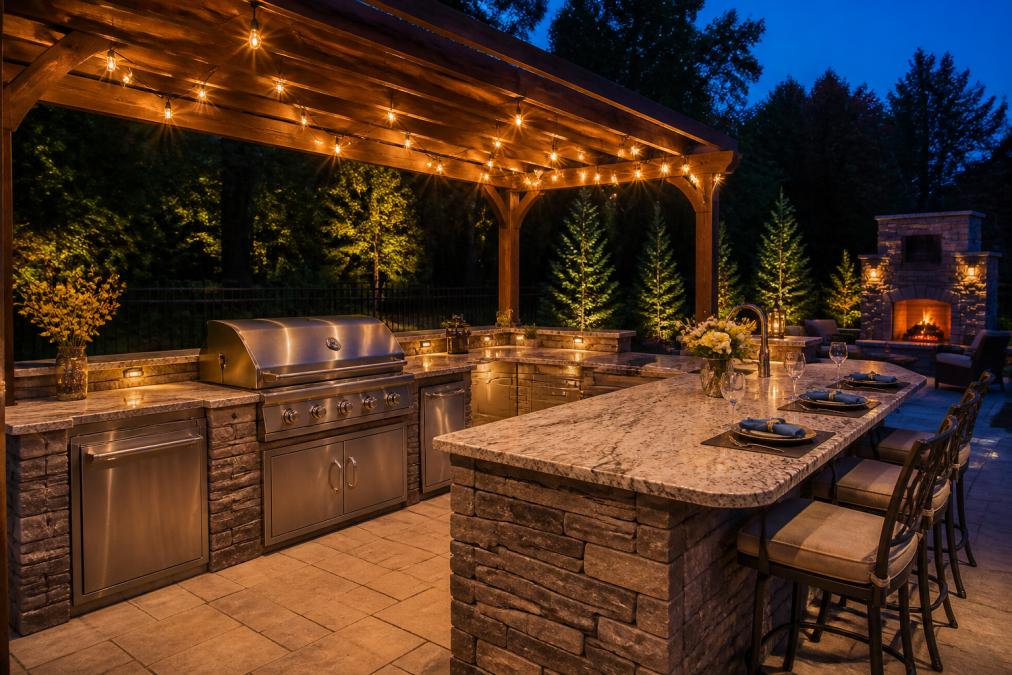
The key distinction between a true high-end outdoor kitchen and a basic grill station is permanence and integration. A built-in structure with weather-resistant cabinetry, dedicated countertop, refrigeration, and side burner reads as architectural.
Custom Cabinetry and Countertop Materials
Custom outdoor cabinetry must be built for the environment. Marine-grade polymer, powder-coated aluminum, and stainless steel are the standard choices at the luxury tier, handling moisture, UV exposure, and temperature cycling without warping or fading.
Quartzite and granite remain the benchmark for outdoor countertops, both dense enough to handle freeze-thaw cycles without cracking (peer-reviewed research). Porcelain slab countertops are gaining ground at the high end for their near-zero porosity and consistent patterning. Layout should follow the work-triangle logic of an indoor kitchen: prep surface, cooking zone, and storage in logical sequence, with an outdoor bar completing the social function.
Covered Patios and Pergolas Over the Kitchen Zone
A covered patio or pergola over the kitchen zone is structural logic, not optional. Outdoor appliances last significantly longer when protected from direct sun and precipitation. Timber pergolas with adjustable louvers have become the premium standard, providing shade control and airflow. Cedar and ipe are preferred for their natural rot resistance (usda.gov).
Custom Outdoor Fireplace Installation and Fire Features
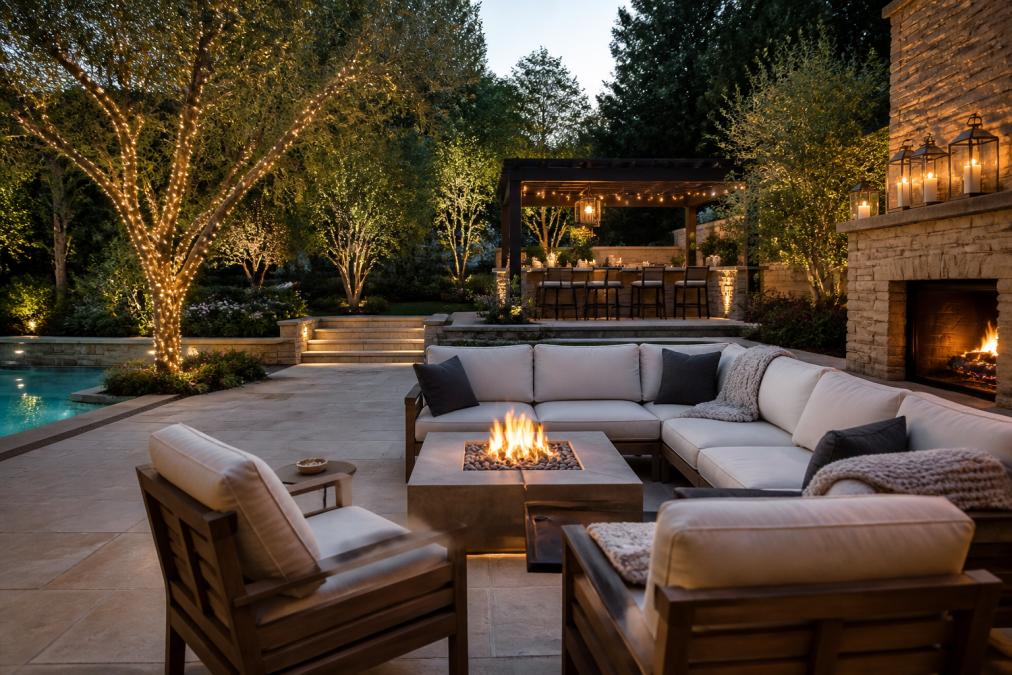
Fire extends the outdoor living season, transforming a space that would sit unused from October through April into a genuine four-season destination. Custom outdoor fireplace installation is one of the most requested upgrades at Four Seasons Landscaping NY.
Fire Pit vs. Built-In Fireplace: Choosing the Right Feature
Fire pits are social by design. Seating wraps around the flame, making them ideal for larger gatherings. Gas-fueled fire pits with electronic ignition are practical for most luxury installations, no wood storage, no ash cleanup, instant on.
Built-in outdoor fireplaces are more architectural. They create a focal wall, define seating orientation, and pair naturally with covered patios. For properties large enough, placing a fireplace on the covered patio and a fire pit in the open lawn creates distinct zones with different social functions.
| Feature | Best For | Fuel Options | Seating Orientation |
|---|---|---|---|
| Built-in fireplace | Covered patios, focal wall | Gas, wood | One-directional |
| Sunken fire pit | Open lawn, social gatherings | Gas, wood | 360-degree |
| Fire table | Smaller patios, dining areas | Gas | Dining-adjacent |
| Linear fire feature | Modern architecture, pool areas | Gas | Viewing from one side |
Modern Landscape Lighting Techniques for Ambient Ambiance
Modern landscape lighting defines the entire nighttime character of a property, the difference between a backyard that disappears at dusk and one that becomes its most impressive version after dark.
High-end landscape lighting relies on layering. A single light source produces flat, institutional results. Elevated ambiance comes from combining uplighting on specimen trees, pathway lights along walkways, downlighting from pergola structures, and accent lighting on architectural features.
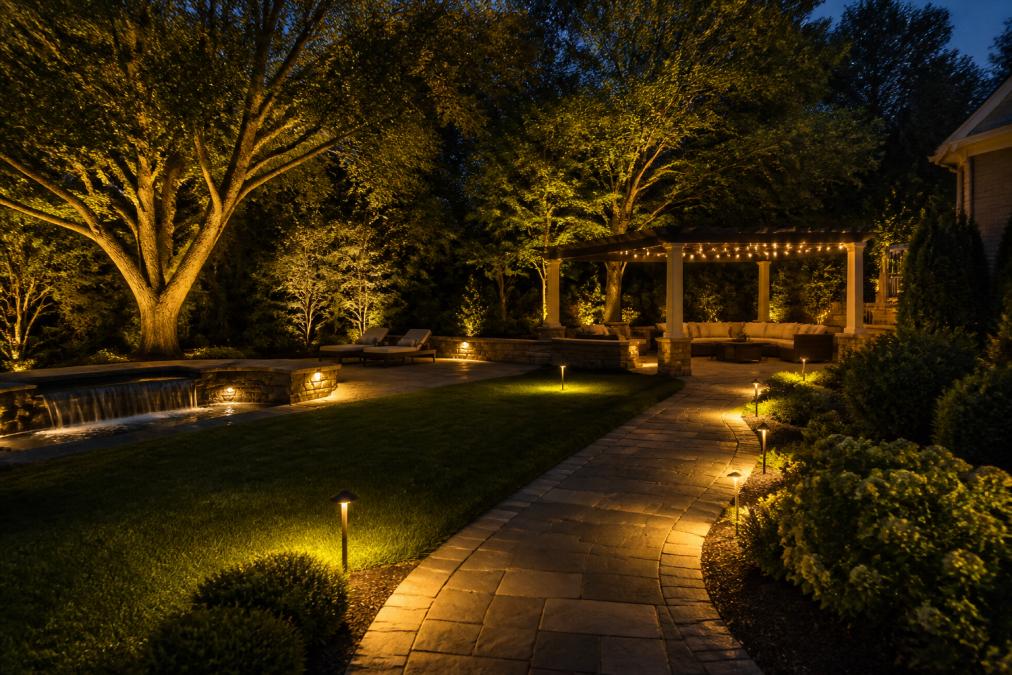
The four lighting layers for a luxury outdoor space:
- Uplighting at the base of trees and architectural features to create drama
- Pathway lighting along walkways and steps for safety and definition
- Downlighting from pergola structures to simulate natural moonlight in seating areas
- Accent lighting targeted at water features, sculpture, or specific plantings
Smart Home Integration for Outdoor Lighting
Smart home integration has moved from luxury add-on to standard expectation in high-end outdoor lighting design. Lighting systems that connect to a central hub allow zone-by-zone control, scheduling, and scene programming from a single app.
A homeowner can set landscape lights to shift from bright welcome lighting when guests arrive to soft ambient scenes during dinner, then transition to security-focused mode at midnight, all automatically. Motion-triggered uplighting on pathways provides security without the harsh look of traditional floodlights.
Patio and Deck Design: Pavers, Decking, and Seating Areas
The patio surface is the largest visible element in most outdoor spaces, making material selection critical to the overall aesthetic. Natural stone pavers, bluestone, limestone, travertine, are the benchmark for luxury applications. They age gracefully, handle heavy use, and pair with virtually every architectural style.
Composite decking has improved substantially at the premium tier, closely replicating timber grain without annual maintenance. For elevated decks adjacent to the home, composite is often practical. Ipe and teak remain the timber standards where natural wood is specified.
Seating areas should be defined architecturally through built-in benches, low landscape walls that double as seating, and changes in paver pattern or elevation, creating distinct zones that feel intentional.
Pool and Water Feature Integration
A pool or water feature integrated into the overall landscape design reads completely differently from one added as an afterthought. Align the pool edge with patio geometry, use the same or complementary stone for coping and deck, and position the pool to form a visual axis with the home's main living space.
Water features short of a full pool, spillway bowls, pondless waterfalls, reflecting pools, add the multi-sensory dimension of moving water without the maintenance commitment of a swimming pool. The sound of water effectively masks road noise and creates a sense of enclosure.
Luxury Outdoor Living Space Ideas for Climate-Specific Design
Most luxury outdoor living space ideas ignore climate. They shouldn't. A design that works beautifully in a mild coastal climate may be completely impractical in regions with harsh winters, heavy humidity, or intense summer heat. Climate-specific design separates a space that gets used from one that sits empty.
For Northeast properties with cold winters and humid summers, design priorities are: materials that handle freeze-thaw cycles, shade structures that make summer entertaining comfortable, and fire features that extend the season into fall and early spring. Covered patios with radiant heating elements are increasingly common at the luxury tier.
Weather-Resistant Materials and Long-Term Maintenance
Weather-resistant material selection is the single most important factor in long-term outdoor performance. The wrong material in the wrong climate fails structurally and generates replacement costs that dwarf original savings.
Material performance by application:
- Patio pavers: Granite and bluestone are most freeze-thaw resistant. Avoid polished marble outdoors in cold climates.
- Cabinetry: Marine-grade polymer or powder-coated aluminum for outdoor kitchens.
- Furniture: Commercial-grade wicker with UV-stabilized resin and solution-dyed acrylic upholstery. Teak for timber frames.
- Pergola framing: Pressure-treated lumber minimum; cedar, ipe, or powder-coated aluminum for premium installations.
Long-term maintenance planning should be part of the design conversation from the start. Outdoor structures designed with maintenance access in mind have significantly lower lifecycle costs.
Budgeting, ROI, and Property Value for Outdoor Upgrades
Outdoor living upgrades consistently rank among home improvements that can offer a meaningful percentage of their cost at resale while delivering immediate lifestyle value during ownership.
The ROI calculation has two components. The first is direct property value increase, which varies by project type and local market. The second is lifestyle value, the daily-use premium of a property that genuinely functions as an outdoor sanctuary.
Project ROI tiers (general guidance):
- High-impact, high-return: Landscape lighting, patio hardscaping, mature plantings
- High-impact, moderate-return: Outdoor kitchens, pergolas, fire features
- High-impact, lifestyle-driven: Pools, full outdoor rooms, smart integration
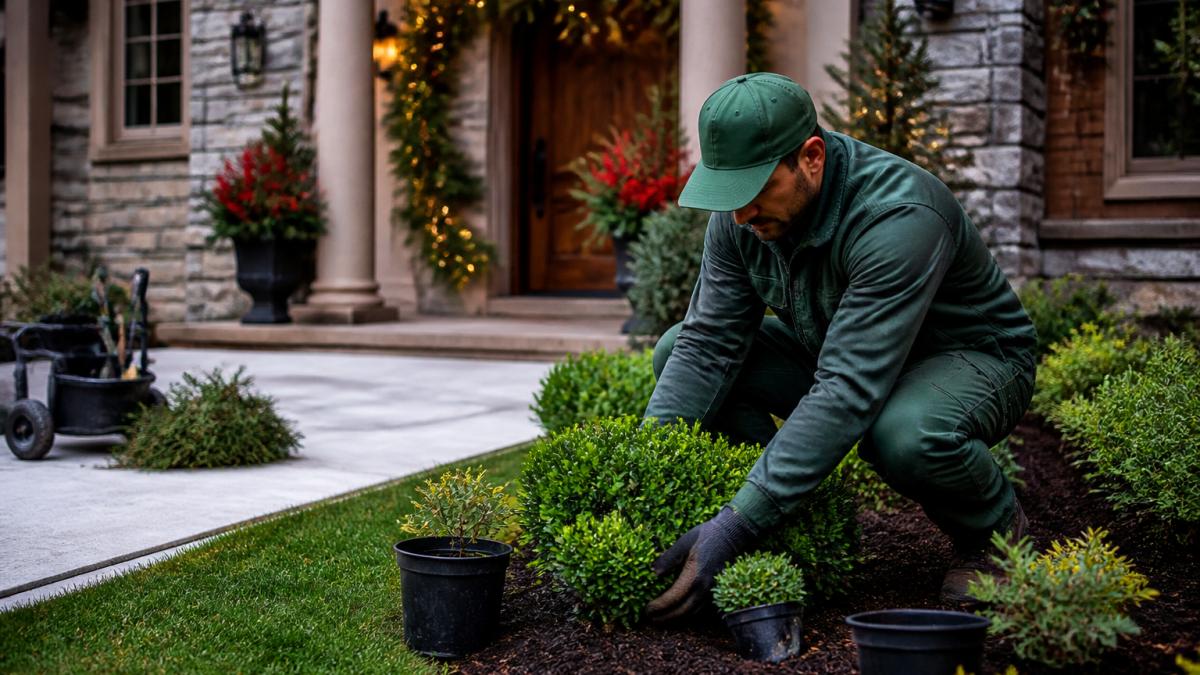
Budgeting should account for design and permitting, installation, and ongoing maintenance. Many homeowners budget carefully for installation and discover annual maintenance costs weren't factored in. A full-service provider handling design, installation, and year-round maintenance under one relationship eliminates coordination overhead.
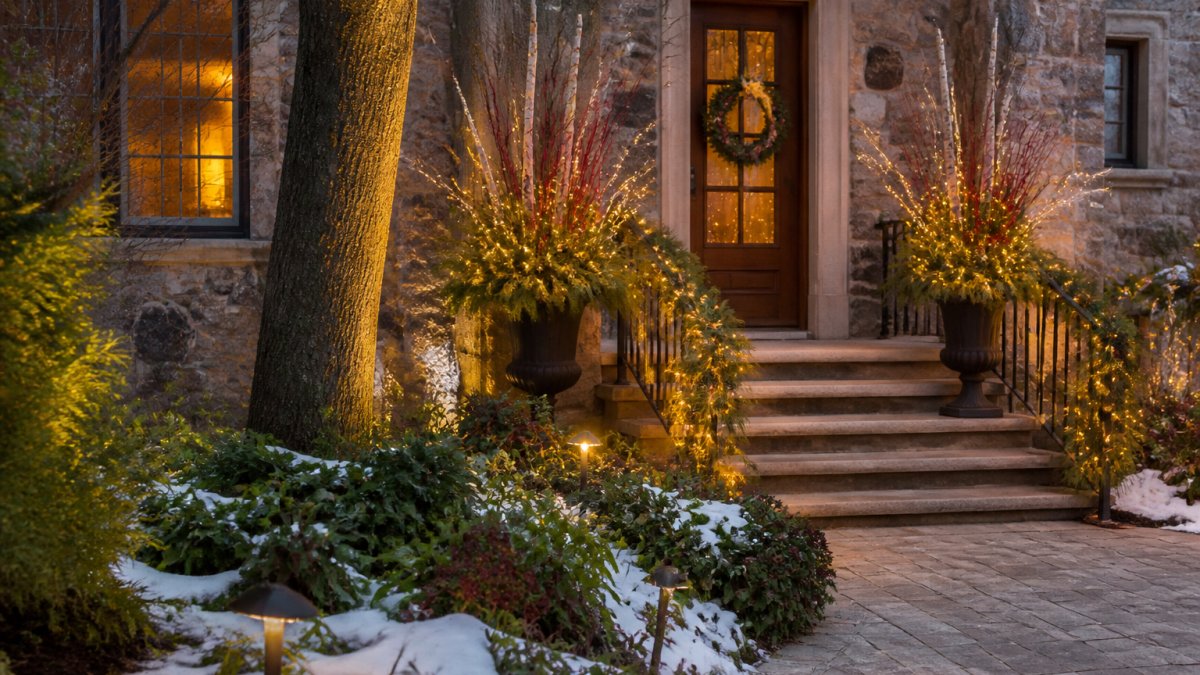
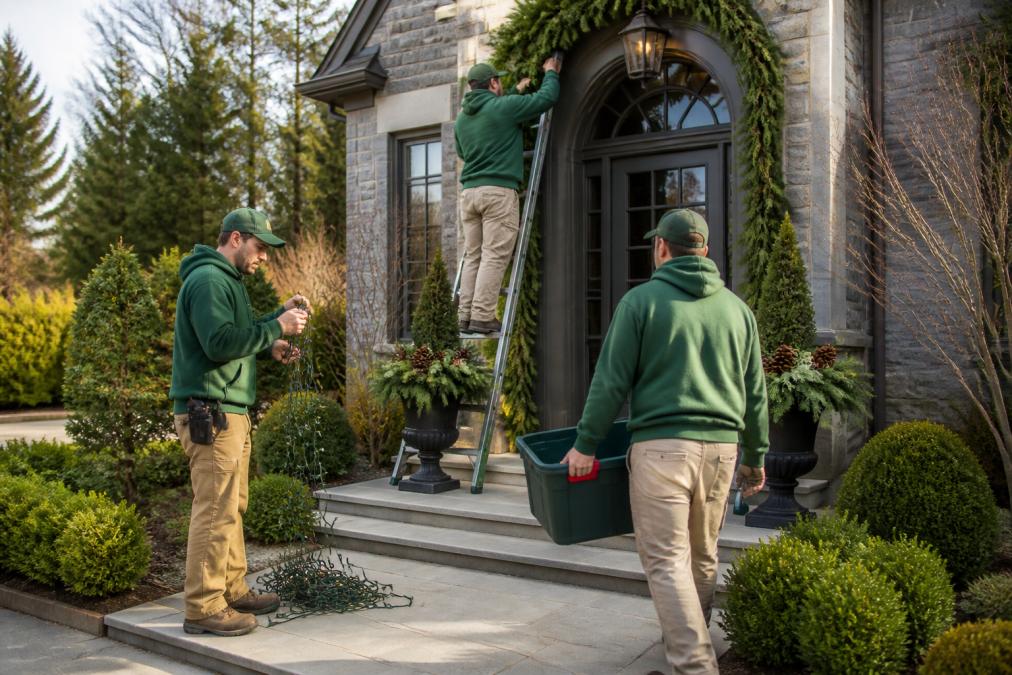
The same team that designs and builds your outdoor space can also handle holiday lighting and décor when the season arrives. Coordinating seasonal installations through a single trusted provider means the lighting scheme complements the landscape architecture rather than working against it.
| Design Element | Primary Function | Climate Consideration | Maintenance Level |
|---|---|---|---|
| Natural stone pavers | Hardscaping foundation | Freeze-thaw resistant varieties for cold climates | Low (periodic sealing) |
| Outdoor kitchen | Al fresco dining, entertaining | Covered structure essential in wet climates | Moderate (appliance care) |
| Pergola / covered patio | Shade, weather protection | Louvered systems for variable climates | Low to moderate |
| Landscape lighting | Ambiance, security, curb appeal | All climates; specify wet-rated fixtures | Low (bulb replacement) |
| Fire feature | Season extension, focal point | Gas preferred for cold climates | Low (gas) to moderate (wood) |
| Pool / water feature | Resort-style experience | Winterization required in freeze climates | High |
| Smart lighting system | Control, automation, security | All climates | Low (software updates) |
A luxury outdoor living space is a long-term investment in how a property functions and how it feels to live there. The difference between a space that delivers and one that disappoints almost always comes down to the quality of planning, materials, and the team executing it.
Four Seasons Landscaping NY brings over 20 years of experience designing and building high-end outdoor spaces for residential and commercial properties throughout Westchester County. From custom masonry and outdoor kitchen installation to landscape lighting and year-round maintenance, we handle every phase of a project under one roof. Get your free quote and start planning the outdoor space your property deserves.
Frequently Asked Questions
What are the essential elements of a high-end outdoor living space?
A true luxury outdoor living space combines durable hardscaping, purposeful spatial planning, and layered amenities. The core elements include a well-designed patio or deck with quality pavers or decking, a covered structure like a pergola, an outdoor kitchen or dining area, a fire feature, and professional landscape lighting. Weather-resistant furniture with quality upholstery, living walls or raised flower beds, and seamless indoor-outdoor flow round out the design. Each element should feel intentional, not added as an afterthought.
What design change makes a patio look more high end?
The single biggest upgrade is replacing basic concrete with natural stone or large-format patio pavers in a custom pattern. Beyond materials, adding ambient lighting transforms how a space feels after dark. A pergola or covered patio overhead gives the area architectural weight. Consistent, weather-resistant furniture with quality upholstery and a defined outdoor kitchen or fire feature signals resort-style design rather than a standard backyard setup. Professional landscape architecture ties all of these together into a cohesive, bespoke result.
What are the latest trends in luxury landscape design for 2026?
The biggest trends for 2026 center on smart home integration for outdoor lighting and irrigation, climate-specific design that accounts for local weather patterns, and living walls or green roof elements that add multi-sensory texture. Al fresco dining areas with custom outdoor kitchens remain in high demand. Homeowners are also prioritizing year-round usability through covered patios, outdoor fireplaces, and heated structures. Holiday lighting and décor installations are growing as an extension of the luxury outdoor experience into the winter season.
How can professional landscaping increase property value?
Professionally designed outdoor spaces consistently improve curb appeal and buyer perception, which translates to stronger appraisals and faster sales. High-end outdoor kitchens, custom outdoor fireplace installations, and resort-style pool surrounds are among the features appraisers recognize as value-adding improvements. A cohesive landscape architecture plan that uses premium, durable materials signals quality throughout the property. Working with a full-service provider ensures the design, installation, and long-term maintenance all meet the standard that luxury properties require.
What materials are best for long-lasting luxury outdoor structures?
For hardscaping, natural stone, bluestone, and concrete pavers offer durability and a bespoke aesthetic. Timber from sustainably sourced species works well for pergolas and decking when properly sealed and maintained. For outdoor kitchens, stainless steel appliances and stone or concrete countertops hold up well against the elements. Weather-resistant wicker and performance upholstery fabrics rated for outdoor use maintain their appearance over multiple seasons. Choosing materials suited to your specific climate is as important as aesthetics.
How do I integrate an outdoor kitchen into a luxury landscape design?
Start with spatial planning: the kitchen zone should sit adjacent to interior access points to make it practical for entertaining. A covered patio or pergola overhead protects appliances and guests from the elements. Custom cabinetry in stone or stainless steel keeps the look cohesive with the surrounding hardscaping. Plan for adequate lighting, both task lighting over prep areas and ambient lighting for the dining zone. A professional landscaping team can coordinate the masonry, utilities, and planting to ensure the kitchen integrates seamlessly into the overall design.
This article was written using GrandRanker