 ultimate-guide
Is Professional Irrigation Worth It? 2026 Guide
Table of Contents
- The Real Cost of DIY vs. Professional Irrigation
- Why Professional Irrigation Saves More Than Water
- Professional-Grade Components vs. Retail Kits
- The Hidden Value of Smart Irrigation Controller Advantages
- Warranty, Liability, and Peace of Mind
- Following a Professional Irrigation Maintenance Schedule
- Common Mistakes to Avoid with Irrigation Installation
- Common Mistakes to Avoid with Irrigation Installation
- Is Professional Irrigation the Right Investment for Your Property?
- Frequently Asked Questions
Last Updated: September 8, 2026
Few home improvement decisions spark as much debate as whether to install an irrigation system yourself or hire a professional. Homeowners often assume a weekend of trenching and a DIY kit will match a professionally designed system, but upfront savings rarely survive contact with poor water pressure, uneven coverage, and premature component failure. This guide from Four Seasons Landscaping NY breaks down the true costs, hidden risks, and long-term value of professional irrigation.
The Real Cost of DIY vs. Professional Irrigation
The true cost of an irrigation system extends far beyond the initial purchase price. A DIY kit might seem cheaper at the register, but installation labor, replacement parts, and water waste from inefficient coverage add up quickly. Professional irrigation is worth it for most homeowners because the design, labor, and materials are engineered to work as one reliable system. Consider the full lifecycle rather than just the sticker price: DIY projects often require tool rentals, multiple supply-store trips, and redoing sections that fail pressure testing, while professionals finish correctly in a fraction of the time.
Breaking Down the True Lifecycle Costs
The upfront price difference is only the entry point. A complete cost comparison must account for these often-missed line items:
- Design and Engineering: A professional conducts a site survey, performs a water pressure test, and creates a zone-by-zone plan, typically bundled into the installation quote. A DIY homeowner must either purchase design software, hire a consultant separately, or rely on the generic layout included in a kit, a gamble that often leads to uneven coverage.
- Materials and Fittings: Professional-grade valves and heads are manufactured to tighter tolerances, which directly impacts water distribution uniformity. Retail kits often use push-fit fittings that are prone to leaking under constant underground pressure.
- Labor and Time: A professional crew can complete a typical residential installation in one to three days. A DIY project frequently spans several weekends, not including time spent researching, troubleshooting, and making return trips to the supply store.
- Water Waste from Inefficiency: This is the silent cost driver. A poorly designed system with mismatched nozzles or overlapping spray patterns can waste thousands of gallons per season. According to the EPA WaterSense statistics on outdoor water use, as much as 50 percent of outdoor water use is lost due to inefficiency. Over a five-year period, this waste can easily exceed the initial cost difference between a DIY kit and a professional installation.
- Repair and Replacement: The first sign of trouble in a DIY system is often a soggy spot in the yard, indicating a broken pipe or fitting. Professional installations are backed by a workmanship warranty, meaning the installer absorbs the cost of these repairs during the warranty period.
The Financial Case for Professional Installation
A professionally installed system pays for its premium through reduced water bills and avoided repairs. Municipal water rates have risen steadily across the country; a system that waters efficiently, applying the right amount only where needed, directly reduces the volume you are billed for, while one that oversprays onto driveways and sidewalks is pouring money down the drain. Treat the irrigation system as a long-term asset: the initial premium is an investment in reliability and efficiency, whereas saving a few hundred dollars upfront often results in a system that costs more to operate, requires frequent repairs, and fails years earlier.
| Factor | DIY Installation | Professional Installation |
|---|---|---|
| Upfront cost | Lower initial investment | Higher initial investment |
| System design | Basic, one-size-fits-all | Customized to property layout |
| Water pressure management | Often overlooked | Precisely calculated per zone |
| Component quality | Retail-grade materials | Professional-grade components |
| Installation time | Multiple weekends | One to three days |
| Warranty protection | Limited or none | Backed by installer |
| Long-term maintenance | Homeowner responsibility | Professional support available |
Why Professional Irrigation Saves More Than Water
A well-designed system does more than keep your lawn green; it protects the single largest investment most families own. Professional irrigation is an investment in landscape health, property structure, and long-term curb appeal. Properly placed sprinkler heads prevent dry patches that invite weeds and disease while avoiding overspray that damages siding, walkways, and fencing.
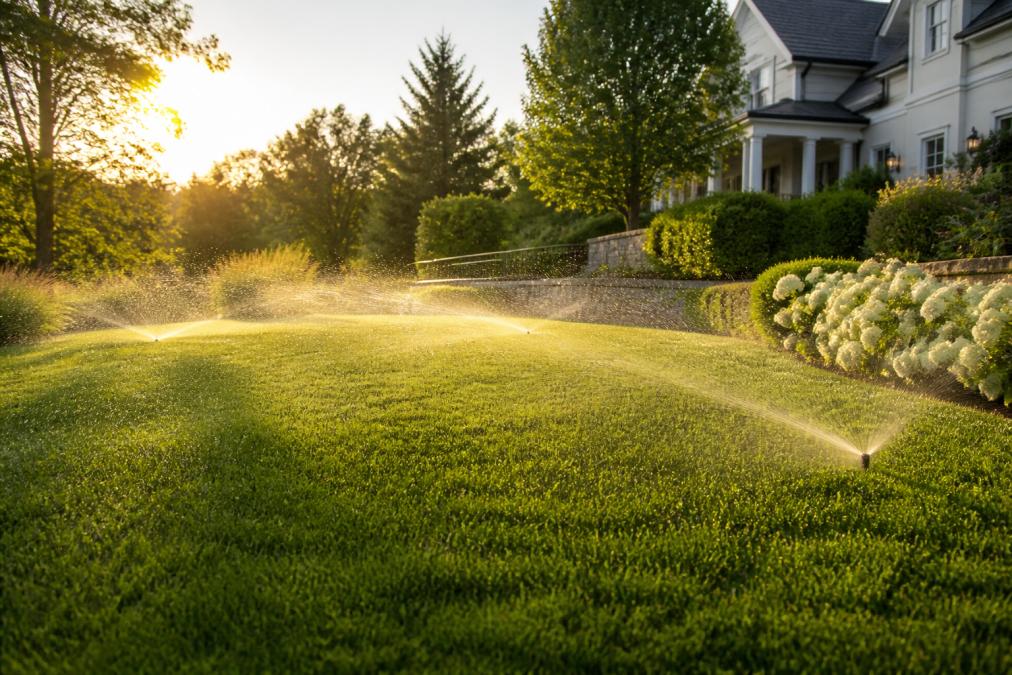
The efficiency gains come from precision. Professionals calculate flow rate, pipe depth, and nozzle coverage for each watering zone, ensuring every drop lands where it belongs. This precision reduces water bills and prevents the erosion and pooling that plague poorly designed DIY systems. According to EPA WaterSense guidance on irrigation efficiency, smart watering practices and efficient system design can significantly reduce outdoor water use, which accounts for a large share of household consumption.
The Environmental Impact Analysis: Beyond the Utility Bill
Most cost-focused guides stop at the water bill, but the environmental impact extends far beyond your monthly statement. A professionally designed system is a tool for conservation, not just convenience.
Water Conservation Metrics: The efficiency of an irrigation system is measured by its distribution uniformity (DU). A professional system is designed to achieve a high DU, meaning water is applied evenly across each zone. A low DU, common in DIY systems with mismatched heads and poor spacing, means some areas are overwatered while others are underwatered, generating runoff that carries fertilizers and pesticides into storm drains. This is not just a waste of water; it is a source of non-point source pollution.
Drought Compliance and Local Ordinances: Many municipalities have implemented watering restrictions and mandatory efficiency standards for new irrigation systems, often requiring rain sensors, smart controllers, and backflow prevention devices. A professional installer is familiar with the local code and ensures the system is compliant from day one. A DIY installation that fails an inspection can result in fines and the cost of redoing the work.
The Runoff and Erosion Factor: A poorly designed system that applies water faster than the soil can absorb it creates runoff that erodes topsoil, undermines plant roots, and carries pollutants into stormwater systems. A professional designs the system to match the soil's infiltration rate, using cycle-and-soak scheduling to prevent runoff.
Long-Term Landscape Health and Property Value
Beyond monthly bills, a professional system protects your landscape investment. Mature trees, custom plantings, and established turf represent thousands of dollars in value; inconsistent watering stresses plants, making them vulnerable to pests and disease and leading to costly replacements that erase any DIY savings. Well-maintained landscaping also influences property value, a professionally installed system signals systematic care, and real estate professionals consistently note that curb appeal affects first impressions and offers.
Professional-Grade Components vs. Retail Kits
The components themselves tell a clear story about durability. Professional-grade parts withstand years of underground exposure, varying water pressure, and freeze-thaw cycles, while retail kits are designed for easy installation, often meaning thinner plastics, lighter fittings, and fewer customization options. Professional installers use commercial-grade heads, valves, and controllers that are serviceable and replaceable, offering better nozzle coverage and longer service life. Another critical distinction is system design: professionals map out watering zones based on sun exposure, plant type, and soil conditions, accounting for slope, shade, and natural pooling areas, planning nearly impossible to replicate with an off-the-shelf kit.
The Hidden Value of Smart Irrigation Controller Advantages
Smart irrigation controllers are one of the most compelling reasons to choose professional installation. These devices adjust schedules automatically based on local weather data, soil moisture, and seasonal changes. The smart irrigation controller advantages extend beyond convenience: by connecting to local forecasts, these controllers skip watering when rain is expected and adjust run times during heat waves, eliminating the guesswork behind overwatering and underwatering. Proper integration is the key differentiator, a professional installs the controller, connects it to each valve, and programs zone-specific schedules that match your landscape's actual needs, while a DIY homeowner often leaves it on factory defaults, negating potential savings.
Warranty, Liability, and Peace of Mind
Installing an irrigation system involves digging trenches, cutting into existing water lines, and working with electricity. A DIY installation carries no warranty, meaning you absorb the full cost of repairs if a connection fails or a head is struck by a mower.
Professional installation includes warranty protection on both components and labor. If something fails within the warranty period, the installer returns and fixes it at no additional cost, particularly valuable during the first year when settling soil and initial adjustments reveal issues.
Liability is another factor homeowners rarely consider. Excavation can damage underground utility lines, and improper connections can cause water damage to the home's foundation. Professional crews carry insurance that covers accidental damage during installation. A DIY project places that risk squarely on the homeowner. The Federal Trade Commission guidance on home improvement contracts recommends verifying that contractors are licensed and insured before work begins.
Following a Professional Irrigation Maintenance Schedule
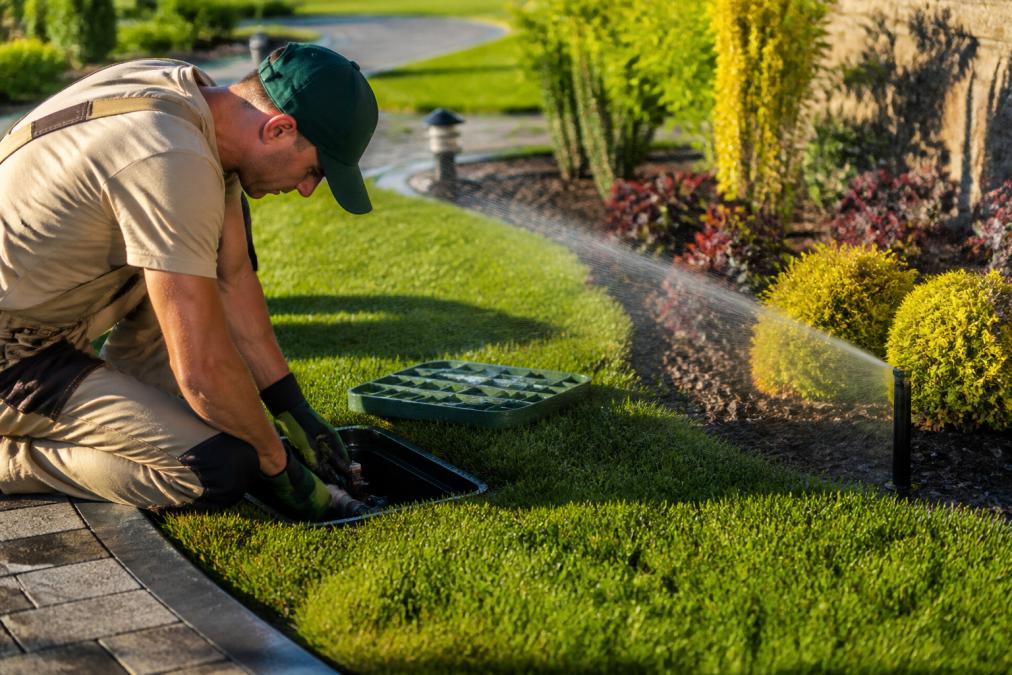
An irrigation system is mechanical equipment buried in the ground, exposed to weather and soil movement. A professional irrigation maintenance schedule typically includes seasonal start-up, mid-season inspections, and winterization. Seasonal start-up in spring involves inspecting valves, clearing debris from heads, and testing each zone for proper pressure and coverage. Mid-season inspections focus on adjustments, as plants grow, heads may need repositioning or nozzle changes, and professionals check for leaks and controller programming updates. Winterization is critical in colder climates: water left in pipes and valves can freeze, expand, and crack the system. Professional winterization uses compressed air to blow water out of the lines, and skipping it is one of the most common and expensive mistakes a homeowner can make.
Common Mistakes to Avoid with Irrigation Installation
The most frequent error is underestimating the complexity of proper system design. Homeowners assume more heads mean better coverage, when overlapping spray patterns and mismatched nozzles create dry spots and wasted water. A professional calculates precipitation rates for each zone to ensure even distribution.
Another common mistake is improper pipe depth. Pipes buried too shallow are vulnerable to aerators, edgers, and freezing temperatures. Professionals trench to the correct depth for your climate and soil, protecting the system for decades.
Neglecting backflow prevention is a serious oversight with health implications. Backflow prevention devices keep irrigation water from contaminating the home's drinking water supply. Many municipalities require these devices and periodic testing. A professional ensures compliance with local codes and EPA regulations on cross-connection control, protecting your household water quality.
Finally, homeowners often skip the permitting process. Many localities require permits, and failing to obtain one can create problems when selling the property. Professional installers handle permits and inspections as part of their service, ensuring the system meets all local requirements.
Common Mistakes to Avoid with Irrigation Installation
Before committing to any irrigation project, ask yourself a few practical questions. How long do you plan to stay in your home? What is the value of your existing landscaping? How much time do you have for design, installation, and maintenance? Professional irrigation is the right choice for homeowners who value landscape health, water efficiency, and long-term reliability, or who lack the time or expertise to install a complex underground system. For properties with extensive landscaping, varied terrain, or high-end aesthetic standards, professional design is particularly valuable, a professional evaluates sun patterns, soil drainage, and plant water needs to create zones that keep every area thriving.
Is Professional Irrigation the Right Investment for Your Property?
The answer comes down to what you value more: short-term savings or long-term performance. Professional irrigation delivers measurable benefits through water efficiency, system reliability, and landscape health. The upfront cost is higher, but the return comes in lower utility bills, fewer repairs, and lasting beauty.
Four Seasons Landscaping NY has spent over two decades designing and installing irrigation systems that match the standards of luxury properties throughout Westchester County. Our fully insured crew handles everything from system design to seasonal maintenance, so you work with one trusted team rather than coordinating multiple contractors. Transparent quotes mean the price we discuss is the price you pay, with no surprise change orders midway through the project. As the seasons turn, the same team that keeps your landscape hydrated can also handle your Holiday Lighting and Décor, ensuring your property looks its best year-round.
Frequently Asked Questions
Is an irrigation system worth the money for residential properties?
Yes, for most homeowners, a professionally installed system pays for itself over time through water savings, reduced repair costs, and increased property value. Professional design ensures proper coverage and efficiency, which prevents the costly mistakes common with DIY kits. The long-term investment in your landscape's health and your home's curb appeal typically outweighs the upfront cost.
What are the common pitfalls of DIY sprinkler system installation?
DIY installation often leads to uneven water coverage, broken heads from incorrect pipe depth, and failed inspections due to improper backflow prevention. Without professional system design, homeowners frequently create watering zones with mismatched pressure, leading to dry patches or runoff. These mistakes result in higher water bills and expensive repairs that negate any initial savings.
How does a professionally designed system improve water conservation?
Professional irrigation design is based on calculating precise flow rates and water pressure for each zone. This ensures optimal nozzle coverage with minimal overspray or runoff. Professionals also integrate smart controllers and soil moisture sensors, which adjust watering schedules based on real-time weather and soil conditions. This targeted approach can reduce outdoor water use by 20-30% compared to manual or outdated systems.
What maintenance requirements should I expect with a professional system?
A professional irrigation maintenance schedule includes a seasonal start-up in spring, where technicians inspect heads, pressure-test the system, and adjust controllers. Regular monthly checks for clogged nozzles or leaks are recommended. A critical winterization step involves blowing out the lines before freezing temperatures to prevent pipe damage. Annual professional service visits can extend the life of your system and prevent costly emergency repairs.
Choosing professional irrigation is a decision to protect your property investment rather than gamble on it. The right system saves water, preserves your landscape, and operates reliably for decades with proper care. Four Seasons Landscaping NY brings 20+ years of experience, premium materials, and a family-owned commitment to quality on every project. Get your free quote today and see how professional irrigation transforms your property into a landscape that thrives in every season.