 ultimate-guide
Comprehensive Landscape Project Management Guide
Table of Contents
- What Comprehensive Landscape Project Management Actually Involves
- Building a Realistic Landscape Construction Project Timeline
- Managing Landscape Installation Budgets Without Surprises
- Hiring Professional Landscaping Contractors: What to Verify
- Site Supervision, Quality Assurance, and Field Operations
- Supply Chain, Procurement, and Subcontractor Management
- Landscape Project Management: Sustainability and Post-Project Handoff
- Conclusion
Last Updated: August 26, 2026
What Comprehensive Landscape Project Management Actually Involves
Comprehensive landscape project management is the end-to-end coordination of design, construction, procurement, scheduling, and site supervision required to deliver a finished outdoor environment on time and within scope. At Four Seasons Landscaping NY, we've managed this process across luxury residential and commercial properties, and the gap between a smooth project and a costly one almost always comes down to how well the management layer is built before a single shovel hits the ground.
Landscape project management coordinates all trades into a single, sequenced workflow. Without it, you get scheduling conflicts, material delays, rework, and invoices that don't match the original quote.
Core Phases: From Site Analysis to Project Handover
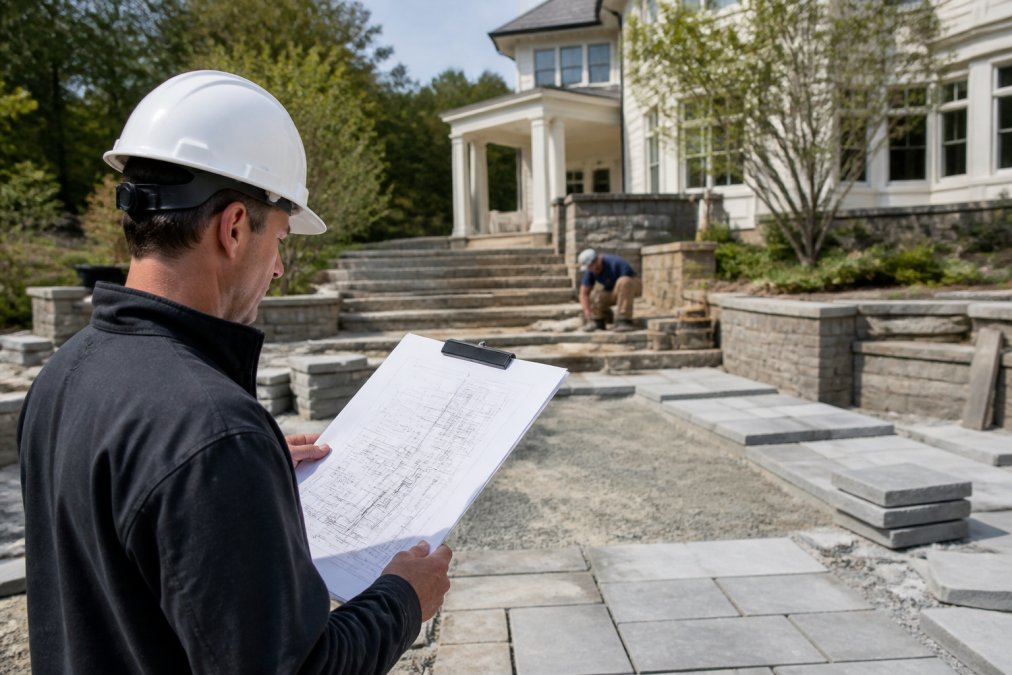
Every well-run landscape project moves through defined phases. Skipping one creates problems you pay to fix later.
- Site analysis - Assess existing grade, drainage patterns, soil conditions, utility locations, and sun exposure.
- Scope definition - Document exactly what will be built, planted, and installed. Vague scopes produce change orders.
- Design and construction drawings - Finalize layouts, materials, and planting plans before procurement begins.
- Procurement and scheduling - Source materials, confirm subcontractor availability, and set the project timeline.
- Installation - Execute hardscape, softscape, irrigation, and masonry in the correct sequence.
- Quality assurance and punch list - Inspect all work against the original project deliverables before client sign-off.
- Project handover - Deliver maintenance documentation, warranty records, and care instructions.
Key Roles and Responsibilities on a Luxury Property Build
A common mistake on high-end residential builds is treating landscape project management as a single person's job. Clear division of responsibilities is essential.
- Project manager - Owns the schedule, budget tracking, and client communication
- Site supervisor - Manages daily field operations, crew coordination, and quality control
- Design lead - Ensures installations match the approved construction drawings
- Procurement coordinator - Handles material logistics, vendor relationships, and supply chain timing
- Subcontractors - Specialists in irrigation, lighting, masonry, or grading brought in for specific phases
On luxury properties, the project manager and site supervisor must stay in close communication. A decision made on-site that isn't documented immediately becomes a change order dispute two weeks later.
Building a Realistic Landscape Construction Project Timeline
The biggest source of client frustration in landscape construction isn't quality, it's schedule surprises. A realistic timeline accounts for material lead times, weather windows, permit processing, and correct sequencing of hardscape before softscape.
According to the Project Management Institute's practice standards for scheduling, milestone scheduling should account for dependencies between tasks before assigning dates. In landscape construction, hardscape foundations must cure before adjacent planting begins, and irrigation rough-in must happen before finish grading.
Many contractors underestimate material lead times. Natural stone, custom pavers, and specimen trees often require four to eight weeks from order to delivery. A project timeline that doesn't account for procurement lead time will slip, regardless of installation crew efficiency.
Milestone Scheduling for Hardscape and Softscape Phases
A practical milestone schedule for a mid-to-large residential landscape project:
Phase | Key Milestone | Dependencies |
|---|---|---|
Site prep and grading | Grade approved, drainage installed | Permits issued, utility marks cleared |
Hardscape installation | Patio, walls, walkways complete | Subgrade compacted, materials on site |
Irrigation rough-in | All lines tested and approved | Hardscape complete, final grade set |
Planting and softscape | All plants installed and mulched | Irrigation active, soil amendments complete |
Lighting and finish work | System commissioned, fixtures set | Planting complete |
Final inspection | Punch list signed off | All phases complete |
Managing Landscape Installation Budgets Without Surprises
Managing landscape installation budgets builds trust or breaks it down entirely. Experienced project managers separate budgets into three categories: fixed costs (materials and contracted labor), variable costs (anything dependent on site conditions discovered during installation), and contingency (typically a percentage of total project value for the unexpected).
Site conditions discovered after grading begins are the most common source of cost overruns. Buried debris, poor subsoil, or unexpected drainage issues can all require scope changes that weren't visible during initial site analysis.
Change Orders, Cost Estimation, and Budget Tracking
Change orders are written authorizations for work outside the original project scope. Every change order should document what changed, why, the cost impact, and the schedule impact. Verbal approvals create disputes; written approvals create clarity.
Effective budget tracking requires a live cost log updated throughout the project. The Construction Financial Management Association's guidelines on project cost control recommend tracking committed costs, actual costs, and projected final costs as three separate figures throughout a project's lifecycle.
Cost estimation should include material costs with confirmed supplier quotes, labor hours by trade, equipment rental and mobilization, permit fees, and contingency reserve for site condition unknowns.
Hiring Professional Landscaping Contractors: What to Verify
Hiring professional landscaping contractors for a luxury property is a due diligence process, not a price comparison. The lowest quote rarely reflects the full project cost once change orders and rework are factored in.
Before signing any contract, verify these items:
- Insurance coverage - Confirm general liability and workers' compensation are current and adequate. Request certificates directly from the insurer.
- Licensing - Verify the contractor holds applicable state or local licenses for the work being performed.
- References from comparable projects - Ask specifically for references from projects of similar scope, value, and property type.
- Subcontractor management practices - Ask who manages subcontractors on site and how their work is inspected.
- Contract clarity - The contract should specify project scope, payment schedule, change order procedures, and timeline in writing.
- Communication protocols - Establish who your point of contact is, how often you'll receive updates, and how site decisions are documented.
A contractor who can't produce a clear written scope document hasn't thought through the project carefully enough to manage it well.
Site Supervision, Quality Assurance, and Field Operations
Quality assurance in landscape construction happens daily, at the site level, as each phase of work is completed. Site supervision catches problems before they're buried under the next phase of installation.
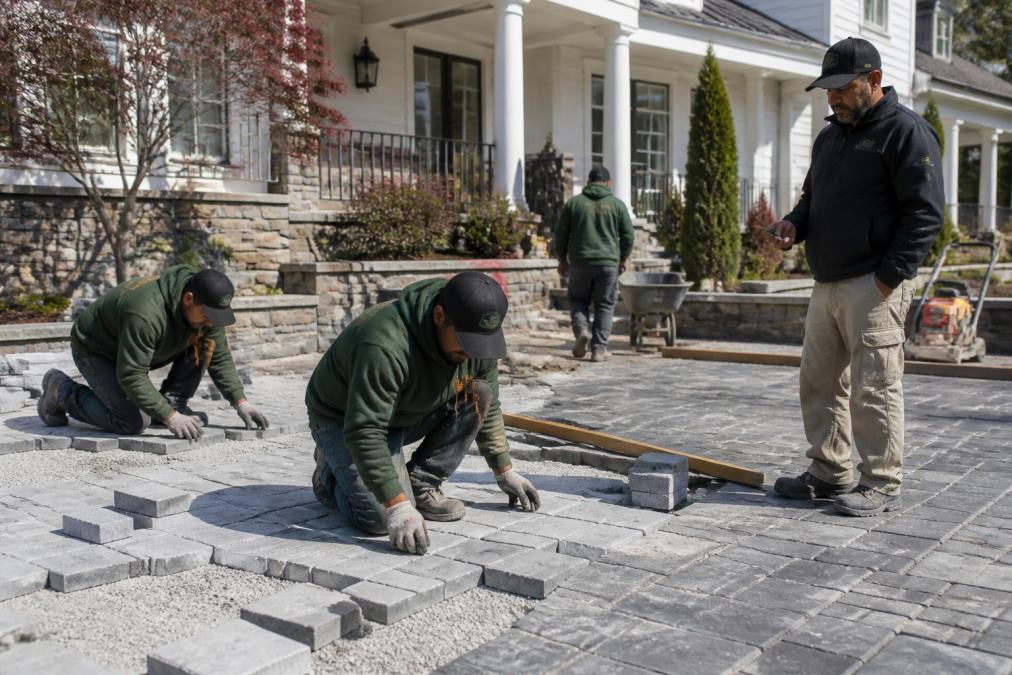
Effective field operations require a site supervisor physically present during critical installation phases: subgrade preparation, hardscape setting, irrigation rough-in, and planting. Catching a drainage slope problem during grading costs an hour of rework. Catching it after the patio is set costs the entire hardscape installation.
Quality assurance checkpoints should be built into the project schedule:
- Pre-pour inspection - Verify subgrade depth, compaction, and formwork before any concrete or base material is placed
- Hardscape alignment check - Confirm paver or stone alignment, joint spacing, and slope before grouting
- Irrigation pressure test - Pressure-test all irrigation lines before backfilling trenches
- Planting inspection - Verify plant placement matches the approved planting plan before backfilling root balls
- Final punch list - Walk the entire site against the project deliverables list and document any items requiring correction
Site safety is non-negotiable. The Occupational Safety and Health Administration's guidelines for landscaping and horticultural services outline specific requirements for equipment operation, trenching, and chemical handling that apply to every landscape project.
Supply Chain, Procurement, and Subcontractor Management
Supply chain disruptions have reshaped how landscape project managers approach procurement. The practical response is to front-load procurement decisions: confirm material availability and lead times before finalizing the project timeline.
Subcontractor management is one of the most underestimated components of landscape project management. Most residential landscape projects involve four to six specialty subcontractors: irrigation, lighting, masonry, grading, arborists, and sometimes structural engineers. Coordinating their schedules, sequencing their work correctly, and maintaining quality standards requires active management.
A practical subcontractor management framework includes:
- Pre-mobilization meetings - Brief each subcontractor on site conditions, access protocols, and quality standards before they begin work
- Sequencing agreements - Confirm in writing when each subcontractor will be on site and what preceding work must be complete
- Material logistics coordination - Confirm delivery windows for materials to avoid site congestion
- Daily progress documentation - Photograph and log each subcontractor's work at the end of each day
Material logistics deserve particular attention on luxury residential properties. Deliveries of large stone, heavy equipment, and bulk materials require coordination with property access and sometimes local permits for road use or crane operation.
Landscape Project Management: Sustainability and Post-Project Handoff
ESG Compliance and Sustainable Landscape Practices
Sustainability in landscape project management is no longer a differentiator, it's a baseline expectation for many luxury property owners and commercial clients. Sustainable landscape practices reduce long-term maintenance costs, improve site performance, and align with broader environmental goals.
Practical sustainability considerations include:
- Native and adaptive planting - Plants selected for regional climate conditions require less irrigation, fewer chemical inputs, and less maintenance
- Stormwater management - Permeable hardscape, bioswales, and rain gardens reduce runoff and can contribute to local stormwater compliance
- Irrigation efficiency - Smart irrigation controllers and drip systems reduce water consumption
- Material sourcing - Locally sourced stone and aggregates reduce transportation impacts
For commercial properties, the U.S. Green Building Council's LEED landscape and site credits provide a structured framework for documenting sustainable landscape practices that contribute to overall building certification.
ESG considerations extend to labor practices, waste management on site, and the long-term carbon footprint of plant and material choices.
Maintenance Handover Documentation and Client Communication
The post-project maintenance handover is where most landscape contractors fall short. A completed installation without a clear maintenance plan is incomplete. Plants, irrigation systems, hardscape, and lighting all require specific care protocols to perform as designed.
A complete maintenance handover package should include:
- Planting list with care instructions - Species names, watering requirements, fertilization schedule, and seasonal care notes
- Irrigation system documentation - Controller programming, zone maps, head specifications, and winterization procedures
- Hardscape care guidelines - Sealing schedules, joint sand maintenance, and cleaning protocols
- Warranty documentation - Written warranties for plants, materials, and installed systems with clear terms and contact information
- Seasonal maintenance calendar - A month-by-month guide to what the property requires throughout the year
A formal walkthrough with the property owner, covering each system and its maintenance requirements, reduces post-project support calls and builds long-term client confidence.
Landscape project management at the luxury level is complex, and the margin for error is narrow. Four Seasons Landscaping NY has managed this process for over 20 years, handling everything from initial site analysis through final maintenance handover for residential and commercial properties throughout Westchester County. Our fully insured crew, transparent quoting process, and full-service model mean you work with one accountable team from design through ongoing maintenance. Get your free quote and see what a properly managed landscape project looks like from start to finish.
Frequently Asked Questions
What is a landscape project manager and what do they do?
A landscape project manager oversees every phase of a landscape construction project, from initial site analysis and design coordination through installation, quality control, and final handover. They manage the project timeline, coordinate subcontractors, track the budget, handle procurement of materials, and serve as the primary point of contact between the client and the field crew. On luxury residential properties, they also manage change orders and ensure all work meets the agreed project scope and quality standards.
What are the key phases of a professional landscape construction project?
A well-run landscape project moves through five core phases: site analysis and design, permitting and procurement, hardscape installation (patios, walls, masonry), softscape installation (planting, sod, irrigation), and final inspection with project handover. Each phase has defined milestones and sign-offs. Skipping or rushing any phase, especially site analysis or procurement, is the most common cause of budget overruns and schedule delays on complex residential builds.
How can I avoid unexpected costs when managing a landscape installation budget?
The most reliable way to control costs is to get a fully itemized written estimate before work begins, with clear language about what triggers a change order. Ask the contractor how they handle material price fluctuations and supply chain delays. Build a contingency of 10-15% into your budget for unforeseen site conditions. Avoid verbal approvals for scope changes — every addition should be documented in writing with an updated cost before work proceeds.
Why is professional project management essential for complex masonry and irrigation installations?
Masonry and irrigation work must be sequenced correctly or costly mistakes follow. Irrigation lines, for example, must be installed before final grading and planting. Masonry foundations require proper drainage planning from the start. A dedicated landscape project manager coordinates these trades so each crew arrives in the right order, materials are on site when needed, and no phase has to be redone because a prior step was rushed or skipped. This coordination directly protects your investment.
What should a post-project maintenance handover include?
A thorough handover gives the property owner or maintenance team everything they need to protect the investment long-term. It should include as-built construction drawings, irrigation system maps with zone schedules, plant species lists with care requirements, warranty documentation for hardscape materials and installed systems, and a seasonal maintenance calendar. For luxury residential properties, a walkthrough with the project manager to review each system in person is worth requesting before final sign-off.
This article was written using GrandRanker